

new cell of equal size whereas the old box part (now the new lid)
forms a slightly smaller cell. This leads to smaller average size of the
population over time (several generations). When cells reach the
smallest possible size, a spore known as an auxiospore forms. The
auxiospore increases its size to the maximum for the species, and
the process starts form the beginning again [5].
Measuring silicon is only necessary when cultivating diatoms,
but then it is critical to keep track of the silicon concentration. The
need for silicon is often considered as 1:1 ratio with nitrogen
(Redfield-Brzezinski ratio), but this is somewhat depending on
the species in question. Many species are able to grow well also in
water with N:Si ratio >1, and might have thinner frustules, which
could be beneficial as silica frustules are hard to break. In order to
determine the optimal nutrient ratio, it is important to also know
the organic forms in the algal biomass, termed biogenic silica (BSi).
In this chapter we present a colorimetric method for determining dissolved silica (DSi), reactive silica (dissolved silicate, monoand polymeric silica, silicic acid) [6], and a method for biogenic
silica (BSi), based on the same principles. Silicon analysis is based on
the molybdate-blue method [6]. Silicomolybdic acid is formed
when sample in acid solution is treated with a molybdate solution;
then the complex is reduced by ascorbic acid to blue complex. The
determination of BSi includes filtration and wet-alkaline procedure,
which converts BSi to silicic acid (Si(OH) 4 ) [7].
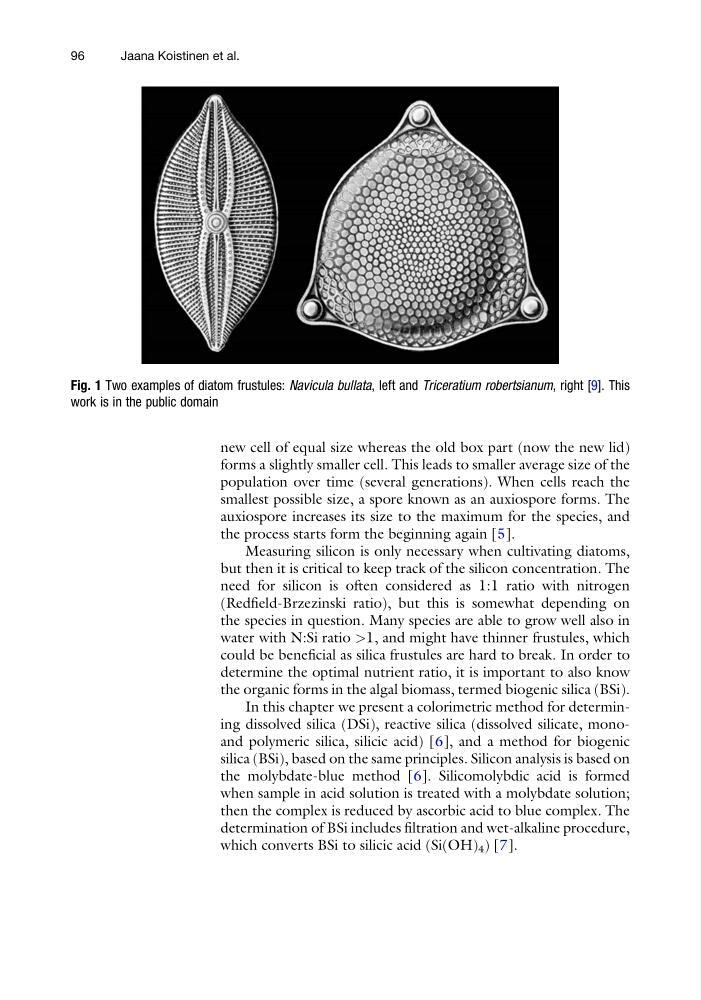
Fig. 1 Two examples of diatom frustules: Navicula bullata, left and Triceratium robertsianum, right [9]. This
work is in the public domain
96
Jaana Koistinen et al.
forms a slightly smaller cell. This leads to smaller average size of the
population over time (several generations). When cells reach the
smallest possible size, a spore known as an auxiospore forms. The
auxiospore increases its size to the maximum for the species, and
the process starts form the beginning again [5].
Measuring silicon is only necessary when cultivating diatoms,
but then it is critical to keep track of the silicon concentration. The
need for silicon is often considered as 1:1 ratio with nitrogen
(Redfield-Brzezinski ratio), but this is somewhat depending on
the species in question. Many species are able to grow well also in
water with N:Si ratio >1, and might have thinner frustules, which
could be beneficial as silica frustules are hard to break. In order to
determine the optimal nutrient ratio, it is important to also know
the organic forms in the algal biomass, termed biogenic silica (BSi).
In this chapter we present a colorimetric method for determining dissolved silica (DSi), reactive silica (dissolved silicate, monoand polymeric silica, silicic acid) [6], and a method for biogenic
silica (BSi), based on the same principles. Silicon analysis is based on
the molybdate-blue method [6]. Silicomolybdic acid is formed
when sample in acid solution is treated with a molybdate solution;
then the complex is reduced by ascorbic acid to blue complex. The
determination of BSi includes filtration and wet-alkaline procedure,
which converts BSi to silicic acid (Si(OH) 4 ) [7].
Fig. 1 Two examples of diatom frustules: Navicula bullata, left and Triceratium robertsianum, right [9]. This
work is in the public domain
96
Jaana Koistinen et al.