

110
Supplementary Information 1
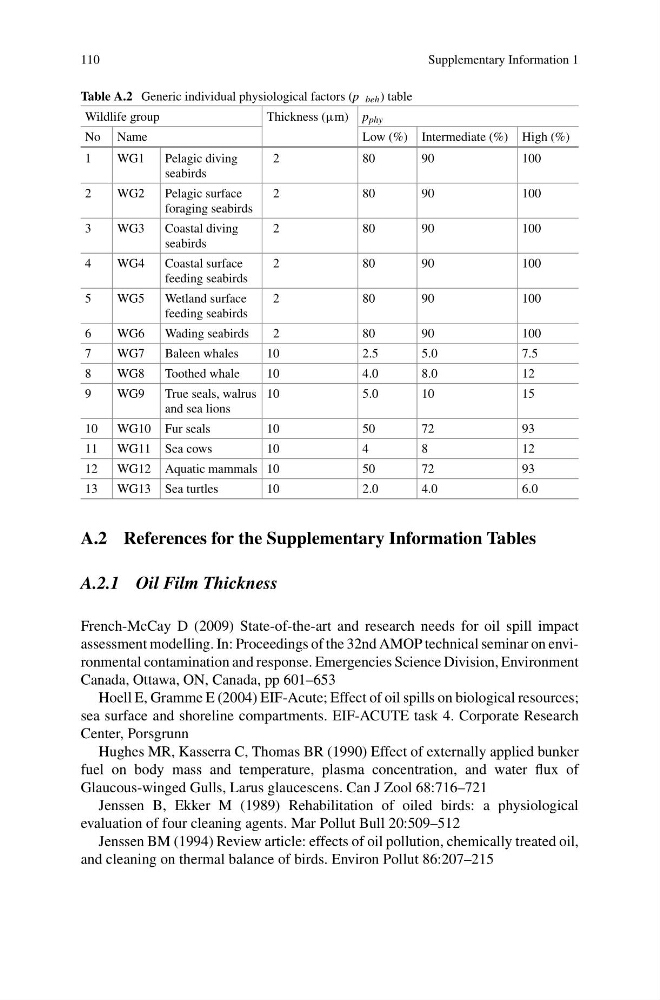
Table A.2 Generic individual physiological factors (p beh ) table
Wildlife group
Thickness (µm) p phy
No Name
Low (%) Intermediate (%) High (%)
1
WG1
Pelagic diving
seabirds
2
80
90
100
2
WG2
Pelagic surface
foraging seabirds
2
80
90
100
3
WG3
Coastal diving
seabirds
2
80
90
100
4
WG4
Coastal surface
feeding seabirds
2
80
90
100
5
WG5
Wetland surface
feeding seabirds
2
80
90
100
6
WG6
Wading seabirds
2
80
90
100
7
WG7
Baleen whales
10
2.5
5.0
7.5
8
WG8
Toothed whale
10
4.0
8.0
12
9
WG9
True seals, walrus
and sea lions
10
5.0
10
15
10
WG10 Fur seals
10
50
72
93
11
WG11 Sea cows
10
4
8
12
12
WG12 Aquatic mammals 10
50
72
93
13
WG13 Sea turtles
10
2.0
4.0
6.0
A.2 References for the Supplementary Information Tables
A.2.1 Oil Film Thickness
French-McCay D (2009) State-of-the-art and research needs for oil spill impact
assessment modelling. In: Proceedings of the 32nd AMOP technical seminar on environmental contamination and response. Emergencies Science Division, Environment
Canada, Ottawa, ON, Canada, pp 601–653
Hoell E, Gramme E (2004) EIF-Acute; Effect of oil spills on biological resources;
sea surface and shoreline compartments. EIF-ACUTE task 4. Corporate Research
Center, Porsgrunn
Hughes MR, Kasserra C, Thomas BR (1990) Effect of externally applied bunker
fuel on body mass and temperature, plasma concentration, and water flux of
Glaucous-winged Gulls, Larus glaucescens. Can J Zool 68:716–721
Jenssen B, Ekker M (1989) Rehabilitation of oiled birds: a physiological
evaluation of four cleaning agents. Mar Pollut Bull 20:509–512
Jenssen BM (1994) Review article: effects of oil pollution, chemically treated oil,
and cleaning on thermal balance of birds. Environ Pollut 86:207–215
Supplementary Information 1
Table A.2 Generic individual physiological factors (p beh ) table
Wildlife group
Thickness (µm) p phy
No Name
Low (%) Intermediate (%) High (%)
1
WG1
Pelagic diving
seabirds
2
80
90
100
2
WG2
Pelagic surface
foraging seabirds
2
80
90
100
3
WG3
Coastal diving
seabirds
2
80
90
100
4
WG4
Coastal surface
feeding seabirds
2
80
90
100
5
WG5
Wetland surface
feeding seabirds
2
80
90
100
6
WG6
Wading seabirds
2
80
90
100
7
WG7
Baleen whales
10
2.5
5.0
7.5
8
WG8
Toothed whale
10
4.0
8.0
12
9
WG9
True seals, walrus
and sea lions
10
5.0
10
15
10
WG10 Fur seals
10
50
72
93
11
WG11 Sea cows
10
4
8
12
12
WG12 Aquatic mammals 10
50
72
93
13
WG13 Sea turtles
10
2.0
4.0
6.0
A.2 References for the Supplementary Information Tables
A.2.1 Oil Film Thickness
French-McCay D (2009) State-of-the-art and research needs for oil spill impact
assessment modelling. In: Proceedings of the 32nd AMOP technical seminar on environmental contamination and response. Emergencies Science Division, Environment
Canada, Ottawa, ON, Canada, pp 601–653
Hoell E, Gramme E (2004) EIF-Acute; Effect of oil spills on biological resources;
sea surface and shoreline compartments. EIF-ACUTE task 4. Corporate Research
Center, Porsgrunn
Hughes MR, Kasserra C, Thomas BR (1990) Effect of externally applied bunker
fuel on body mass and temperature, plasma concentration, and water flux of
Glaucous-winged Gulls, Larus glaucescens. Can J Zool 68:716–721
Jenssen B, Ekker M (1989) Rehabilitation of oiled birds: a physiological
evaluation of four cleaning agents. Mar Pollut Bull 20:509–512
Jenssen BM (1994) Review article: effects of oil pollution, chemically treated oil,
and cleaning on thermal balance of birds. Environ Pollut 86:207–215