

30
2 Actual Potentials of Theoretical Chemistry: What Can Be Obtained
(a)
Energy
N(E)
(b)
Energy
N(E)
ε 1 ε 2
ε 3
ε 1 ε 2
ε 3
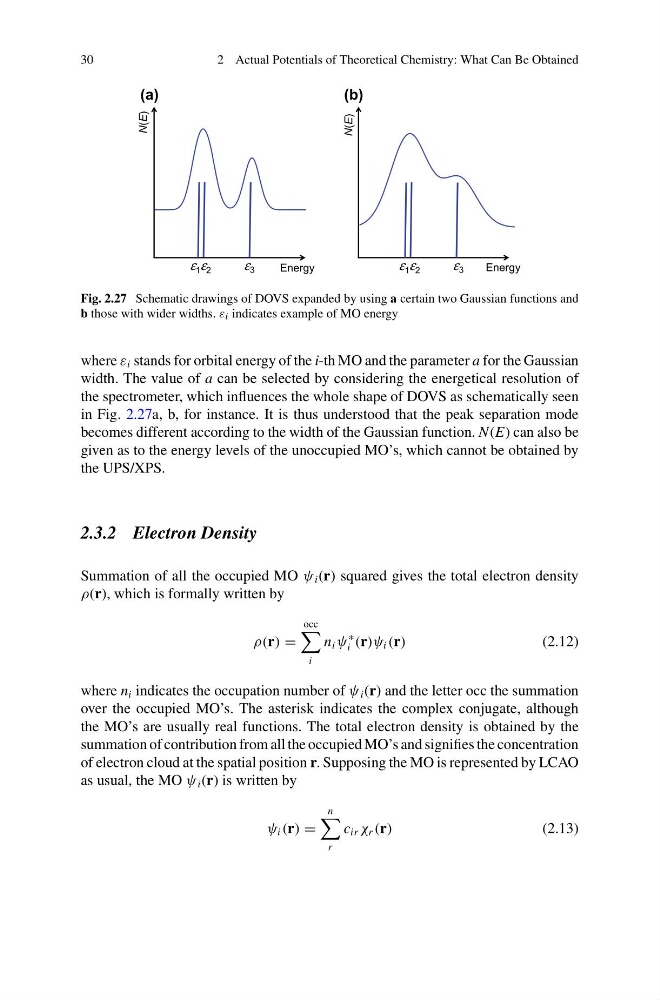
Fig. 2.27 Schematic drawings of DOVS expanded by using a certain two Gaussian functions and
b those with wider widths. ε i indicates example of MO energy
where ε i stands for orbital energy of the i-th MO and the parameter a for the Gaussian
width. The value of a can be selected by considering the energetical resolution of
the spectrometer, which influences the whole shape of DOVS as schematically seen
in Fig. 2.27a, b, for instance. It is thus understood that the peak separation mode
becomes different according to the width of the Gaussian function. N(E) can also be
given as to the energy levels of the unoccupied MO’s, which cannot be obtained by
the UPS/XPS.
2.3.2 Electron Density
Summation of all the occupied MO ψ i (r) squared gives the total electron density
ρ(r), which is formally written by
ρ(r) =
occ
i
n i ψ
∗
i (r)ψ i (r)
(2.12)
where n i indicates the occupation number of ψ i (r) and the letter occ the summation
over the occupied MO’s. The asterisk indicates the complex conjugate, although
the MO’s are usually real functions. The total electron density is obtained by the
summation of contribution from all the occupied MO’s and signifies the concentration
of electron cloud at the spatial position r. Supposing the MO is represented by LCAO
as usual, the MO ψ i (r) is written by
ψ i (r) =
n
r
c ir χ r (r)
(2.13)
2 Actual Potentials of Theoretical Chemistry: What Can Be Obtained
(a)
Energy
N(E)
(b)
Energy
N(E)
ε 1 ε 2
ε 3
ε 1 ε 2
ε 3
Fig. 2.27 Schematic drawings of DOVS expanded by using a certain two Gaussian functions and
b those with wider widths. ε i indicates example of MO energy
where ε i stands for orbital energy of the i-th MO and the parameter a for the Gaussian
width. The value of a can be selected by considering the energetical resolution of
the spectrometer, which influences the whole shape of DOVS as schematically seen
in Fig. 2.27a, b, for instance. It is thus understood that the peak separation mode
becomes different according to the width of the Gaussian function. N(E) can also be
given as to the energy levels of the unoccupied MO’s, which cannot be obtained by
the UPS/XPS.
2.3.2 Electron Density
Summation of all the occupied MO ψ i (r) squared gives the total electron density
ρ(r), which is formally written by
ρ(r) =
occ
i
n i ψ
∗
i (r)ψ i (r)
(2.12)
where n i indicates the occupation number of ψ i (r) and the letter occ the summation
over the occupied MO’s. The asterisk indicates the complex conjugate, although
the MO’s are usually real functions. The total electron density is obtained by the
summation of contribution from all the occupied MO’s and signifies the concentration
of electron cloud at the spatial position r. Supposing the MO is represented by LCAO
as usual, the MO ψ i (r) is written by
ψ i (r) =
n
r
c ir χ r (r)
(2.13)