

2.2 Chemical Bonds
19
C
H
H
O
-7.647 eV
-10.857 eV
-15.386 eV
-15.386 eV
-29.564 eV
-19.476 eV
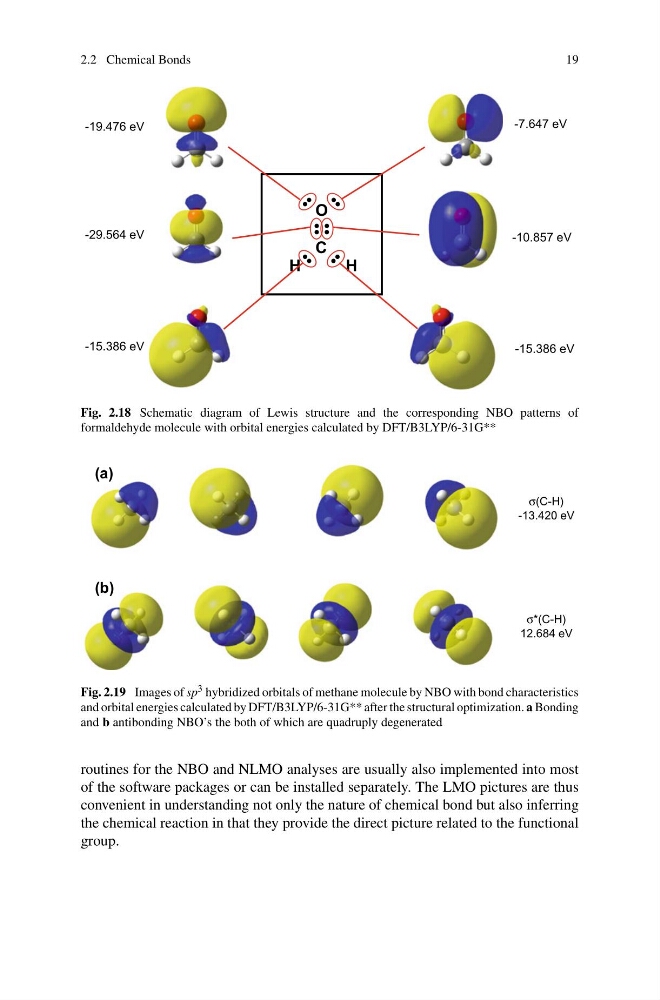
Fig. 2.18 Schematic diagram of Lewis structure and the corresponding NBO patterns of
formaldehyde molecule with orbital energies calculated by DFT/B3LYP/6-31G**
σ*(C-H)
12.684 eV
σ(C-H)
-13.420 eV
(a)
(b)
Fig. 2.19 Images of sp 3 hybridized orbitals of methane molecule by NBO with bond characteristics
and orbital energies calculated by DFT/B3LYP/6-31G** after the structural optimization. a Bonding
and b antibonding NBO’s the both of which are quadruply degenerated
routines for the NBO and NLMO analyses are usually also implemented into most
of the software packages or can be installed separately. The LMO pictures are thus
convenient in understanding not only the nature of chemical bond but also inferring
the chemical reaction in that they provide the direct picture related to the functional
group.
19
C
H
H
O
-7.647 eV
-10.857 eV
-15.386 eV
-15.386 eV
-29.564 eV
-19.476 eV
Fig. 2.18 Schematic diagram of Lewis structure and the corresponding NBO patterns of
formaldehyde molecule with orbital energies calculated by DFT/B3LYP/6-31G**
σ*(C-H)
12.684 eV
σ(C-H)
-13.420 eV
(a)
(b)
Fig. 2.19 Images of sp 3 hybridized orbitals of methane molecule by NBO with bond characteristics
and orbital energies calculated by DFT/B3LYP/6-31G** after the structural optimization. a Bonding
and b antibonding NBO’s the both of which are quadruply degenerated
routines for the NBO and NLMO analyses are usually also implemented into most
of the software packages or can be installed separately. The LMO pictures are thus
convenient in understanding not only the nature of chemical bond but also inferring
the chemical reaction in that they provide the direct picture related to the functional
group.