

3.1 Molecular Orbital Calculations
109
(a)
(b)
(c)
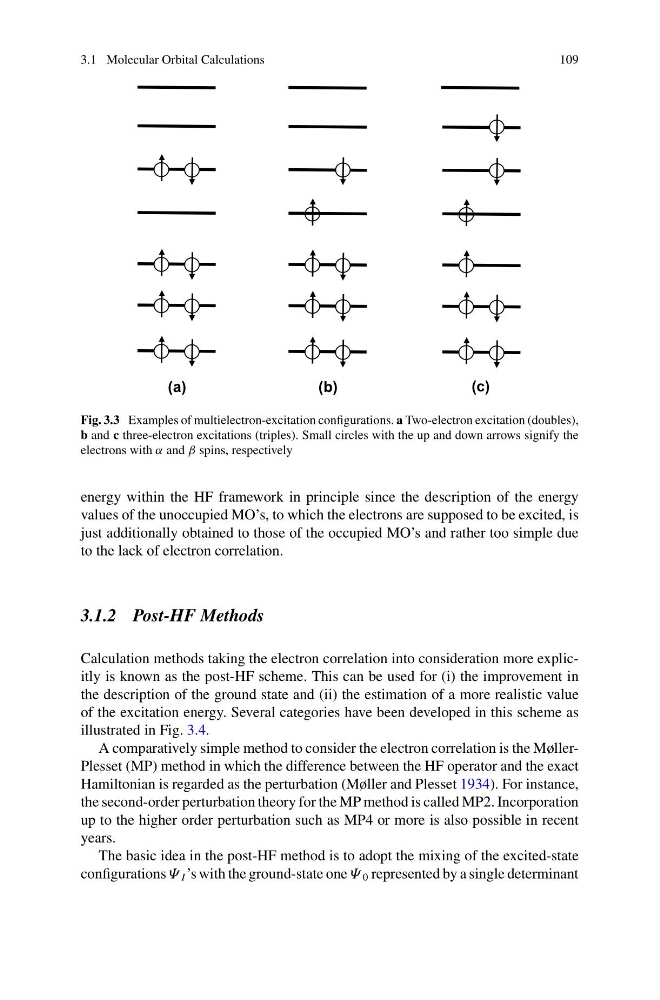
Fig. 3.3 Examples of multielectron-excitation configurations. a Two-electron excitation (doubles),
b and c three-electron excitations (triples). Small circles with the up and down arrows signify the
electrons with α and β spins, respectively
energy within the HF framework in principle since the description of the energy
values of the unoccupied MO’s, to which the electrons are supposed to be excited, is
just additionally obtained to those of the occupied MO’s and rather too simple due
to the lack of electron correlation.
3.1.2 Post-HF Methods
Calculation methods taking the electron correlation into consideration more explicitly is known as the post-HF scheme. This can be used for (i) the improvement in
the description of the ground state and (ii) the estimation of a more realistic value
of the excitation energy. Several categories have been developed in this scheme as
illustrated in Fig. 3.4.
A comparatively simple method to consider the electron correlation is the MøllerPlesset (MP) method in which the difference between the HF operator and the exact
Hamiltonian is regarded as the perturbation (Møller and Plesset 1934). For instance,
the second-order perturbation theory for the MP method is called MP2. Incorporation
up to the higher order perturbation such as MP4 or more is also possible in recent
years.
The basic idea in the post-HF method is to adopt the mixing of the excited-state
configurations Ψ I ’s with the ground-state one Ψ 0 represented by a single determinant
109
(a)
(b)
(c)
Fig. 3.3 Examples of multielectron-excitation configurations. a Two-electron excitation (doubles),
b and c three-electron excitations (triples). Small circles with the up and down arrows signify the
electrons with α and β spins, respectively
energy within the HF framework in principle since the description of the energy
values of the unoccupied MO’s, to which the electrons are supposed to be excited, is
just additionally obtained to those of the occupied MO’s and rather too simple due
to the lack of electron correlation.
3.1.2 Post-HF Methods
Calculation methods taking the electron correlation into consideration more explicitly is known as the post-HF scheme. This can be used for (i) the improvement in
the description of the ground state and (ii) the estimation of a more realistic value
of the excitation energy. Several categories have been developed in this scheme as
illustrated in Fig. 3.4.
A comparatively simple method to consider the electron correlation is the MøllerPlesset (MP) method in which the difference between the HF operator and the exact
Hamiltonian is regarded as the perturbation (Møller and Plesset 1934). For instance,
the second-order perturbation theory for the MP method is called MP2. Incorporation
up to the higher order perturbation such as MP4 or more is also possible in recent
years.
The basic idea in the post-HF method is to adopt the mixing of the excited-state
configurations Ψ I ’s with the ground-state one Ψ 0 represented by a single determinant