

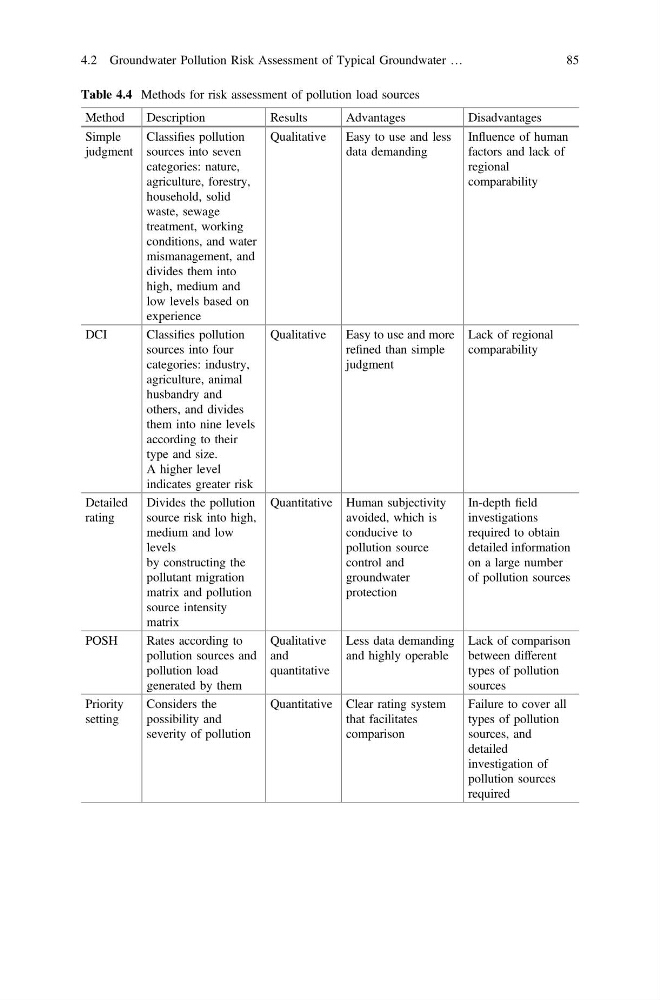
Table 4.4 Methods for risk assessment of pollution load sources
Method
Description
Results
Advantages
Disadvantages
Simple
judgment
Classifies pollution
sources into seven
categories: nature,
agriculture, forestry,
household, solid
waste, sewage
treatment, working
conditions, and water
mismanagement, and
divides them into
high, medium and
low levels based on
experience
Qualitative
Easy to use and less
data demanding
Influence of human
factors and lack of
regional
comparability
DCI
Classifies pollution
sources into four
categories: industry,
agriculture, animal
husbandry and
others, and divides
them into nine levels
according to their
type and size.
A higher level
indicates greater risk
Qualitative
Easy to use and more
refined than simple
judgment
Lack of regional
comparability
Detailed
rating
Divides the pollution
source risk into high,
medium and low
levels
by constructing the
pollutant migration
matrix and pollution
source intensity
matrix
Quantitative Human subjectivity
avoided, which is
conducive to
pollution source
control and
groundwater
protection
In-depth field
investigations
required to obtain
detailed information
on a large number
of pollution sources
POSH
Rates according to
pollution sources and
pollution load
generated by them
Qualitative
and
quantitative
Less data demanding
and highly operable
Lack of comparison
between different
types of pollution
sources
Priority
setting
Considers the
possibility and
severity of pollution
Quantitative Clear rating system
that facilitates
comparison
Failure to cover all
types of pollution
sources, and
detailed
investigation of
pollution sources
required
4.2 Groundwater Pollution Risk Assessment of Typical Groundwater …
85
Method
Description
Results
Advantages
Disadvantages
Simple
judgment
Classifies pollution
sources into seven
categories: nature,
agriculture, forestry,
household, solid
waste, sewage
treatment, working
conditions, and water
mismanagement, and
divides them into
high, medium and
low levels based on
experience
Qualitative
Easy to use and less
data demanding
Influence of human
factors and lack of
regional
comparability
DCI
Classifies pollution
sources into four
categories: industry,
agriculture, animal
husbandry and
others, and divides
them into nine levels
according to their
type and size.
A higher level
indicates greater risk
Qualitative
Easy to use and more
refined than simple
judgment
Lack of regional
comparability
Detailed
rating
Divides the pollution
source risk into high,
medium and low
levels
by constructing the
pollutant migration
matrix and pollution
source intensity
matrix
Quantitative Human subjectivity
avoided, which is
conducive to
pollution source
control and
groundwater
protection
In-depth field
investigations
required to obtain
detailed information
on a large number
of pollution sources
POSH
Rates according to
pollution sources and
pollution load
generated by them
Qualitative
and
quantitative
Less data demanding
and highly operable
Lack of comparison
between different
types of pollution
sources
Priority
setting
Considers the
possibility and
severity of pollution
Quantitative Clear rating system
that facilitates
comparison
Failure to cover all
types of pollution
sources, and
detailed
investigation of
pollution sources
required
4.2 Groundwater Pollution Risk Assessment of Typical Groundwater …
85