

including: (1) one upstream background monitoring well; (2) one pollution control
monitoring well in lead-acid battery recovery workshop, one pollution control
monitoring well in physico-chemical treatment workshop, one pollution control
monitoring well in three hazardous waste storage warehouses, one pollution control
monitoring well in landfill pretreatment workshop, one pollution control monitoring
well in maintenance workshop, one pollution control monitoring well in incineration workshop, one pollution control monitoring well in mineral oil recovery
workshop, one pollution control monitoring well in oil storage and transportation
warehouse, two pollution control monitoring wells in the rigid landfill pit, one
pollution control monitoring well in sewage treatment station and one pollution
control monitoring well in fluorescent lamp dismantling workshop; (3) one
downstream pollution diffusion monitoring well. Among them, one pollution
control monitoring well located on the north side of the rigid landfill site follows the
principle of “when one boundary of the disposal site is perpendicular to the
groundwater flow direction or the minimum included angle between them is less
than 10°” and “located 30–50 m downstream of the groundwater flow direction of
the vertical disposal site”. The layout of the background monitoring wells shall be
based on the principle of “when one boundary of the disposal site is perpendicular
to the groundwater flow direction or the minimum included angle between them is
less than 10°” and “located 30–50 m upstream of the groundwater flow direction of
the disposal site”. The layout of pollution diffusion wells shall follow the principle
Typical site
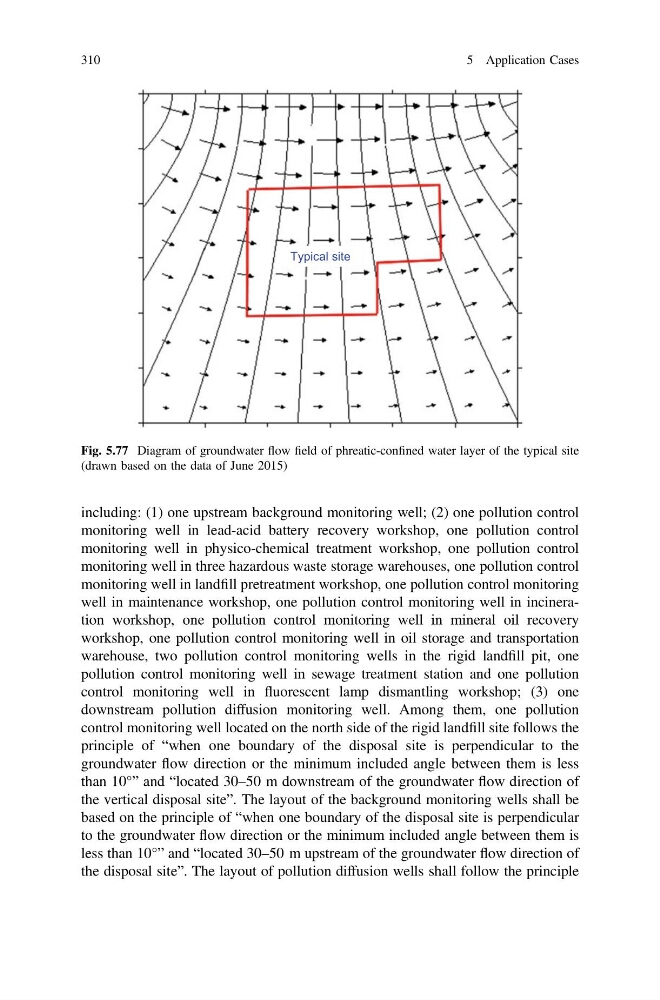
Fig. 5.77 Diagram of groundwater flow field of phreatic-confined water layer of the typical site
(drawn based on the data of June 2015)
310
5 Application Cases
monitoring well in lead-acid battery recovery workshop, one pollution control
monitoring well in physico-chemical treatment workshop, one pollution control
monitoring well in three hazardous waste storage warehouses, one pollution control
monitoring well in landfill pretreatment workshop, one pollution control monitoring
well in maintenance workshop, one pollution control monitoring well in incineration workshop, one pollution control monitoring well in mineral oil recovery
workshop, one pollution control monitoring well in oil storage and transportation
warehouse, two pollution control monitoring wells in the rigid landfill pit, one
pollution control monitoring well in sewage treatment station and one pollution
control monitoring well in fluorescent lamp dismantling workshop; (3) one
downstream pollution diffusion monitoring well. Among them, one pollution
control monitoring well located on the north side of the rigid landfill site follows the
principle of “when one boundary of the disposal site is perpendicular to the
groundwater flow direction or the minimum included angle between them is less
than 10°” and “located 30–50 m downstream of the groundwater flow direction of
the vertical disposal site”. The layout of the background monitoring wells shall be
based on the principle of “when one boundary of the disposal site is perpendicular
to the groundwater flow direction or the minimum included angle between them is
less than 10°” and “located 30–50 m upstream of the groundwater flow direction of
the disposal site”. The layout of pollution diffusion wells shall follow the principle
Typical site
Fig. 5.77 Diagram of groundwater flow field of phreatic-confined water layer of the typical site
(drawn based on the data of June 2015)
310
5 Application Cases