

land use is categorized into non-sensitive land and the off-site land use into sensitive land. Groundwater in this site serves as a drinking water source.
• Source-pathway-receptor analysis
– Pollution sources
Since this study aims to assess the human health risks of groundwater in contaminated sites, the pollution sources are deemed to be contaminated groundwater in
the given landfill in Sichuan Province.
– Pollutant migration pathways
As this simple shoal-type landfill has not installed leachate treatment facilities,
leachate and other substances produced by waste disposal are directly discharged,
and contaminate the groundwater by infiltration through soil. Further, such
groundwater pollutants migrate, transform, and spread through groundwater flows.
– Receptors
In the use of the site, groundwater pollutants will pose hazards to the exposed
workers of the site and to residents in the surrounding areas. According to the
landfill use and the surrounding population, workers inside the site and residents in
the vicinity of the site are identified as sensitive receptors.
• Exposure pathway analysis
Since the site contamination plume involves groundwater-based drinking water
sources, the exposure pathways for in situ receptors include indoor and outdoor
inhalation of vapor from groundwater and groundwater intake. For off-site
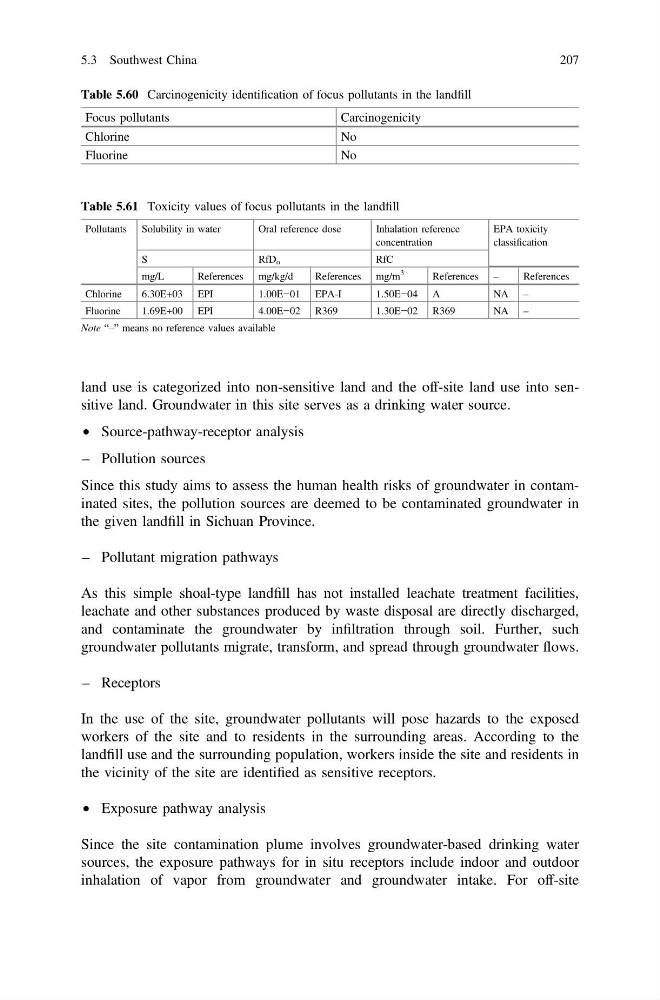
Table 5.60 Carcinogenicity identification of focus pollutants in the landfill
Focus pollutants
Carcinogenicity
Chlorine
No
Fluorine
No
Table 5.61 Toxicity values of focus pollutants in the landfill
Pollutants Solubility in water
Oral reference dose
Inhalation reference
concentration
EPA toxicity
classification
S
RfD o
RfC
mg/L
References mg/kg/d
References mg/m
3
References –
References
Chlorine
6.30E+03 EPI
1.00E−01 EPA-I
1.50E−04 A
NA –
Fluorine
1.69E+00 EPI
4.00E−02 R369
1.30E−02 R369
NA –
Note “–” means no reference values available
5.3 Southwest China
207
• Source-pathway-receptor analysis
– Pollution sources
Since this study aims to assess the human health risks of groundwater in contaminated sites, the pollution sources are deemed to be contaminated groundwater in
the given landfill in Sichuan Province.
– Pollutant migration pathways
As this simple shoal-type landfill has not installed leachate treatment facilities,
leachate and other substances produced by waste disposal are directly discharged,
and contaminate the groundwater by infiltration through soil. Further, such
groundwater pollutants migrate, transform, and spread through groundwater flows.
– Receptors
In the use of the site, groundwater pollutants will pose hazards to the exposed
workers of the site and to residents in the surrounding areas. According to the
landfill use and the surrounding population, workers inside the site and residents in
the vicinity of the site are identified as sensitive receptors.
• Exposure pathway analysis
Since the site contamination plume involves groundwater-based drinking water
sources, the exposure pathways for in situ receptors include indoor and outdoor
inhalation of vapor from groundwater and groundwater intake. For off-site
Table 5.60 Carcinogenicity identification of focus pollutants in the landfill
Focus pollutants
Carcinogenicity
Chlorine
No
Fluorine
No
Table 5.61 Toxicity values of focus pollutants in the landfill
Pollutants Solubility in water
Oral reference dose
Inhalation reference
concentration
EPA toxicity
classification
S
RfD o
RfC
mg/L
References mg/kg/d
References mg/m
3
References –
References
Chlorine
6.30E+03 EPI
1.00E−01 EPA-I
1.50E−04 A
NA –
Fluorine
1.69E+00 EPI
4.00E−02 R369
1.30E−02 R369
NA –
Note “–” means no reference values available
5.3 Southwest China
207