

Priority should be given to the removal of pollution sources. The way, scope,
and destination that pollution sources are removed should be clearly defined. Where
the pollution sources are non-removable, it is necessary to reduce the emission
source intensity to a larger extent, and impose stricter requirements for seepage
control measures and on the time of existence of pollution sources.
(5) Health risk assessment of groundwater environment
(a) Hazard identification
According to the hydrogeological conditions of the landfill and the basic conditions
around the site, the groundwater near the landfill is discharged in the
northwest-southeast direction to the Jinma River. A total of 83 households in
Fengshui Village are distributed 194–691 m from the landfill, and all use wells
(manually operated steel pipe wells) to draw groundwater for production and
domestic use. Using the pollutant identification method provided by the Guidelines
for Health Risk Assessment for Contaminated Groundwater (Trial), combined with
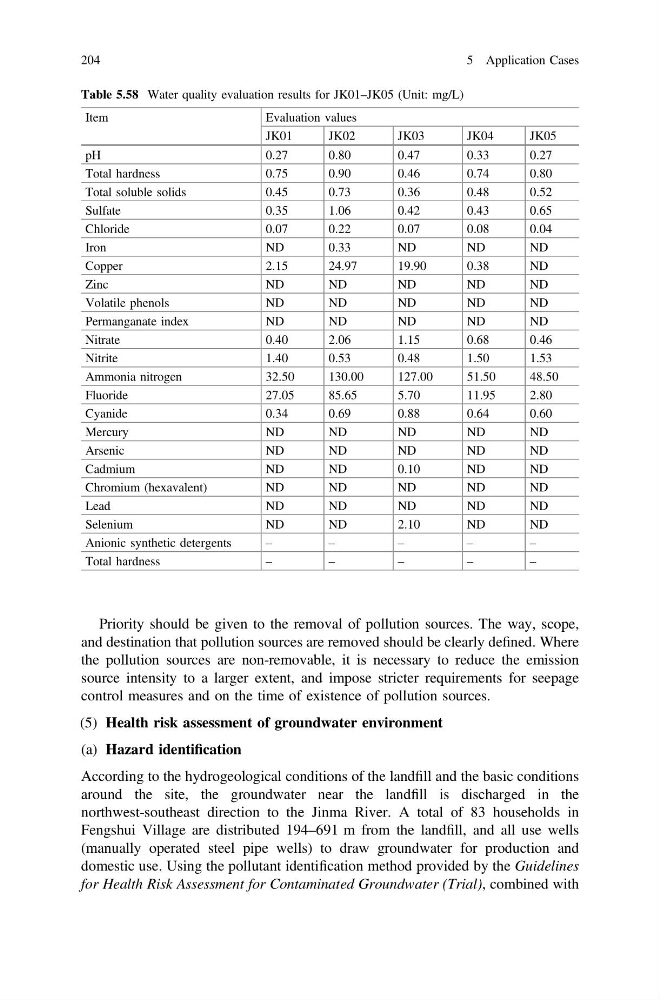
Table 5.58 Water quality evaluation results for JK01–JK05 (Unit: mg/L)
Item
Evaluation values
JK01
JK02
JK03
JK04
JK05
pH
0.27
0.80
0.47
0.33
0.27
Total hardness
0.75
0.90
0.46
0.74
0.80
Total soluble solids
0.45
0.73
0.36
0.48
0.52
Sulfate
0.35
1.06
0.42
0.43
0.65
Chloride
0.07
0.22
0.07
0.08
0.04
Iron
ND
0.33
ND
ND
ND
Copper
2.15
24.97
19.90
0.38
ND
Zinc
ND
ND
ND
ND
ND
Volatile phenols
ND
ND
ND
ND
ND
Permanganate index
ND
ND
ND
ND
ND
Nitrate
0.40
2.06
1.15
0.68
0.46
Nitrite
1.40
0.53
0.48
1.50
1.53
Ammonia nitrogen
32.50
130.00
127.00
51.50
48.50
Fluoride
27.05
85.65
5.70
11.95
2.80
Cyanide
0.34
0.69
0.88
0.64
0.60
Mercury
ND
ND
ND
ND
ND
Arsenic
ND
ND
ND
ND
ND
Cadmium
ND
ND
0.10
ND
ND
Chromium (hexavalent)
ND
ND
ND
ND
ND
Lead
ND
ND
ND
ND
ND
Selenium
ND
ND
2.10
ND
ND
Anionic synthetic detergents
–
–
–
–
–
Total hardness
–
–
–
–
–
204
5 Application Cases
and destination that pollution sources are removed should be clearly defined. Where
the pollution sources are non-removable, it is necessary to reduce the emission
source intensity to a larger extent, and impose stricter requirements for seepage
control measures and on the time of existence of pollution sources.
(5) Health risk assessment of groundwater environment
(a) Hazard identification
According to the hydrogeological conditions of the landfill and the basic conditions
around the site, the groundwater near the landfill is discharged in the
northwest-southeast direction to the Jinma River. A total of 83 households in
Fengshui Village are distributed 194–691 m from the landfill, and all use wells
(manually operated steel pipe wells) to draw groundwater for production and
domestic use. Using the pollutant identification method provided by the Guidelines
for Health Risk Assessment for Contaminated Groundwater (Trial), combined with
Table 5.58 Water quality evaluation results for JK01–JK05 (Unit: mg/L)
Item
Evaluation values
JK01
JK02
JK03
JK04
JK05
pH
0.27
0.80
0.47
0.33
0.27
Total hardness
0.75
0.90
0.46
0.74
0.80
Total soluble solids
0.45
0.73
0.36
0.48
0.52
Sulfate
0.35
1.06
0.42
0.43
0.65
Chloride
0.07
0.22
0.07
0.08
0.04
Iron
ND
0.33
ND
ND
ND
Copper
2.15
24.97
19.90
0.38
ND
Zinc
ND
ND
ND
ND
ND
Volatile phenols
ND
ND
ND
ND
ND
Permanganate index
ND
ND
ND
ND
ND
Nitrate
0.40
2.06
1.15
0.68
0.46
Nitrite
1.40
0.53
0.48
1.50
1.53
Ammonia nitrogen
32.50
130.00
127.00
51.50
48.50
Fluoride
27.05
85.65
5.70
11.95
2.80
Cyanide
0.34
0.69
0.88
0.64
0.60
Mercury
ND
ND
ND
ND
ND
Arsenic
ND
ND
ND
ND
ND
Cadmium
ND
ND
0.10
ND
ND
Chromium (hexavalent)
ND
ND
ND
ND
ND
Lead
ND
ND
ND
ND
ND
Selenium
ND
ND
2.10
ND
ND
Anionic synthetic detergents
–
–
–
–
–
Total hardness
–
–
–
–
–
204
5 Application Cases