

36 Additive Manufacturing for Circular Manufacturing: Trends …
529
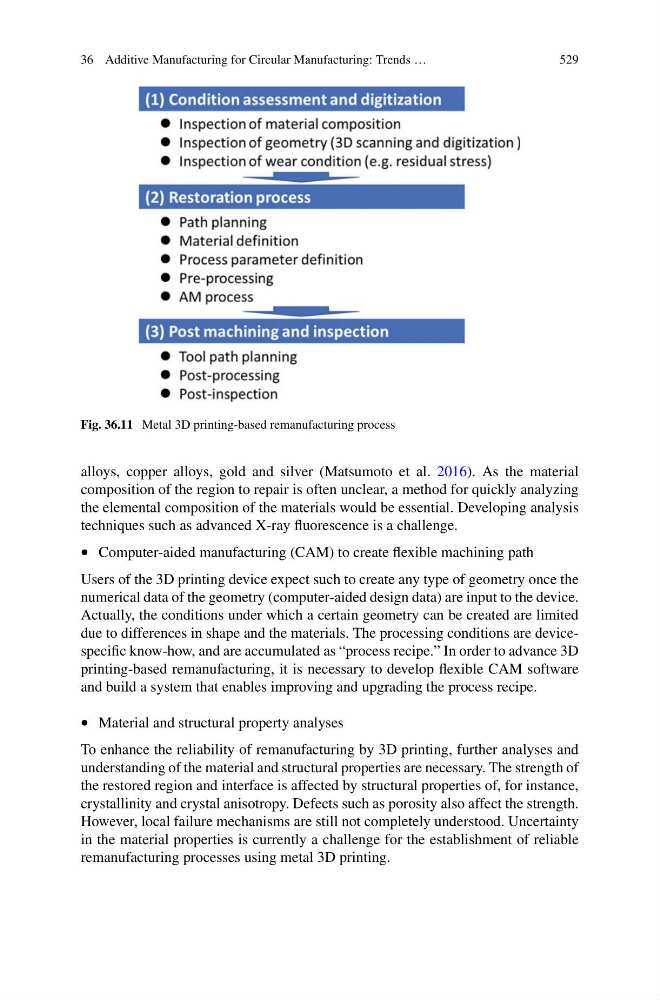
Fig. 36.11 Metal 3D printing-based remanufacturing process
alloys, copper alloys, gold and silver (Matsumoto et al. 2016). As the material
composition of the region to repair is often unclear, a method for quickly analyzing
the elemental composition of the materials would be essential. Developing analysis
techniques such as advanced X-ray fluorescence is a challenge.
• Computer-aided manufacturing (CAM) to create flexible machining path
Users of the 3D printing device expect such to create any type of geometry once the
numerical data of the geometry (computer-aided design data) are input to the device.
Actually, the conditions under which a certain geometry can be created are limited
due to differences in shape and the materials. The processing conditions are devicespecific know-how, and are accumulated as “process recipe.” In order to advance 3D
printing-based remanufacturing, it is necessary to develop flexible CAM software
and build a system that enables improving and upgrading the process recipe.
• Material and structural property analyses
To enhance the reliability of remanufacturing by 3D printing, further analyses and
understanding of the material and structural properties are necessary. The strength of
the restored region and interface is affected by structural properties of, for instance,
crystallinity and crystal anisotropy. Defects such as porosity also affect the strength.
However, local failure mechanisms are still not completely understood. Uncertainty
in the material properties is currently a challenge for the establishment of reliable
remanufacturing processes using metal 3D printing.
529
Fig. 36.11 Metal 3D printing-based remanufacturing process
alloys, copper alloys, gold and silver (Matsumoto et al. 2016). As the material
composition of the region to repair is often unclear, a method for quickly analyzing
the elemental composition of the materials would be essential. Developing analysis
techniques such as advanced X-ray fluorescence is a challenge.
• Computer-aided manufacturing (CAM) to create flexible machining path
Users of the 3D printing device expect such to create any type of geometry once the
numerical data of the geometry (computer-aided design data) are input to the device.
Actually, the conditions under which a certain geometry can be created are limited
due to differences in shape and the materials. The processing conditions are devicespecific know-how, and are accumulated as “process recipe.” In order to advance 3D
printing-based remanufacturing, it is necessary to develop flexible CAM software
and build a system that enables improving and upgrading the process recipe.
• Material and structural property analyses
To enhance the reliability of remanufacturing by 3D printing, further analyses and
understanding of the material and structural properties are necessary. The strength of
the restored region and interface is affected by structural properties of, for instance,
crystallinity and crystal anisotropy. Defects such as porosity also affect the strength.
However, local failure mechanisms are still not completely understood. Uncertainty
in the material properties is currently a challenge for the establishment of reliable
remanufacturing processes using metal 3D printing.