

344
T. Sugahara et al.
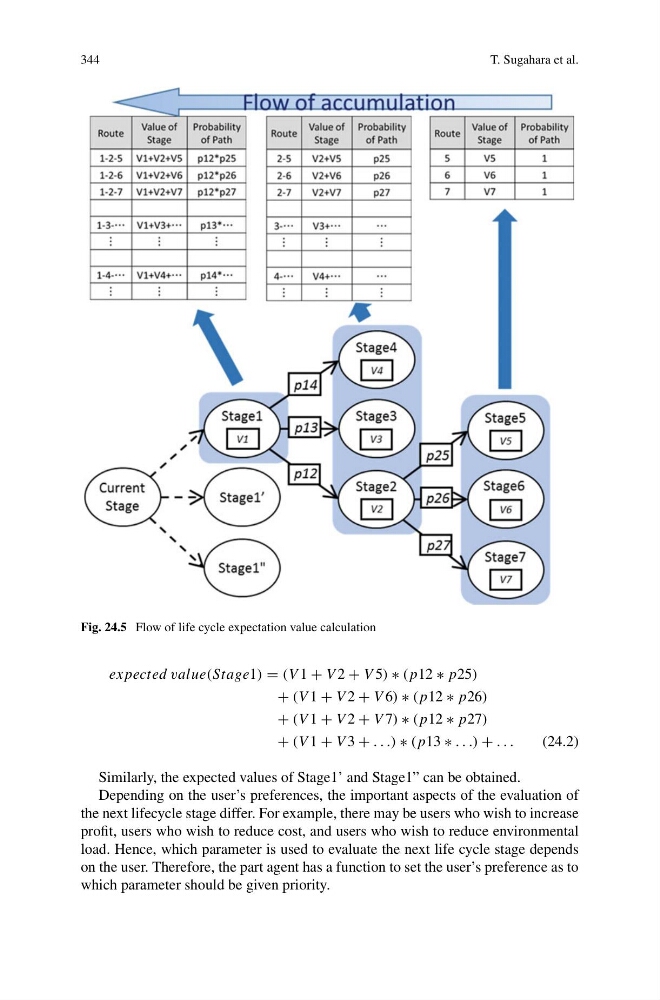
Fig. 24.5 Flow of life cycle expectation value calculation
ex pected value(Stage1) = (V 1 + V 2 + V 5) ∗ ( p12 ∗ p25)
+ (V 1 + V 2 + V 6) ∗ ( p12 ∗ p26)
+ (V 1 + V 2 + V 7) ∗ ( p12 ∗ p27)
+ (V 1 + V 3 + . . .) ∗ ( p13 ∗ . . .) + . . .
(24.2)
Similarly, the expected values of Stage1’ and Stage1” can be obtained.
Depending on the user’s preferences, the important aspects of the evaluation of
the next lifecycle stage differ. For example, there may be users who wish to increase
profit, users who wish to reduce cost, and users who wish to reduce environmental
load. Hence, which parameter is used to evaluate the next life cycle stage depends
on the user. Therefore, the part agent has a function to set the user’s preference as to
which parameter should be given priority.
T. Sugahara et al.
Fig. 24.5 Flow of life cycle expectation value calculation
ex pected value(Stage1) = (V 1 + V 2 + V 5) ∗ ( p12 ∗ p25)
+ (V 1 + V 2 + V 6) ∗ ( p12 ∗ p26)
+ (V 1 + V 2 + V 7) ∗ ( p12 ∗ p27)
+ (V 1 + V 3 + . . .) ∗ ( p13 ∗ . . .) + . . .
(24.2)
Similarly, the expected values of Stage1’ and Stage1” can be obtained.
Depending on the user’s preferences, the important aspects of the evaluation of
the next lifecycle stage differ. For example, there may be users who wish to increase
profit, users who wish to reduce cost, and users who wish to reduce environmental
load. Hence, which parameter is used to evaluate the next life cycle stage depends
on the user. Therefore, the part agent has a function to set the user’s preference as to
which parameter should be given priority.