

114
V. K. Soo et al.
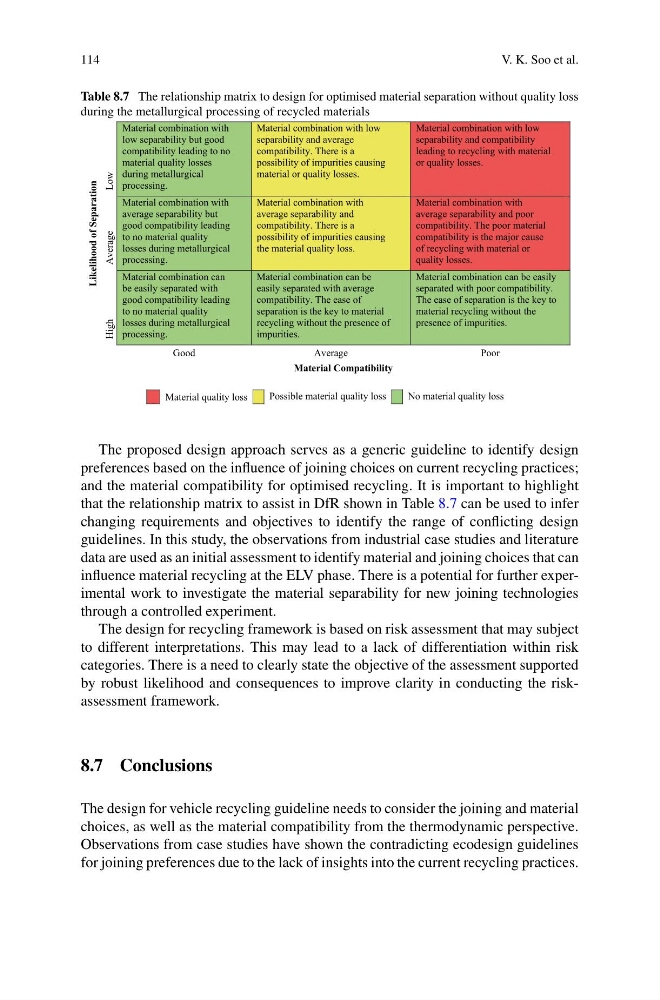
Table 8.7 The relationship matrix to design for optimised material separation without quality loss
during the metallurgical processing of recycled materials
Likelihood of Separation
Low
Material combination with
low separability but good
compatibility leading to no
material quality losses
during metallurgical
processing.
Material combination with low
separability and average
compatibility. There is a
possibility of impurities causing
material or quality losses.
Material combination with low
separability and compatibility
leading to recycling with material
or quality losses.
Average
Material combination with
average separability but
good compatibility leading
to no material quality
losses during metallurgical
processing.
Material combination with
average separability and
compatibility. There is a
possibility of impurities causing
the material quality loss.
Material combination with
average separability and poor
compatibility. The poor material
compatibility is the major cause
of recycling with material or
quality losses.
High
Material combination can
be easily separated with
good compatibility leading
to no material quality
losses during metallurgical
processing.
Material combination can be
easily separated with average
compatibility. The ease of
separation is the key to material
recycling without the presence of
impurities.
Material combination can be easily
separated with poor compatibility.
The ease of separation is the key to
material recycling without the
presence of impurities.
r
o
o
P
e
g
a
r
e
v
A
d
o
o
G
Material Compatibility
Material quality loss
Possible material quality loss
No material quality loss
The proposed design approach serves as a generic guideline to identify design
preferences based on the influence of joining choices on current recycling practices;
and the material compatibility for optimised recycling. It is important to highlight
that the relationship matrix to assist in DfR shown in Table 8.7 can be used to infer
changing requirements and objectives to identify the range of conflicting design
guidelines. In this study, the observations from industrial case studies and literature
data are used as an initial assessment to identify material and joining choices that can
influence material recycling at the ELV phase. There is a potential for further experimental work to investigate the material separability for new joining technologies
through a controlled experiment.
The design for recycling framework is based on risk assessment that may subject
to different interpretations. This may lead to a lack of differentiation within risk
categories. There is a need to clearly state the objective of the assessment supported
by robust likelihood and consequences to improve clarity in conducting the riskassessment framework.
8.7 Conclusions
The design for vehicle recycling guideline needs to consider the joining and material
choices, as well as the material compatibility from the thermodynamic perspective.
Observations from case studies have shown the contradicting ecodesign guidelines
for joining preferences due to the lack of insights into the current recycling practices.
V. K. Soo et al.
Table 8.7 The relationship matrix to design for optimised material separation without quality loss
during the metallurgical processing of recycled materials
Likelihood of Separation
Low
Material combination with
low separability but good
compatibility leading to no
material quality losses
during metallurgical
processing.
Material combination with low
separability and average
compatibility. There is a
possibility of impurities causing
material or quality losses.
Material combination with low
separability and compatibility
leading to recycling with material
or quality losses.
Average
Material combination with
average separability but
good compatibility leading
to no material quality
losses during metallurgical
processing.
Material combination with
average separability and
compatibility. There is a
possibility of impurities causing
the material quality loss.
Material combination with
average separability and poor
compatibility. The poor material
compatibility is the major cause
of recycling with material or
quality losses.
High
Material combination can
be easily separated with
good compatibility leading
to no material quality
losses during metallurgical
processing.
Material combination can be
easily separated with average
compatibility. The ease of
separation is the key to material
recycling without the presence of
impurities.
Material combination can be easily
separated with poor compatibility.
The ease of separation is the key to
material recycling without the
presence of impurities.
r
o
o
P
e
g
a
r
e
v
A
d
o
o
G
Material Compatibility
Material quality loss
Possible material quality loss
No material quality loss
The proposed design approach serves as a generic guideline to identify design
preferences based on the influence of joining choices on current recycling practices;
and the material compatibility for optimised recycling. It is important to highlight
that the relationship matrix to assist in DfR shown in Table 8.7 can be used to infer
changing requirements and objectives to identify the range of conflicting design
guidelines. In this study, the observations from industrial case studies and literature
data are used as an initial assessment to identify material and joining choices that can
influence material recycling at the ELV phase. There is a potential for further experimental work to investigate the material separability for new joining technologies
through a controlled experiment.
The design for recycling framework is based on risk assessment that may subject
to different interpretations. This may lead to a lack of differentiation within risk
categories. There is a need to clearly state the objective of the assessment supported
by robust likelihood and consequences to improve clarity in conducting the riskassessment framework.
8.7 Conclusions
The design for vehicle recycling guideline needs to consider the joining and material
choices, as well as the material compatibility from the thermodynamic perspective.
Observations from case studies have shown the contradicting ecodesign guidelines
for joining preferences due to the lack of insights into the current recycling practices.