

104
V. K. Soo et al.
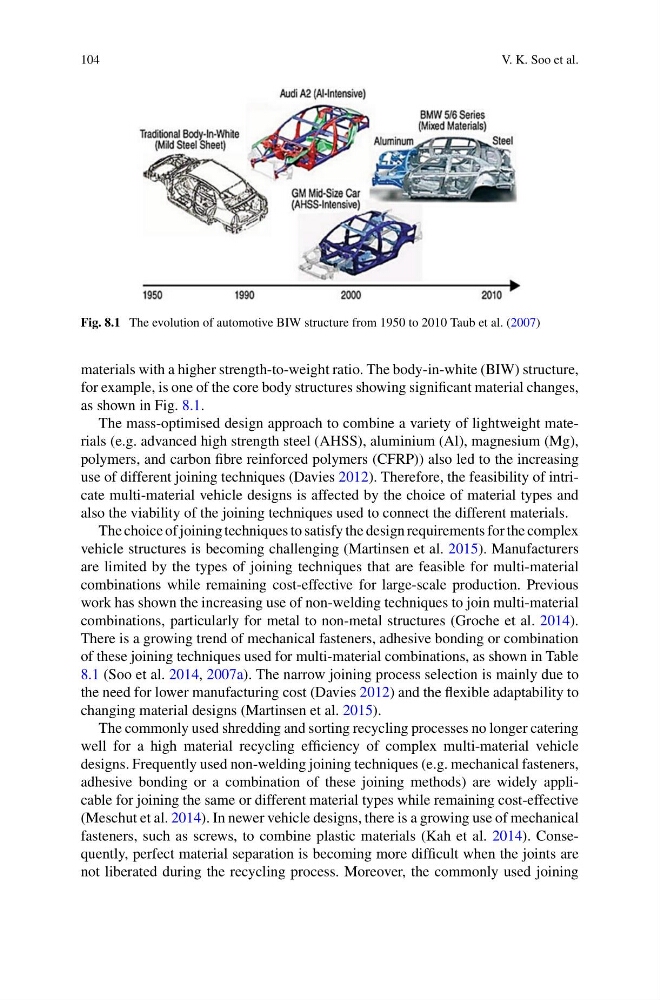
Fig. 8.1 The evolution of automotive BIW structure from 1950 to 2010 Taub et al. (2007)
materials with a higher strength-to-weight ratio. The body-in-white (BIW) structure,
for example, is one of the core body structures showing significant material changes,
as shown in Fig. 8.1.
The mass-optimised design approach to combine a variety of lightweight materials (e.g. advanced high strength steel (AHSS), aluminium (Al), magnesium (Mg),
polymers, and carbon fibre reinforced polymers (CFRP)) also led to the increasing
use of different joining techniques (Davies 2012). Therefore, the feasibility of intricate multi-material vehicle designs is affected by the choice of material types and
also the viability of the joining techniques used to connect the different materials.
The choice of joining techniques to satisfy the design requirements for the complex
vehicle structures is becoming challenging (Martinsen et al. 2015). Manufacturers
are limited by the types of joining techniques that are feasible for multi-material
combinations while remaining cost-effective for large-scale production. Previous
work has shown the increasing use of non-welding techniques to join multi-material
combinations, particularly for metal to non-metal structures (Groche et al. 2014).
There is a growing trend of mechanical fasteners, adhesive bonding or combination
of these joining techniques used for multi-material combinations, as shown in Table
8.1 (Soo et al. 2014, 2007a). The narrow joining process selection is mainly due to
the need for lower manufacturing cost (Davies 2012) and the flexible adaptability to
changing material designs (Martinsen et al. 2015).
The commonly used shredding and sorting recycling processes no longer catering
well for a high material recycling efficiency of complex multi-material vehicle
designs. Frequently used non-welding joining techniques (e.g. mechanical fasteners,
adhesive bonding or a combination of these joining methods) are widely applicable for joining the same or different material types while remaining cost-effective
(Meschut et al. 2014). In newer vehicle designs, there is a growing use of mechanical
fasteners, such as screws, to combine plastic materials (Kah et al. 2014). Consequently, perfect material separation is becoming more difficult when the joints are
not liberated during the recycling process. Moreover, the commonly used joining
V. K. Soo et al.
Fig. 8.1 The evolution of automotive BIW structure from 1950 to 2010 Taub et al. (2007)
materials with a higher strength-to-weight ratio. The body-in-white (BIW) structure,
for example, is one of the core body structures showing significant material changes,
as shown in Fig. 8.1.
The mass-optimised design approach to combine a variety of lightweight materials (e.g. advanced high strength steel (AHSS), aluminium (Al), magnesium (Mg),
polymers, and carbon fibre reinforced polymers (CFRP)) also led to the increasing
use of different joining techniques (Davies 2012). Therefore, the feasibility of intricate multi-material vehicle designs is affected by the choice of material types and
also the viability of the joining techniques used to connect the different materials.
The choice of joining techniques to satisfy the design requirements for the complex
vehicle structures is becoming challenging (Martinsen et al. 2015). Manufacturers
are limited by the types of joining techniques that are feasible for multi-material
combinations while remaining cost-effective for large-scale production. Previous
work has shown the increasing use of non-welding techniques to join multi-material
combinations, particularly for metal to non-metal structures (Groche et al. 2014).
There is a growing trend of mechanical fasteners, adhesive bonding or combination
of these joining techniques used for multi-material combinations, as shown in Table
8.1 (Soo et al. 2014, 2007a). The narrow joining process selection is mainly due to
the need for lower manufacturing cost (Davies 2012) and the flexible adaptability to
changing material designs (Martinsen et al. 2015).
The commonly used shredding and sorting recycling processes no longer catering
well for a high material recycling efficiency of complex multi-material vehicle
designs. Frequently used non-welding joining techniques (e.g. mechanical fasteners,
adhesive bonding or a combination of these joining methods) are widely applicable for joining the same or different material types while remaining cost-effective
(Meschut et al. 2014). In newer vehicle designs, there is a growing use of mechanical
fasteners, such as screws, to combine plastic materials (Kah et al. 2014). Consequently, perfect material separation is becoming more difficult when the joints are
not liberated during the recycling process. Moreover, the commonly used joining