

15
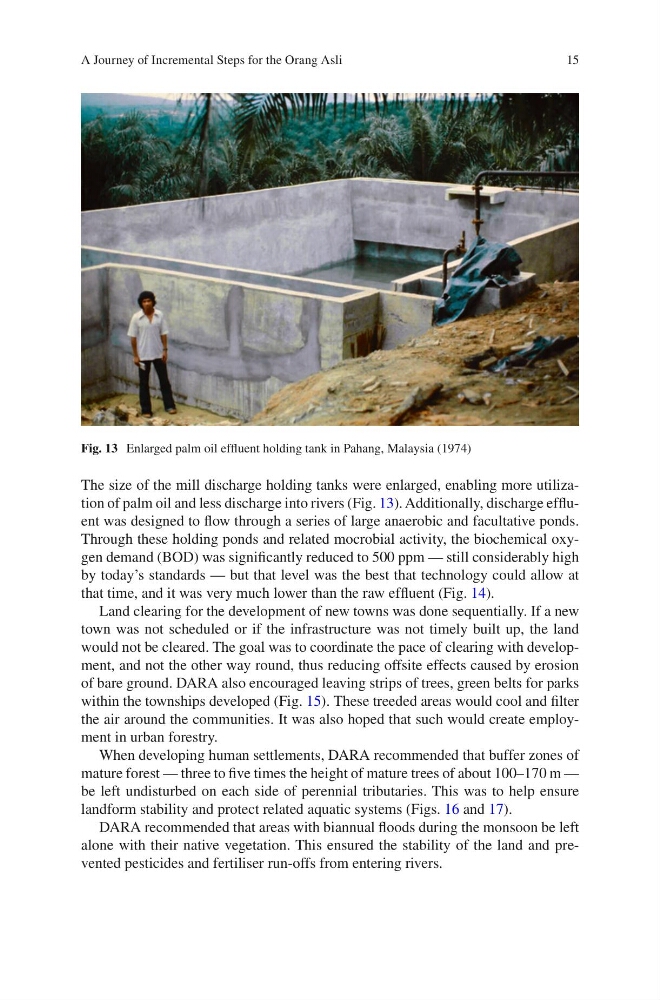
The size of the mill discharge holding tanks were enlarged, enabling more utilization of palm oil and less discharge into rivers (Fig. 13). Additionally, discharge effluent was designed to flow through a series of large anaerobic and facultative ponds.
Through these holding ponds and related mocrobial activity, the biochemical oxygen demand (BOD) was significantly reduced to 500 ppm — still considerably high
by today’s standards — but that level was the best that technology could allow at
that time, and it was very much lower than the raw effluent (Fig. 14).
Land clearing for the development of new towns was done sequentially. If a new
town was not scheduled or if the infrastructure was not timely built up, the land
would not be cleared. The goal was to coordinate the pace of clearing with development, and not the other way round, thus reducing offsite effects caused by erosion
of bare ground. DARA also encouraged leaving strips of trees, green belts for parks
within the townships developed (Fig. 15). These treeded areas would cool and filter
the air around the communities. It was also hoped that such would create employment in urban forestry.
When developing human settlements, DARA recommended that buffer zones of
mature forest — three to five times the height of mature trees of about 100–170 m —
be left undisturbed on each side of perennial tributaries. This was to help ensure
landform stability and protect related aquatic systems (Figs. 16 and 17).
DARA recommended that areas with biannual floods during the monsoon be left
alone with their native vegetation. This ensured the stability of the land and prevented pesticides and fertiliser run-offs from entering rivers.
Fig. 13 Enlarged palm oil effluent holding tank in Pahang, Malaysia (1974)
A Journey of Incremental Steps for the Orang Asli
The size of the mill discharge holding tanks were enlarged, enabling more utilization of palm oil and less discharge into rivers (Fig. 13). Additionally, discharge effluent was designed to flow through a series of large anaerobic and facultative ponds.
Through these holding ponds and related mocrobial activity, the biochemical oxygen demand (BOD) was significantly reduced to 500 ppm — still considerably high
by today’s standards — but that level was the best that technology could allow at
that time, and it was very much lower than the raw effluent (Fig. 14).
Land clearing for the development of new towns was done sequentially. If a new
town was not scheduled or if the infrastructure was not timely built up, the land
would not be cleared. The goal was to coordinate the pace of clearing with development, and not the other way round, thus reducing offsite effects caused by erosion
of bare ground. DARA also encouraged leaving strips of trees, green belts for parks
within the townships developed (Fig. 15). These treeded areas would cool and filter
the air around the communities. It was also hoped that such would create employment in urban forestry.
When developing human settlements, DARA recommended that buffer zones of
mature forest — three to five times the height of mature trees of about 100–170 m —
be left undisturbed on each side of perennial tributaries. This was to help ensure
landform stability and protect related aquatic systems (Figs. 16 and 17).
DARA recommended that areas with biannual floods during the monsoon be left
alone with their native vegetation. This ensured the stability of the land and prevented pesticides and fertiliser run-offs from entering rivers.
Fig. 13 Enlarged palm oil effluent holding tank in Pahang, Malaysia (1974)
A Journey of Incremental Steps for the Orang Asli