

14
Role and Contributions of DARA
Mohd Saufi Abdullah was the director of DARA when I was working there in 1974.
The agency was then responsible for providing oversight in implementing the
Second Malaysia Plan in Pahang Tenggara. Basically, thousands of hectares of lowland forest were converted to palm oil and rubber plantations, and 27 new townships
had been planned or were under some level of construction to house the workforce.
Saufi was the pointman for everything, including resolving complaints from the
people. He had a phenomenal team that I was privileged to be a member of. Saufi
and his staff coordinated with the Asian Development Bank, the Federal Land
Development Authority (Felda), the Malaysian Agricultural and Research
Development Institute (Mardi), and many other organisations to ensure that development could proceed smoothly in the vast area under DARA’s jurisdiction. He and
his staff were active listeners and knew how to influence people for a good outcomes. He believed in the old adage that an ounce of prevention is worth a pound
of cure.
A healthy river fishery, good water quality for drinking and bathing, landform
stability, effluent control and forest conservation were key to helping ensure a less
painful transition for the Orang Asli into stable reservations. In general, DARA was
concerned about the environmental hygiene of all Pahang citizens. Under Saufi’s
leadership, the staff developed the following vision.
DARA encouraged the development of Malaysia’s first-ever microbial treatment
system to break down and render palm oil effluent less harmful to the environment.
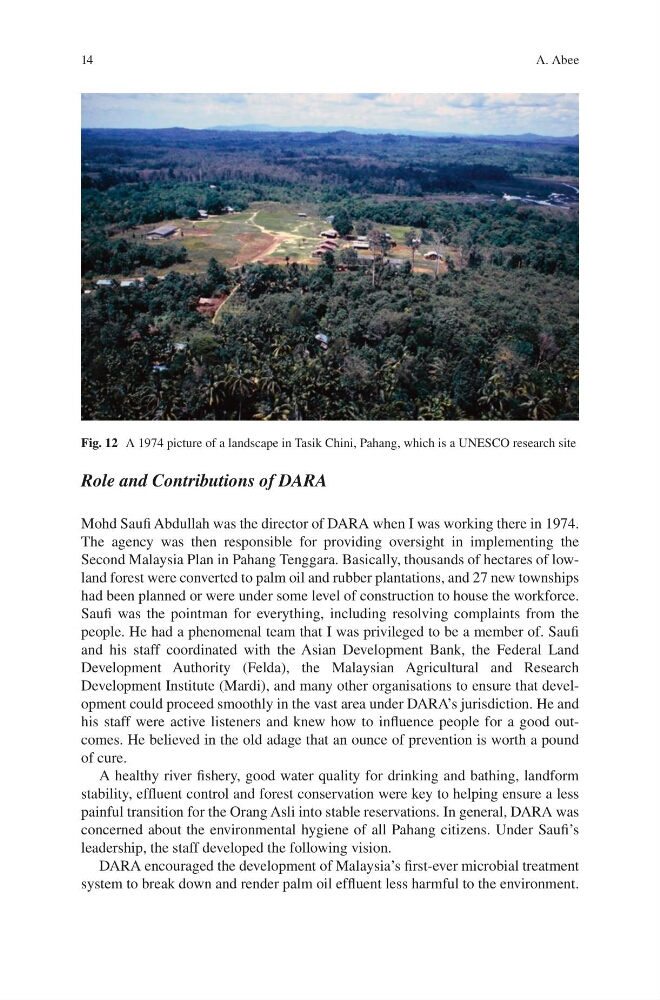
Fig. 12 A 1974 picture of a landscape in Tasik Chini, Pahang, which is a UNESCO research site
A. Abee
Role and Contributions of DARA
Mohd Saufi Abdullah was the director of DARA when I was working there in 1974.
The agency was then responsible for providing oversight in implementing the
Second Malaysia Plan in Pahang Tenggara. Basically, thousands of hectares of lowland forest were converted to palm oil and rubber plantations, and 27 new townships
had been planned or were under some level of construction to house the workforce.
Saufi was the pointman for everything, including resolving complaints from the
people. He had a phenomenal team that I was privileged to be a member of. Saufi
and his staff coordinated with the Asian Development Bank, the Federal Land
Development Authority (Felda), the Malaysian Agricultural and Research
Development Institute (Mardi), and many other organisations to ensure that development could proceed smoothly in the vast area under DARA’s jurisdiction. He and
his staff were active listeners and knew how to influence people for a good outcomes. He believed in the old adage that an ounce of prevention is worth a pound
of cure.
A healthy river fishery, good water quality for drinking and bathing, landform
stability, effluent control and forest conservation were key to helping ensure a less
painful transition for the Orang Asli into stable reservations. In general, DARA was
concerned about the environmental hygiene of all Pahang citizens. Under Saufi’s
leadership, the staff developed the following vision.
DARA encouraged the development of Malaysia’s first-ever microbial treatment
system to break down and render palm oil effluent less harmful to the environment.
Fig. 12 A 1974 picture of a landscape in Tasik Chini, Pahang, which is a UNESCO research site
A. Abee