

10
Lack of Sequential Clearing for Towns
When my wife (Sheila K (Holcomb) Abee) and I arrived back in Malaysia to work
in ITM, we were provided a new house in Shah Alam (Fig. 7). While it was a beautiful house, the environmental setting was tragically and unnecessarily hostile — the
landscape was baking under the hot sun! Concurrently, multiple monsoons eroded
all but the subsoil away thus not only creating a hostile living environment but
also choking river systems and estuaries with erosion sediment. Basically, more
land was cleared for town development in a year, but the structures and facilities
could not be built fast enough, leaving denuded soils exposed to the elements
for years.
Due to the massive forest conversion programme, the market for timber became
depressed. Huge trees of unknown species were cut down and left behind. Out of the
2,000 stems per hectare of standing biomass in lowland forest systems, less than 25
trees were removed for utilisation. The rest were bulldozed and burned on site, making way for palm oil plantations (Fig. 8).
The soil in Pahang is mostly infertile, being useful mainly for root support and
water movement. Basically, available nutrients for forest growth were “juggled”
aboveground by the standing biomass. Nutrients were recycled above the soil profile. Thus, with the forest liquidation process, the majority of the nutrient biomass
was immediately lost, leading to the need for large amounts of fertiliser being used
per oil palm tree to establish and maintain plantation growth.
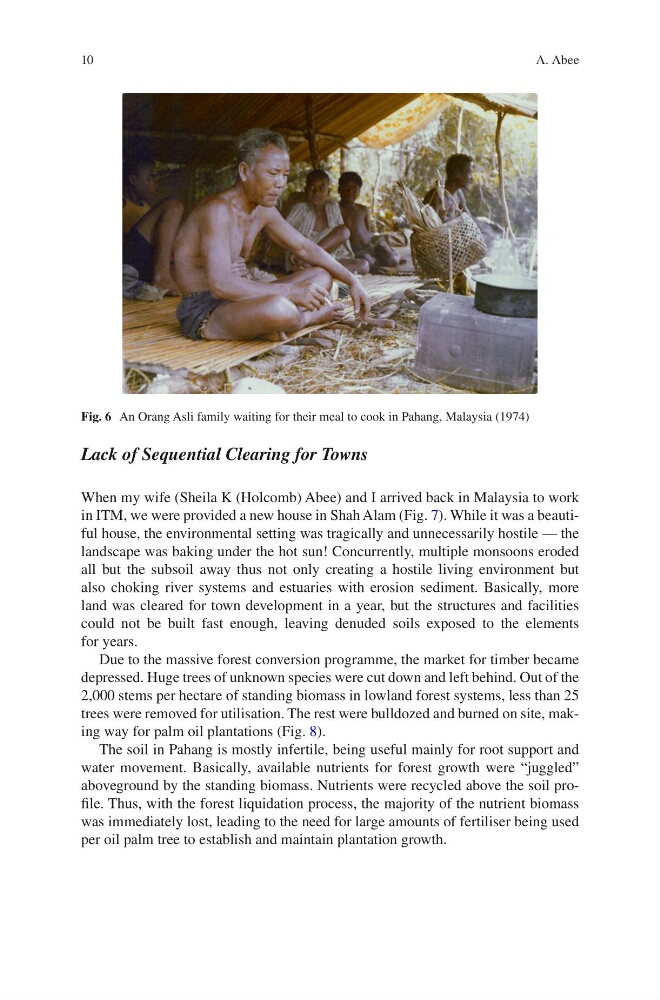
Fig. 6 An Orang Asli family waiting for their meal to cook in Pahang, Malaysia (1974)
A. Abee
Lack of Sequential Clearing for Towns
When my wife (Sheila K (Holcomb) Abee) and I arrived back in Malaysia to work
in ITM, we were provided a new house in Shah Alam (Fig. 7). While it was a beautiful house, the environmental setting was tragically and unnecessarily hostile — the
landscape was baking under the hot sun! Concurrently, multiple monsoons eroded
all but the subsoil away thus not only creating a hostile living environment but
also choking river systems and estuaries with erosion sediment. Basically, more
land was cleared for town development in a year, but the structures and facilities
could not be built fast enough, leaving denuded soils exposed to the elements
for years.
Due to the massive forest conversion programme, the market for timber became
depressed. Huge trees of unknown species were cut down and left behind. Out of the
2,000 stems per hectare of standing biomass in lowland forest systems, less than 25
trees were removed for utilisation. The rest were bulldozed and burned on site, making way for palm oil plantations (Fig. 8).
The soil in Pahang is mostly infertile, being useful mainly for root support and
water movement. Basically, available nutrients for forest growth were “juggled”
aboveground by the standing biomass. Nutrients were recycled above the soil profile. Thus, with the forest liquidation process, the majority of the nutrient biomass
was immediately lost, leading to the need for large amounts of fertiliser being used
per oil palm tree to establish and maintain plantation growth.
Fig. 6 An Orang Asli family waiting for their meal to cook in Pahang, Malaysia (1974)
A. Abee