

209
was a belief about the relationship between life and its surroundings. The Orang
Asli parents depended on school teachers to provide their children with a formal
education. Unfortunately, without commitment to ensure that their children
completed secondary school, positive results could not be seen until they understood the importance of formal education. Thus, the children in Kampung Sungai
Berua preferred to just stay at home rather than go to school.
Poor waste management was a perennial problem even though their resettlement
area was equipped with good infrastructure and amenities. Based on observation,
there was no proper waste management system for the Orang Asli in Kampung
Sungai Berua. They normally disposed of their household waste by burning, burying or dumping them in a nearby river. These improper methods were an environmental health hazard.
Poor waste management practices often led to environmental contamination,
therefore, increasing the risk of infection and diseases among the villagers. Diseases
and infestations that were related to poor waste management included fly- transmitted
diseases (myiasis, diarrhoea, typhoid and cholera), rodent-transmitted diseases
(lassa fever leptospirosis and typhoid) and mosquito-borne diseases (malaria, yellow fever, filariasis and dengue) (Adogu et al. 2015). And some of these diseases
had been detected in Kampung Sungai Berua. There were many factors that contributed to the awareness and knowledge of waste disposal. According to Banga (2011),
No. Question
SD
D
NS
A
SA
Education
1
I found that my children love to go to school lately
22.6 40.9 9.7 26.9
0
2
I realise that my children's level of education has increased
23.7 34.4 30.1 11.8
0
Standard of Living
3
I have 24 hours electricity supply at my house
0
0
0
10.8 89.2
4
Our village is now connected to other areas by better road access
0
0
0
11.8 88.2
5
There is clean water supplied directly to my house
0
0
0
15.1 84.9
6
I prefer to use a liquefied petroleum gas (LPG) stove to cook rather than wood
and charcoal
0
1.1
0
21.5 77.4
7
I have better sanitation system in my house
0
0
0
45.2 54.8
8
I realise that my house is in good condition compared to before
0
0
3.2 46.2 50.5
9
I love to use modern appliances at my house
0
2.2
3.2 83.9 10.8
10 I realise that family planning programmes are good to control my cost of living 20.4 34.4
0
41.9 3.2
11 I realise that good waste management can help live a better life
45.2
28
25.8
0
1.1
Wealth
12 I realise that source of income is a crucial element to live
0
0
1.1 36.6 62.4
13 I realise that wealth accumulation is important for my family's future
0
1.1 18.3 60.2 20.4
14 I realise that owning livestock can help me raise more income
57
43
0
0
0
Overall
15 I am really satisfied with all changes that have occurred in my life after all
0
0
0
16.1 83.9
Indication:
*SD-Strongly Disagree*D-Disagree*N-Not Sure*A-Agree*SA-Strongly Agree
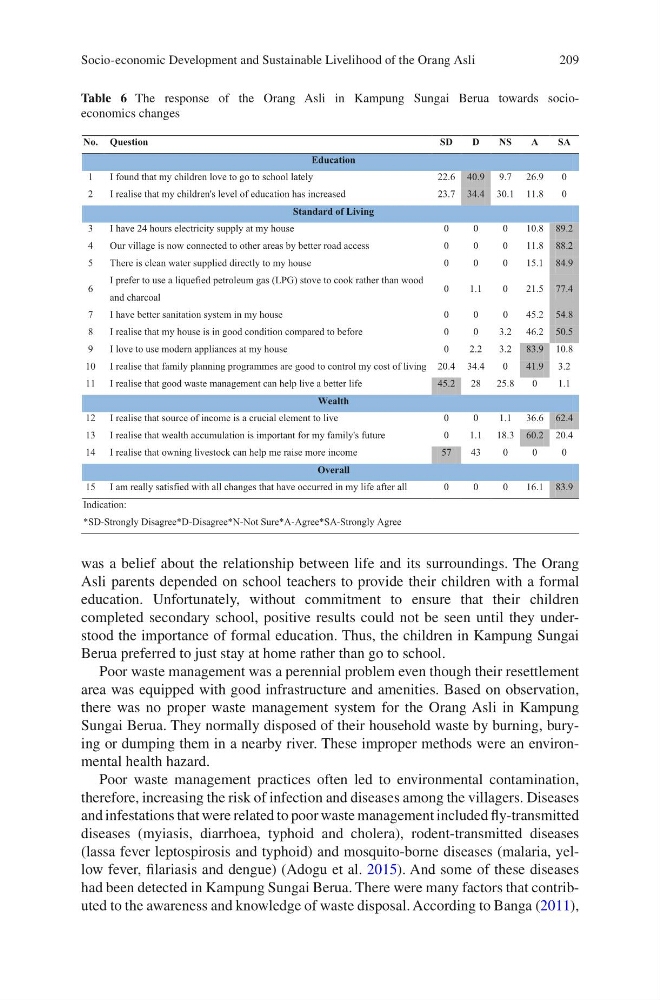
Table 6 The response of the Orang Asli in Kampung Sungai Berua towards socioeconomics changes
Socio-economic Development and Sustainable Livelihood of the Orang Asli
was a belief about the relationship between life and its surroundings. The Orang
Asli parents depended on school teachers to provide their children with a formal
education. Unfortunately, without commitment to ensure that their children
completed secondary school, positive results could not be seen until they understood the importance of formal education. Thus, the children in Kampung Sungai
Berua preferred to just stay at home rather than go to school.
Poor waste management was a perennial problem even though their resettlement
area was equipped with good infrastructure and amenities. Based on observation,
there was no proper waste management system for the Orang Asli in Kampung
Sungai Berua. They normally disposed of their household waste by burning, burying or dumping them in a nearby river. These improper methods were an environmental health hazard.
Poor waste management practices often led to environmental contamination,
therefore, increasing the risk of infection and diseases among the villagers. Diseases
and infestations that were related to poor waste management included fly- transmitted
diseases (myiasis, diarrhoea, typhoid and cholera), rodent-transmitted diseases
(lassa fever leptospirosis and typhoid) and mosquito-borne diseases (malaria, yellow fever, filariasis and dengue) (Adogu et al. 2015). And some of these diseases
had been detected in Kampung Sungai Berua. There were many factors that contributed to the awareness and knowledge of waste disposal. According to Banga (2011),
No. Question
SD
D
NS
A
SA
Education
1
I found that my children love to go to school lately
22.6 40.9 9.7 26.9
0
2
I realise that my children's level of education has increased
23.7 34.4 30.1 11.8
0
Standard of Living
3
I have 24 hours electricity supply at my house
0
0
0
10.8 89.2
4
Our village is now connected to other areas by better road access
0
0
0
11.8 88.2
5
There is clean water supplied directly to my house
0
0
0
15.1 84.9
6
I prefer to use a liquefied petroleum gas (LPG) stove to cook rather than wood
and charcoal
0
1.1
0
21.5 77.4
7
I have better sanitation system in my house
0
0
0
45.2 54.8
8
I realise that my house is in good condition compared to before
0
0
3.2 46.2 50.5
9
I love to use modern appliances at my house
0
2.2
3.2 83.9 10.8
10 I realise that family planning programmes are good to control my cost of living 20.4 34.4
0
41.9 3.2
11 I realise that good waste management can help live a better life
45.2
28
25.8
0
1.1
Wealth
12 I realise that source of income is a crucial element to live
0
0
1.1 36.6 62.4
13 I realise that wealth accumulation is important for my family's future
0
1.1 18.3 60.2 20.4
14 I realise that owning livestock can help me raise more income
57
43
0
0
0
Overall
15 I am really satisfied with all changes that have occurred in my life after all
0
0
0
16.1 83.9
Indication:
*SD-Strongly Disagree*D-Disagree*N-Not Sure*A-Agree*SA-Strongly Agree
Table 6 The response of the Orang Asli in Kampung Sungai Berua towards socioeconomics changes
Socio-economic Development and Sustainable Livelihood of the Orang Asli