

619
challenging to eliminate them entirely. But it is possible to limit their amounts in the
food. These include antibiotics in animal feeds and sanitizers and inks in foodstuffs
that may arise from packaging materials.
27.4.2.3 Physical Hazards
Physical hazards are materials that can cause physical harm such as choking, cuts,
dental complaints such as broken teeth, oral injury or laceration and/or bleeding,
trauma to the esophagus, abdomen or other associated organs of the alimentary
canal, and adverse events. These may also have other adverse events and surgery
sometimes to remove them. Examples include glass, metal fragments, wood fragments and many more. These are materials that are normally not supposed to be
present in food. Physical hazards are one of the widely reported hazards in food
because most of them can be easily seen using eyes and their effects are usually
immediately after exposure (Keener 2001).
27.5 Hazard Analysis Critical Control Point (HACCP)
Hazard Analysis Critical Control Point (HACCP) is a systematic and preventive
approach to food safety. HACCP has been in use since 1960s by most countries
around the world (CFI 2018). HACCP is not only involved in the inspection of
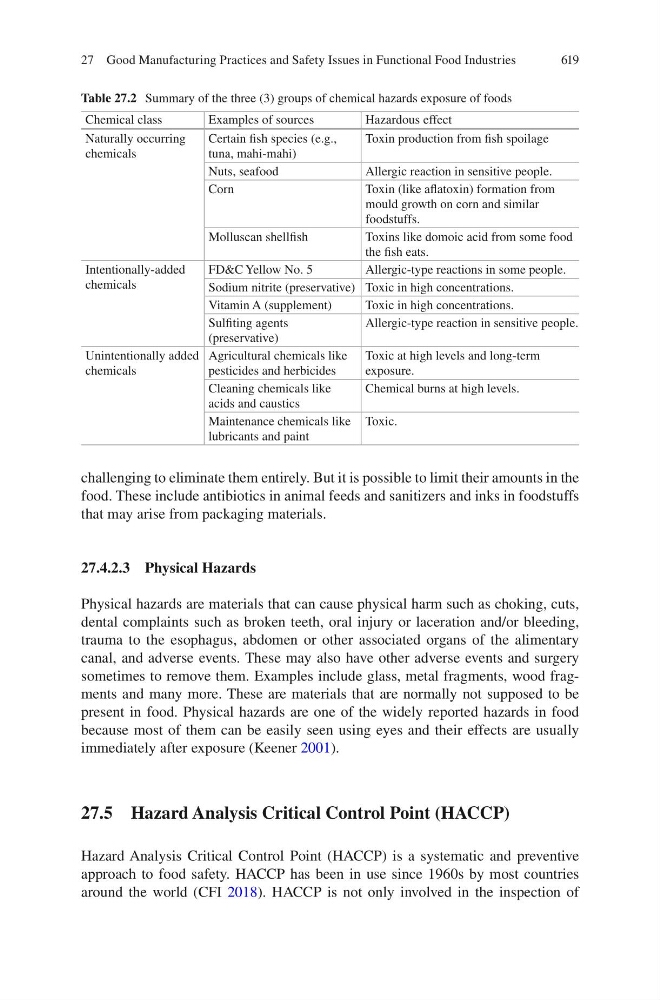
Table 27.2 Summary of the three (3) groups of chemical hazards exposure of foods
Chemical class
Examples of sources
Hazardous effect
Naturally occurring
chemicals
Certain fish species (e.g.,
tuna, mahi-mahi)
Toxin production from fish spoilage
Nuts, seafood
Allergic reaction in sensitive people.
Corn
Toxin (like aflatoxin) formation from
mould growth on corn and similar
foodstuffs.
Molluscan shellfish
Toxins like domoic acid from some food
the fish eats.
Intentionally-added
chemicals
FD&C Yellow No. 5
Allergic-type reactions in some people.
Sodium nitrite (preservative) Toxic in high concentrations.
Vitamin A (supplement)
Toxic in high concentrations.
Sulfiting agents
(preservative)
Allergic-type reaction in sensitive people.
Unintentionally added
chemicals
Agricultural chemicals like
pesticides and herbicides
Toxic at high levels and long-term
exposure.
Cleaning chemicals like
acids and caustics
Chemical burns at high levels.
Maintenance chemicals like
lubricants and paint
Toxic.
27 Good Manufacturing Practices and Safety Issues in Functional Food Industries