

618
27.4.2.2 Chemical Hazards
These are chemical compounds that can cause illness or injury upon exposure for a
short or long period of time. Chemicals are used in our daily lives and serve their
purpose with minimal or no negative effect when used as recommended. Chemicals
occur naturally but they can also be introduced into the environment intentionally or
unintentionally. Different chemicals have different physicochemical properties,
which also give them different toxicological profiles. Because of this difference,
acceptable exposure amounts have been established for each chemical such that
certain amounts are allowed to be present in products, beyond which they increase
the risk of causing harm. For example, chemicals can be helpful and are purposefully used with some foods, such as pesticides on fruits and vegetables. Chemical
risk occurs when chemicals are used without control or when the recommended
treatment rates are exceeded. Apart from depending on intrinsic property of a compound, chemicals risk or toxicity may also depend on other factors such as period of
exposure and concentration (Castro and Hollyer 2014).
Chemical hazards are generally categorised into three groups (Table 27.2). The
first group is described as naturally occurring chemicals (including allergens).
These are mostly chemicals originating from plants, animals or microorganisms
such as toxins from bacteria. The second group is intentionally added chemicals.
These are mostly chemicals that are added to enhance the growth of the raw materials for producing food, during manufacturing process and during storage of food.
There are set procedures and precautions for their use to ensure that safety of the
consumers is not compromised. As already mentioned, limits of exposure have been
set for every chemical and this is checked by regulators and within manufacturing
entities to ensure adherence to the limits. The third group belongs to unintentionally
added chemicals. These compounds get into the food unintentionally and it is
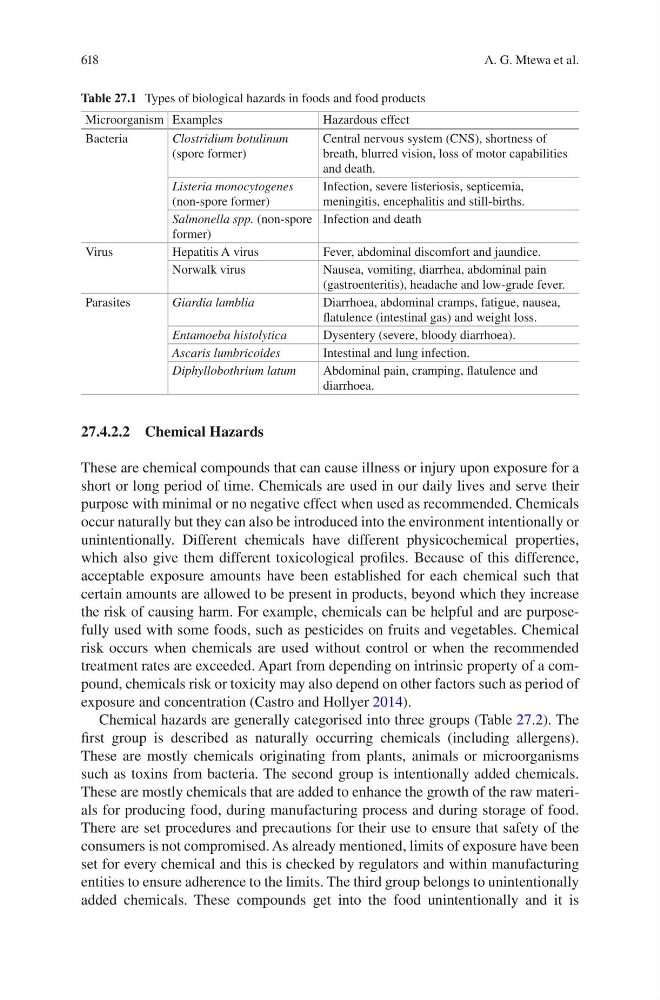
Table 27.1 Types of biological hazards in foods and food products
Microorganism Examples
Hazardous effect
Bacteria
Clostridium botulinum
(spore former)
Central nervous system (CNS), shortness of
breath, blurred vision, loss of motor capabilities
and death.
Listeria monocytogenes
(non-spore former)
Infection, severe listeriosis, septicemia,
meningitis, encephalitis and still-births.
Salmonella spp. (non-spore
former)
Infection and death
Virus
Hepatitis A virus
Fever, abdominal discomfort and jaundice.
Norwalk virus
Nausea, vomiting, diarrhea, abdominal pain
(gastroenteritis), headache and low-grade fever.
Parasites
Giardia lamblia
Diarrhoea, abdominal cramps, fatigue, nausea,
flatulence (intestinal gas) and weight loss.
Entamoeba histolytica
Dysentery (severe, bloody diarrhoea).
Ascaris lumbricoides
Intestinal and lung infection.
Diphyllobothrium latum
Abdominal pain, cramping, flatulence and
diarrhoea.
A. G. Mtewa et al.