

154
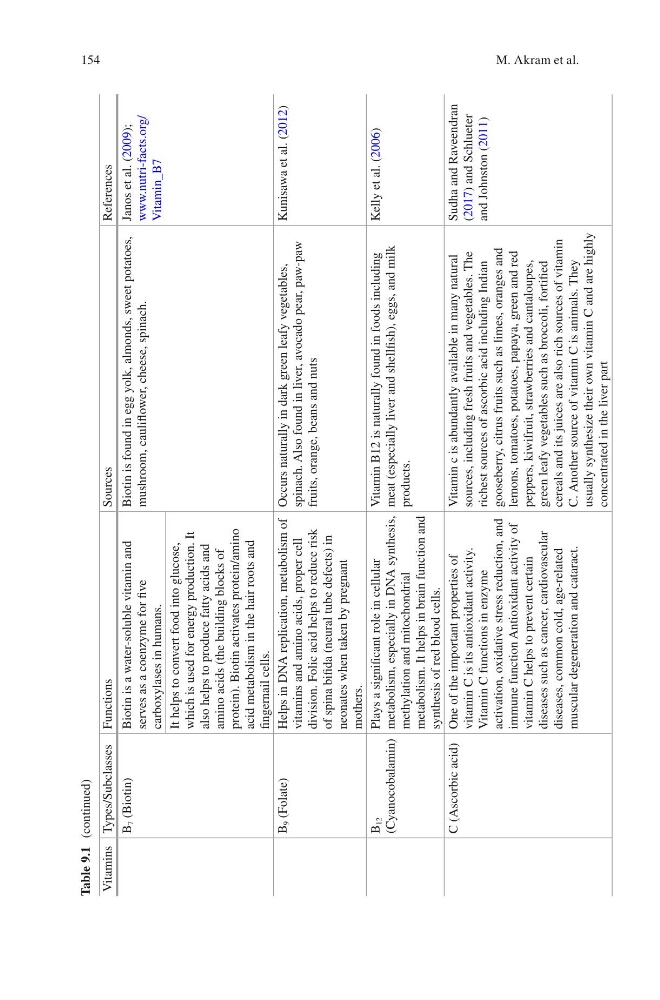
Table 9.1 (continued)
B
7 (Biotin)
Biotin is a water-soluble vitamin and
serves as a coenzyme for five
carboxylases in humans.
Biotin is found in egg yolk, almonds, sweet potatoes,
mushroom, cauliflower, cheese, spinach.
Janos et al. (2009);
www.nutri-facts.org/
Vitamin_B7
It helps to convert food into glucose,
which is used for energy production. It
also helps to produce fatty acids and
amino acids (the building blocks of
protein). Biotin activates protein/amino
acid metabolism in the hair roots and
fingernail cells.
B
9 (Folate)
Helps in DNA replication, metabolism of
vitamins and amino acids, proper cell
division. Folic acid helps to reduce risk
of spina bifida (neural tube defects) in
neonates when taken by pregnant
mothers.
Occurs naturally in dark green leafy vegetables,
spinach. Also found in liver, avocado pear, paw-paw
fruits, orange, beans and nuts
Kunisawa et al. (2012)
B
12
(Cyanocobalamin)
Plays a significant role in cellular
metabolism, especially in DNA synthesis,
methylation and mitochondrial
metabolism. It helps in brain function and
synthesis of red blood cells.
Vitamin B12 is naturally found in foods including
meat (especially liver and shellfish), eggs, and milk
products.
Kelly et al. (2006)
C (Ascorbic acid) One of the important properties of
vitamin C is its antioxidant activity.
Vitamin C functions in enzyme
activation, oxidative stress reduction, and
immune function Antioxidant activity of
vitamin C helps to prevent certain
diseases such as cancer, cardiovascular
diseases, common cold, age-related
muscular degeneration and cataract.
Vitamin c is abundantly available in many natural
sources, including fresh fruits and vegetables. The
richest sources of ascorbic acid including Indian
gooseberry, citrus fruits such as limes, oranges and
lemons, tomatoes, potatoes, papaya, green and red
peppers, kiwifruit, strawberries and cantaloupes,
green leafy vegetables such as broccoli, fortified
cereals and its juices are also rich sources of vitamin
C. Another source of vitamin C is animals. They
usually synthesize their own vitamin C and are highly
concentrated in the liver part
Sudha and Raveendran
(2017) and Schlueter
and Johnston (2011)
Vitamins Types/Subclasses Functions
Sources
References
M. Akram et al.
Table 9.1 (continued)
B
7 (Biotin)
Biotin is a water-soluble vitamin and
serves as a coenzyme for five
carboxylases in humans.
Biotin is found in egg yolk, almonds, sweet potatoes,
mushroom, cauliflower, cheese, spinach.
Janos et al. (2009);
www.nutri-facts.org/
Vitamin_B7
It helps to convert food into glucose,
which is used for energy production. It
also helps to produce fatty acids and
amino acids (the building blocks of
protein). Biotin activates protein/amino
acid metabolism in the hair roots and
fingernail cells.
B
9 (Folate)
Helps in DNA replication, metabolism of
vitamins and amino acids, proper cell
division. Folic acid helps to reduce risk
of spina bifida (neural tube defects) in
neonates when taken by pregnant
mothers.
Occurs naturally in dark green leafy vegetables,
spinach. Also found in liver, avocado pear, paw-paw
fruits, orange, beans and nuts
Kunisawa et al. (2012)
B
12
(Cyanocobalamin)
Plays a significant role in cellular
metabolism, especially in DNA synthesis,
methylation and mitochondrial
metabolism. It helps in brain function and
synthesis of red blood cells.
Vitamin B12 is naturally found in foods including
meat (especially liver and shellfish), eggs, and milk
products.
Kelly et al. (2006)
C (Ascorbic acid) One of the important properties of
vitamin C is its antioxidant activity.
Vitamin C functions in enzyme
activation, oxidative stress reduction, and
immune function Antioxidant activity of
vitamin C helps to prevent certain
diseases such as cancer, cardiovascular
diseases, common cold, age-related
muscular degeneration and cataract.
Vitamin c is abundantly available in many natural
sources, including fresh fruits and vegetables. The
richest sources of ascorbic acid including Indian
gooseberry, citrus fruits such as limes, oranges and
lemons, tomatoes, potatoes, papaya, green and red
peppers, kiwifruit, strawberries and cantaloupes,
green leafy vegetables such as broccoli, fortified
cereals and its juices are also rich sources of vitamin
C. Another source of vitamin C is animals. They
usually synthesize their own vitamin C and are highly
concentrated in the liver part
Sudha and Raveendran
(2017) and Schlueter
and Johnston (2011)
Vitamins Types/Subclasses Functions
Sources
References
M. Akram et al.