

152
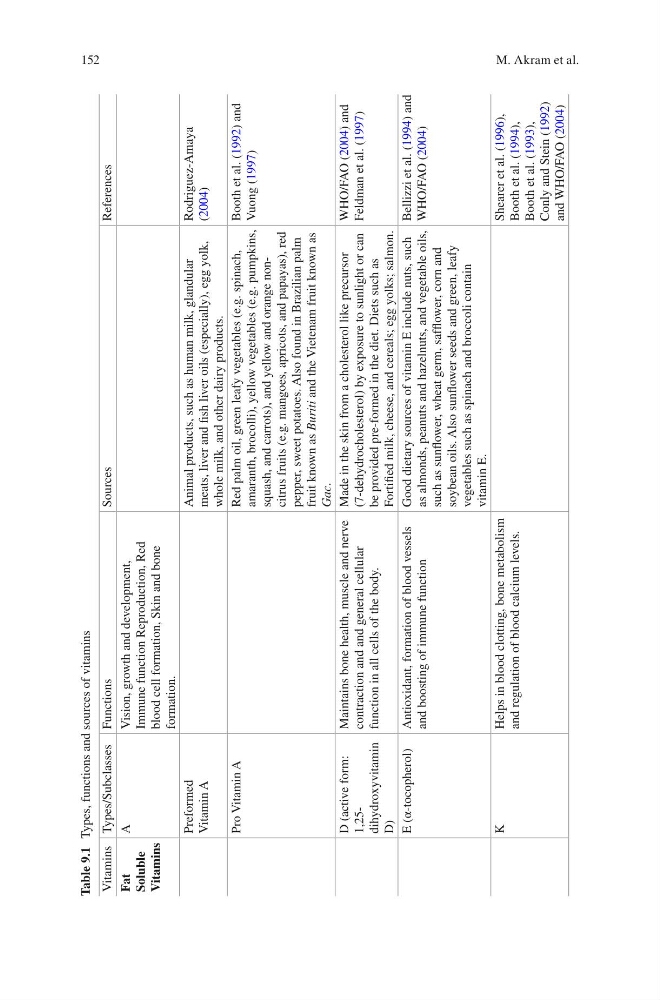
Table 9.1 Types, functions and sources of vitamins
Vitamins Types/Subclasses Functions
Sources
References
Fat
Soluble
Vitamins
A
Vision, growth and development,
Immune function Reproduction, Red
blood cell formation, Skin and bone
formation.
Preformed
Vitamin A
Animal products, such as human milk, glandular
meats, liver and fish liver oils (especially), egg yolk,
whole milk, and other dairy products.
Rodriguez-Amaya
(2004)
Pro Vitamin A
Red palm oil, green leafy vegetables (e.g. spinach,
amaranth, brocolli), yellow vegetables (e.g. pumpkins,
squash, and carrots), and yellow and orange noncitrus fruits (e.g. mangoes, apricots, and papayas), red
pepper, sweet potatoes. Also found in Brazilian palm
fruit known as Buriti
and the Vietenam fruit known as
Gac.
Booth et al. (1992) and
Vuong (1997)
D (active form:
1,25dihydroxyvitamin
D)
Maintains bone health, muscle and nerve
contraction and and general cellular
function in all cells of the body.
Made in the skin from a cholesterol like precursor
(7-dehydrocholesterol) by exposure to sunlight or can
be provided pre-formed in the diet. Diets such as
Fortified milk, cheese, and cereals; egg yolks; salmon.
WHO/FAO (2004) and
Feldman et al. (1997)
E (α-tocopherol)
Antioxidant, formation of blood vessels
and boosting of immune function
Good dietary sources of vitamin E include nuts, such
as almonds, peanuts and hazelnuts, and vegetable oils,
such as sunflower, wheat germ, safflower, corn and
soybean oils. Also sunflower seeds and green, leafy
vegetables such as spinach and broccoli contain
vitamin E.
Bellizzi et al. (1994) and
WHO/FAO (2004)
K
Helps in blood clotting, bone metabolism
and regulation of blood calcium levels.
Shearer et al. (1996),
Booth et al. (1994),
Booth et al. (1993),
Conly and Stein (1992)
and WHO/FAO (2004)
M. Akram et al.
Table 9.1 Types, functions and sources of vitamins
Vitamins Types/Subclasses Functions
Sources
References
Fat
Soluble
Vitamins
A
Vision, growth and development,
Immune function Reproduction, Red
blood cell formation, Skin and bone
formation.
Preformed
Vitamin A
Animal products, such as human milk, glandular
meats, liver and fish liver oils (especially), egg yolk,
whole milk, and other dairy products.
Rodriguez-Amaya
(2004)
Pro Vitamin A
Red palm oil, green leafy vegetables (e.g. spinach,
amaranth, brocolli), yellow vegetables (e.g. pumpkins,
squash, and carrots), and yellow and orange noncitrus fruits (e.g. mangoes, apricots, and papayas), red
pepper, sweet potatoes. Also found in Brazilian palm
fruit known as Buriti
and the Vietenam fruit known as
Gac.
Booth et al. (1992) and
Vuong (1997)
D (active form:
1,25dihydroxyvitamin
D)
Maintains bone health, muscle and nerve
contraction and and general cellular
function in all cells of the body.
Made in the skin from a cholesterol like precursor
(7-dehydrocholesterol) by exposure to sunlight or can
be provided pre-formed in the diet. Diets such as
Fortified milk, cheese, and cereals; egg yolks; salmon.
WHO/FAO (2004) and
Feldman et al. (1997)
E (α-tocopherol)
Antioxidant, formation of blood vessels
and boosting of immune function
Good dietary sources of vitamin E include nuts, such
as almonds, peanuts and hazelnuts, and vegetable oils,
such as sunflower, wheat germ, safflower, corn and
soybean oils. Also sunflower seeds and green, leafy
vegetables such as spinach and broccoli contain
vitamin E.
Bellizzi et al. (1994) and
WHO/FAO (2004)
K
Helps in blood clotting, bone metabolism
and regulation of blood calcium levels.
Shearer et al. (1996),
Booth et al. (1994),
Booth et al. (1993),
Conly and Stein (1992)
and WHO/FAO (2004)
M. Akram et al.