

contribute to household food consumption, either through formal employment or
being actively involved in food gardening. According to Maponya and Moja (2012),
households with more members who are economically active are generally more
food secure than those with less economically active members. There is a positive
correlation between gender and gardens still owned and available (Table 14.4). This
study’s gender results are also in line with findings by Ndobo (2013), who indicated
that households headed by females are more likely to face mild-to-moderate, as well
as severe forms of food insecurity than those headed by males. Similar results were
found by Mohammadi et al. (2011), who reported that severe food insecurity was
more frequent in female-headed households. The study further emphasised that age
category and gardens owned and availability are positively correlated, and both
variables are significant at 5%. There is a positive correlation between household
income and gardens owned and still available. It is thus expected that households
City of
Johannesburg
City of Tshwane
Ekurhuleni
Sedibeng
West Rand
Gauteng
Yes
270
151
82
91
170
764
No
49
119
59
125
34
386
Total
3 1 9
2 7 0
1 4 1
2 1 6
2 0 4
1 1 5 0
0
200
400
600
800
1000
1200
1400
Yes No Total
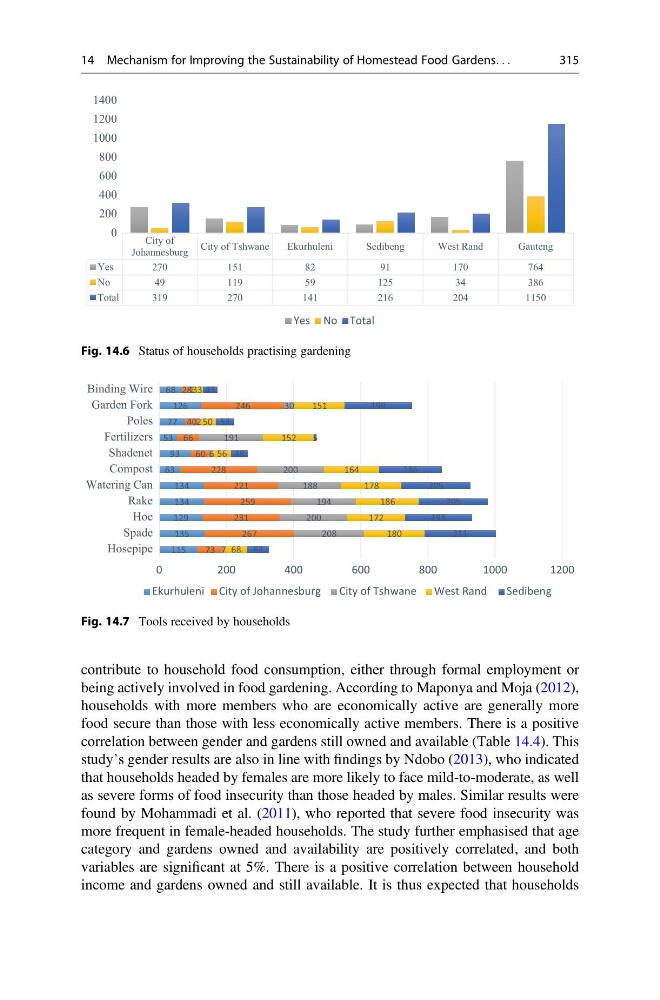
Fig. 14.6 Status of households practising gardening
115
135
129
134
134
63
93
53
77
126
68
73
267
231
259
221
228
60
66
40
246
28
7
208
200
194
188
200
6
191
2
30
1
68
180
172
186
178
164
56
152
50
151
33
63
211
198
205
205
186
48
5
53
199
43
0
200
400
600
800
1000
1200
Hosepipe
Spade
Hoe
Rake
Watering Can
Compost
Shadenet
Fertilizers
Poles
Garden Fork
Binding Wire
Ekurhuleni City of Johannesburg
City of Tshwane West Rand
Sedibeng
Fig. 14.7 Tools received by households
14 Mechanism for Improving the Sustainability of Homestead Food Gardens. . .
315
being actively involved in food gardening. According to Maponya and Moja (2012),
households with more members who are economically active are generally more
food secure than those with less economically active members. There is a positive
correlation between gender and gardens still owned and available (Table 14.4). This
study’s gender results are also in line with findings by Ndobo (2013), who indicated
that households headed by females are more likely to face mild-to-moderate, as well
as severe forms of food insecurity than those headed by males. Similar results were
found by Mohammadi et al. (2011), who reported that severe food insecurity was
more frequent in female-headed households. The study further emphasised that age
category and gardens owned and availability are positively correlated, and both
variables are significant at 5%. There is a positive correlation between household
income and gardens owned and still available. It is thus expected that households
City of
Johannesburg
City of Tshwane
Ekurhuleni
Sedibeng
West Rand
Gauteng
Yes
270
151
82
91
170
764
No
49
119
59
125
34
386
Total
3 1 9
2 7 0
1 4 1
2 1 6
2 0 4
1 1 5 0
0
200
400
600
800
1000
1200
1400
Yes No Total
Fig. 14.6 Status of households practising gardening
115
135
129
134
134
63
93
53
77
126
68
73
267
231
259
221
228
60
66
40
246
28
7
208
200
194
188
200
6
191
2
30
1
68
180
172
186
178
164
56
152
50
151
33
63
211
198
205
205
186
48
5
53
199
43
0
200
400
600
800
1000
1200
Hosepipe
Spade
Hoe
Rake
Watering Can
Compost
Shadenet
Fertilizers
Poles
Garden Fork
Binding Wire
Ekurhuleni City of Johannesburg
City of Tshwane West Rand
Sedibeng
Fig. 14.7 Tools received by households
14 Mechanism for Improving the Sustainability of Homestead Food Gardens. . .
315