

during the focus group discussions with officials that the seeds were chosen because
they can thrive in small and densely planted areas, and because of the high
nutritional value of these vegetables. Figure 14.8 also indicates that the delivery of
starter packs has been fairly uniform across the districts and metropolitans. The
distribution of the starter packs contributed significantly to food security and in line
with Akrofi et al. (2010) who found that food items from home gardens significantly
contributed to food security of rural households in the Eastern Region of Ghana.
Figure 14.9 indicates that the majority of households felt that the homestead
initiative is very good (371), good (490), and fair (191). Only a few households felt
that the initiative is poor (70) and very poor (28). Some households complained
about the lack of monitoring and evaluation of the homestead initiative as the reasons
for their fair, poor, and very poor response. The same trend was observed across
districts and metropolitans. Figure 14.10 indicates that the majority of households
felt that the support received is very good (443), good, (341) and fair (166). Quite a
number of households felt that the support received was poor (105) and very poor
(95). Some households complained about the lack of monitoring and evaluation of
the homestead initiative as the reasons for their poor response. The same trend is
observed across districts and metropolitans.
In terms of household food gardens sustainability, there is a consistent response
regarding income generation across the districts as indicated in Fig. 14.11. 84% of
Westonaria
WEDELA
Randfontein
Merafong
KOKOSI
KHUTSONG
GREEN PARK
BRAANDVLEI
BLYVOOR
BLYBANK
Frequency
Locations
Locations
60
40
20
0
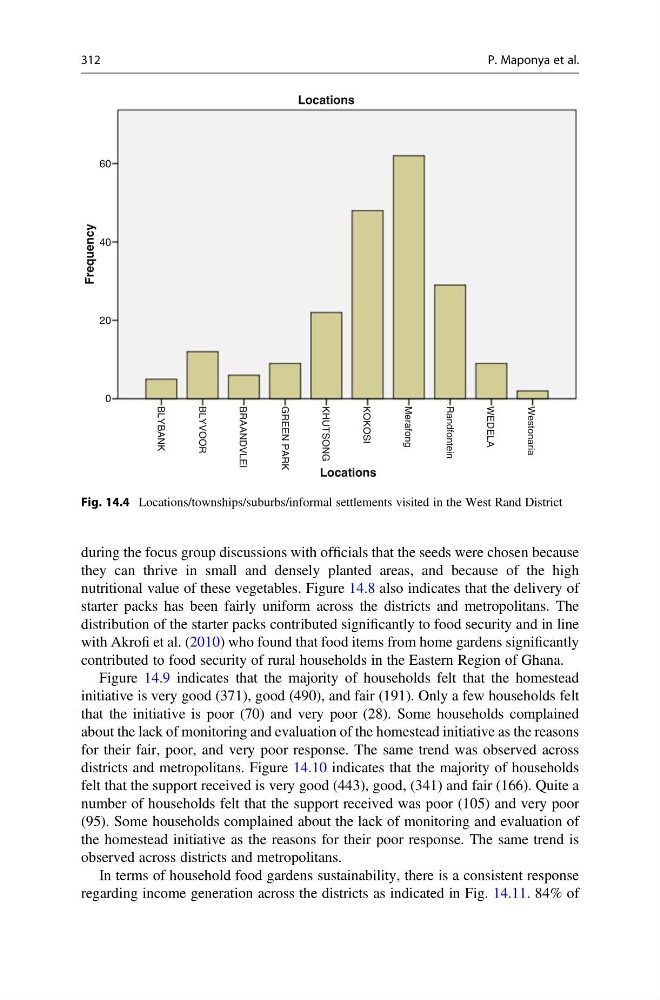
Fig. 14.4 Locations/townships/suburbs/informal settlements visited in the West Rand District
312
P. Maponya et al.
they can thrive in small and densely planted areas, and because of the high
nutritional value of these vegetables. Figure 14.8 also indicates that the delivery of
starter packs has been fairly uniform across the districts and metropolitans. The
distribution of the starter packs contributed significantly to food security and in line
with Akrofi et al. (2010) who found that food items from home gardens significantly
contributed to food security of rural households in the Eastern Region of Ghana.
Figure 14.9 indicates that the majority of households felt that the homestead
initiative is very good (371), good (490), and fair (191). Only a few households felt
that the initiative is poor (70) and very poor (28). Some households complained
about the lack of monitoring and evaluation of the homestead initiative as the reasons
for their fair, poor, and very poor response. The same trend was observed across
districts and metropolitans. Figure 14.10 indicates that the majority of households
felt that the support received is very good (443), good, (341) and fair (166). Quite a
number of households felt that the support received was poor (105) and very poor
(95). Some households complained about the lack of monitoring and evaluation of
the homestead initiative as the reasons for their poor response. The same trend is
observed across districts and metropolitans.
In terms of household food gardens sustainability, there is a consistent response
regarding income generation across the districts as indicated in Fig. 14.11. 84% of
Westonaria
WEDELA
Randfontein
Merafong
KOKOSI
KHUTSONG
GREEN PARK
BRAANDVLEI
BLYVOOR
BLYBANK
Frequency
Locations
Locations
60
40
20
0
Fig. 14.4 Locations/townships/suburbs/informal settlements visited in the West Rand District
312
P. Maponya et al.