

receiving tertiary education (34). The level of education is consistent in all districts
and metropolitans across the Gauteng Province. According to Heckman (1999),
education is key to poverty reduction, improve household food security, and to
improve the livelihoods of the poor. This is due to the ability of an education to
increase knowledge and skills, which is supportive to a household’s employability
and the fulfilment of the household’s basic necessities. Most households fall in the
income level of R1001–R2500 per month and quite a number of households had no
income (248) (Table 14.3). Most of the households were spending >R601 of their
monthly expenditure on food. There was not much difference in the number of
household members in the Gauteng Province. Most of the household’s size ranged
between 1 and 5 members, and the same trend was seen across districts and
metropolitans. According to Amaza et al. (2009), the importance of household size
as a major contributing factor to household agricultural production and hence food
security, through labour supply, has been well documented globally.
Zola
Wellers Farm
Vlakfontein
Tshiawelo
Transist Camp
Tladi
Thulamtwana
Snake park
Poortji
Pimville
Orange Farm
Orange Farm
Noordgesig
Naledi
Mountain View
Motswaledi
Meriting
Marlboro
Mapetla
Malatji
Lufereng
Litheleng
Kliptown
Kapok
Kanana Park
Itsoseng
Honefield
Green Village
Freedom Park
Fine Town
Ennerdale
Eldorado Park
Drummond
Drizik
Doorkop
Dieploot
Alexandra
Frequency
Locations
Locations
50
40
30
20
10
0
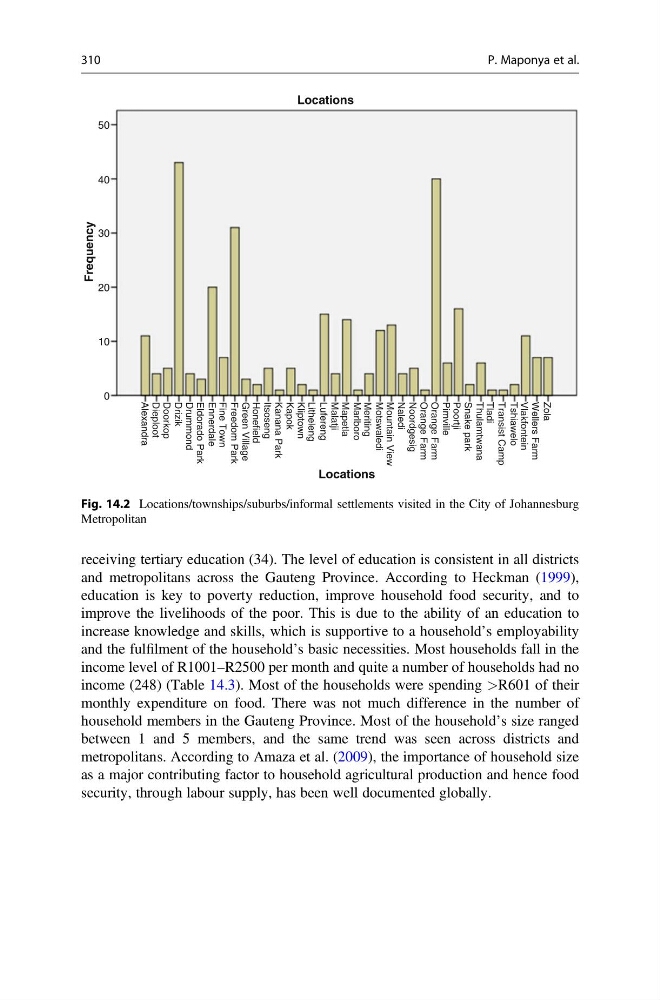
Fig. 14.2 Locations/townships/suburbs/informal settlements visited in the City of Johannesburg
Metropolitan
310
P. Maponya et al.
and metropolitans across the Gauteng Province. According to Heckman (1999),
education is key to poverty reduction, improve household food security, and to
improve the livelihoods of the poor. This is due to the ability of an education to
increase knowledge and skills, which is supportive to a household’s employability
and the fulfilment of the household’s basic necessities. Most households fall in the
income level of R1001–R2500 per month and quite a number of households had no
income (248) (Table 14.3). Most of the households were spending >R601 of their
monthly expenditure on food. There was not much difference in the number of
household members in the Gauteng Province. Most of the household’s size ranged
between 1 and 5 members, and the same trend was seen across districts and
metropolitans. According to Amaza et al. (2009), the importance of household size
as a major contributing factor to household agricultural production and hence food
security, through labour supply, has been well documented globally.
Zola
Wellers Farm
Vlakfontein
Tshiawelo
Transist Camp
Tladi
Thulamtwana
Snake park
Poortji
Pimville
Orange Farm
Orange Farm
Noordgesig
Naledi
Mountain View
Motswaledi
Meriting
Marlboro
Mapetla
Malatji
Lufereng
Litheleng
Kliptown
Kapok
Kanana Park
Itsoseng
Honefield
Green Village
Freedom Park
Fine Town
Ennerdale
Eldorado Park
Drummond
Drizik
Doorkop
Dieploot
Alexandra
Frequency
Locations
Locations
50
40
30
20
10
0
Fig. 14.2 Locations/townships/suburbs/informal settlements visited in the City of Johannesburg
Metropolitan
310
P. Maponya et al.