

residue burning, biofuel burning and application of nitrogenous fertilizers (Lipper
et al. 2014; Smith et al. 2014; Venkatramanan and Shah 2019). The NOAA and
American Meteorological Society’s report on “State of Climate in 2018” stated that
the global atmospheric CO 2 was 407.4 Æ 0.1 ppm in 2018, a new record high. It is
estimated that the increase was 2.2 Æ 0.1 ppm (2016), 2.5 Æ 0.1 ppm (2017) and
2.4 Æ 0.1 ppm (2018), whereas the global growth rate of atmospheric carbon dioxide
was roughly 0.6 Æ 0.1 ppm per year during 1960 (Blunden and Arndt 2019).
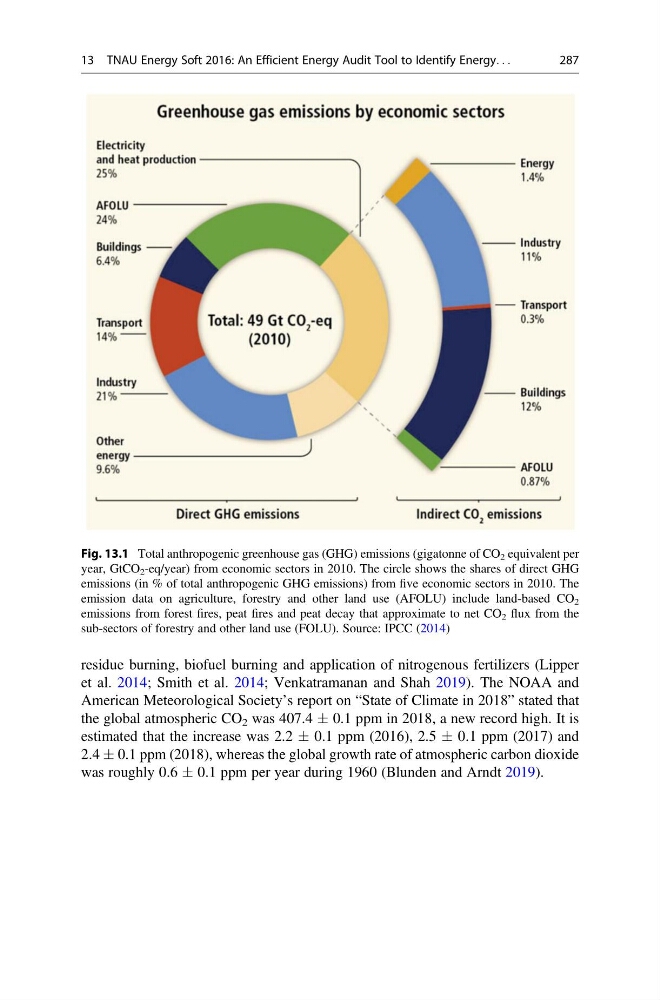
Fig. 13.1 Total anthropogenic greenhouse gas (GHG) emissions (gigatonne of CO 2 equivalent per
year, GtCO 2 -eq/year) from economic sectors in 2010. The circle shows the shares of direct GHG
emissions (in % of total anthropogenic GHG emissions) from five economic sectors in 2010. The
emission data on agriculture, forestry and other land use (AFOLU) include land-based CO 2
emissions from forest fires, peat fires and peat decay that approximate to net CO 2 flux from the
sub-sectors of forestry and other land use (FOLU). Source: IPCC (2014)
13 TNAU Energy Soft 2016: An Efficient Energy Audit Tool to Identify Energy. . .
287
et al. 2014; Smith et al. 2014; Venkatramanan and Shah 2019). The NOAA and
American Meteorological Society’s report on “State of Climate in 2018” stated that
the global atmospheric CO 2 was 407.4 Æ 0.1 ppm in 2018, a new record high. It is
estimated that the increase was 2.2 Æ 0.1 ppm (2016), 2.5 Æ 0.1 ppm (2017) and
2.4 Æ 0.1 ppm (2018), whereas the global growth rate of atmospheric carbon dioxide
was roughly 0.6 Æ 0.1 ppm per year during 1960 (Blunden and Arndt 2019).
Fig. 13.1 Total anthropogenic greenhouse gas (GHG) emissions (gigatonne of CO 2 equivalent per
year, GtCO 2 -eq/year) from economic sectors in 2010. The circle shows the shares of direct GHG
emissions (in % of total anthropogenic GHG emissions) from five economic sectors in 2010. The
emission data on agriculture, forestry and other land use (AFOLU) include land-based CO 2
emissions from forest fires, peat fires and peat decay that approximate to net CO 2 flux from the
sub-sectors of forestry and other land use (FOLU). Source: IPCC (2014)
13 TNAU Energy Soft 2016: An Efficient Energy Audit Tool to Identify Energy. . .
287