

non-ruminants. At the same time, livestock manure releases methane and nitrous
oxide from the decomposition of the organic materials in manure under anaerobic
conditions. Liquid manure found in lagoon or tanks releases more methane than dry
manure. These emissions also depend on temperature, moisture, pH, storage time,
and animal diet. FAO (2018) reported that manure decomposition contributes 17.5
million tonnes of global methane per year. Of all gas emissions from livestock and
poultry activities, methane is dominant and the Global Warming Potential of methane is 21 (Gerber et al. 2013).
The greenhouse gases emissions from livestock can be attributed to lower
efficiency and productivity of livestock and due to excess loss of nutrients, energy,
and organic matter (Gerber et al. 2013). The solution for this problem is developing
an Integrated Bio-cycle System (IBS) in livestock and agriculture farming.
Principles in IBFS are cycling of energy, organic matter, and carbon, water, nutrient,
production, and money through the 9R method (reuse, recycle, refill, replace, repair,
replant, rebuild, reward). This concept is offered to manage bioenergy and waste in
livestock and poultry farming, and to mitigate the negative impacts on the environment. Integrated Bio-Cycle Farming System (IBFS) also leads to a circular economy
as a business practice that gives benefit by utilizing waste and by-products. In other
words, a circular economy is a generic term for an industrial economy that is
producing no waste and pollution. EIP-AGRI Network defined circular economy
as a principle in which resource efficiency is at the center of economic decisionmaking and practice, ensuring added value and making sure that resources are
maintained as long as possible so that they can be re-applied by eliminating waste
(EIP-AGRI Network 2015). The concept of a circular economy is presented in
Fig. 10.4. This phenomenon is a contrast to a linear economy which involves
“take, make, and dispose” model of production. The circular economy not only
focuses on to decrease the waste by the 9R method but also arranges how to utilize
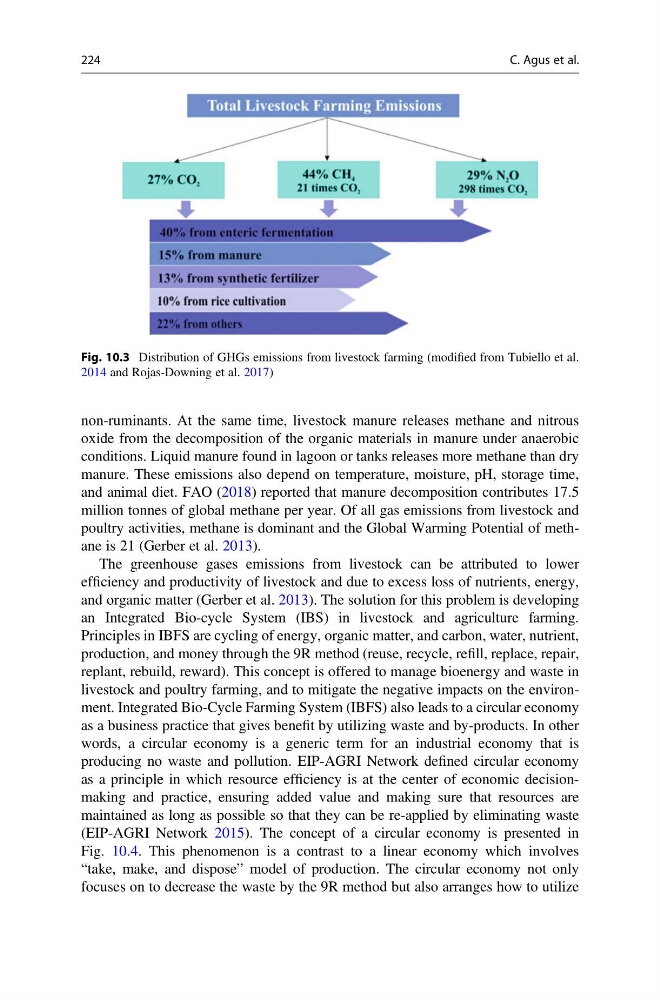
Fig. 10.3 Distribution of GHGs emissions from livestock farming (modified from Tubiello et al.
2014 and Rojas-Downing et al. 2017)
224
C. Agus et al.
oxide from the decomposition of the organic materials in manure under anaerobic
conditions. Liquid manure found in lagoon or tanks releases more methane than dry
manure. These emissions also depend on temperature, moisture, pH, storage time,
and animal diet. FAO (2018) reported that manure decomposition contributes 17.5
million tonnes of global methane per year. Of all gas emissions from livestock and
poultry activities, methane is dominant and the Global Warming Potential of methane is 21 (Gerber et al. 2013).
The greenhouse gases emissions from livestock can be attributed to lower
efficiency and productivity of livestock and due to excess loss of nutrients, energy,
and organic matter (Gerber et al. 2013). The solution for this problem is developing
an Integrated Bio-cycle System (IBS) in livestock and agriculture farming.
Principles in IBFS are cycling of energy, organic matter, and carbon, water, nutrient,
production, and money through the 9R method (reuse, recycle, refill, replace, repair,
replant, rebuild, reward). This concept is offered to manage bioenergy and waste in
livestock and poultry farming, and to mitigate the negative impacts on the environment. Integrated Bio-Cycle Farming System (IBFS) also leads to a circular economy
as a business practice that gives benefit by utilizing waste and by-products. In other
words, a circular economy is a generic term for an industrial economy that is
producing no waste and pollution. EIP-AGRI Network defined circular economy
as a principle in which resource efficiency is at the center of economic decisionmaking and practice, ensuring added value and making sure that resources are
maintained as long as possible so that they can be re-applied by eliminating waste
(EIP-AGRI Network 2015). The concept of a circular economy is presented in
Fig. 10.4. This phenomenon is a contrast to a linear economy which involves
“take, make, and dispose” model of production. The circular economy not only
focuses on to decrease the waste by the 9R method but also arranges how to utilize
Fig. 10.3 Distribution of GHGs emissions from livestock farming (modified from Tubiello et al.
2014 and Rojas-Downing et al. 2017)
224
C. Agus et al.