

8.3.2 Microwave Assisted Extraction (MAE)
Microwave heating is a process by which high frequency alternating electric field
heats the dielectric material from inside to the outside (Marić et al. 2018; Kaderides
et al. 2019). Microwave produces electromagnetic radiation consisting of alternating
electric and magnetic wave which travels perpendicular to one another. The frequency of the electromagnetic radiation is 300 MHz to 300 GHz. The ISM bands
which are used commonly in microwave are 915 MHz and 2450 MHz. In MAE,
microwave radiation is supplied to the solution in short intervals. It causes heating of
the mixture through ionic conduction and dipolar rotation. It takes lesser time to heat
up the sample and provides uniformity. Exhaust fans and fumes detector should be
provided in the laboratory and domestic microwaves are not advisable for use.
8.3.3 Ultrasound Assisted Extraction (UAE)
Ultrasound refers to sound waves with frequencies between 20 and 100 kHz
(Chuyen et al. 2018; Wen et al. 2018). The use of ultrasound is often combined
with other treatments at moderate intensity. When ultrasonic wave hit the surface of
the solution it produces compression and shear waves. When both waves are
combined together it produces instantaneous change in temperature and pressure
that causes cavitations, shear disruption, weakening of cell wall, and free radical
production in the plant tissues. This process produces heat which is cooled by
placing the extraction container on an ice bath.
8.3.4 Supercritical Fluid Extraction (SFE)
Supercritical fluid extraction is efficient, environmentally friendly, powerful,
and faster. Hence it has been widely recognized as a green sample preparation
technique. In supercritical fluid, distinct liquid and gas phases do not exist
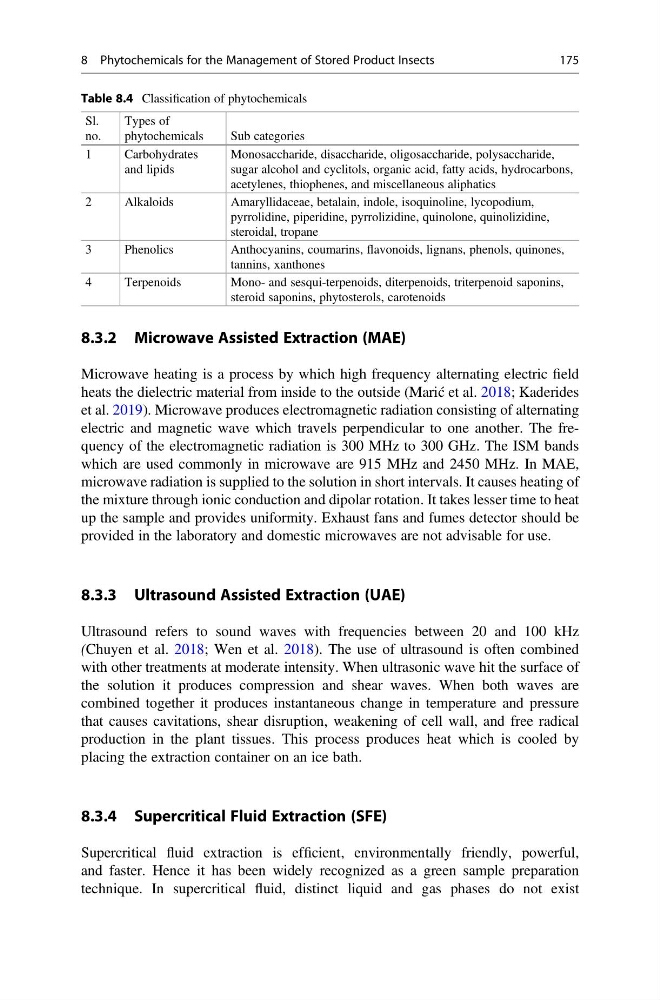
Table 8.4 Classification of phytochemicals
Sl.
no.
Types of
phytochemicals
Sub categories
1
Carbohydrates
and lipids
Monosaccharide, disaccharide, oligosaccharide, polysaccharide,
sugar alcohol and cyclitols, organic acid, fatty acids, hydrocarbons,
acetylenes, thiophenes, and miscellaneous aliphatics
2
Alkaloids
Amaryllidaceae, betalain, indole, isoquinoline, lycopodium,
pyrrolidine, piperidine, pyrrolizidine, quinolone, quinolizidine,
steroidal, tropane
3
Phenolics
Anthocyanins, coumarins, flavonoids, lignans, phenols, quinones,
tannins, xanthones
4
Terpenoids
Mono- and sesqui-terpenoids, diterpenoids, triterpenoid saponins,
steroid saponins, phytosterols, carotenoids
8 Phytochemicals for the Management of Stored Product Insects
175
Microwave heating is a process by which high frequency alternating electric field
heats the dielectric material from inside to the outside (Marić et al. 2018; Kaderides
et al. 2019). Microwave produces electromagnetic radiation consisting of alternating
electric and magnetic wave which travels perpendicular to one another. The frequency of the electromagnetic radiation is 300 MHz to 300 GHz. The ISM bands
which are used commonly in microwave are 915 MHz and 2450 MHz. In MAE,
microwave radiation is supplied to the solution in short intervals. It causes heating of
the mixture through ionic conduction and dipolar rotation. It takes lesser time to heat
up the sample and provides uniformity. Exhaust fans and fumes detector should be
provided in the laboratory and domestic microwaves are not advisable for use.
8.3.3 Ultrasound Assisted Extraction (UAE)
Ultrasound refers to sound waves with frequencies between 20 and 100 kHz
(Chuyen et al. 2018; Wen et al. 2018). The use of ultrasound is often combined
with other treatments at moderate intensity. When ultrasonic wave hit the surface of
the solution it produces compression and shear waves. When both waves are
combined together it produces instantaneous change in temperature and pressure
that causes cavitations, shear disruption, weakening of cell wall, and free radical
production in the plant tissues. This process produces heat which is cooled by
placing the extraction container on an ice bath.
8.3.4 Supercritical Fluid Extraction (SFE)
Supercritical fluid extraction is efficient, environmentally friendly, powerful,
and faster. Hence it has been widely recognized as a green sample preparation
technique. In supercritical fluid, distinct liquid and gas phases do not exist
Table 8.4 Classification of phytochemicals
Sl.
no.
Types of
phytochemicals
Sub categories
1
Carbohydrates
and lipids
Monosaccharide, disaccharide, oligosaccharide, polysaccharide,
sugar alcohol and cyclitols, organic acid, fatty acids, hydrocarbons,
acetylenes, thiophenes, and miscellaneous aliphatics
2
Alkaloids
Amaryllidaceae, betalain, indole, isoquinoline, lycopodium,
pyrrolidine, piperidine, pyrrolizidine, quinolone, quinolizidine,
steroidal, tropane
3
Phenolics
Anthocyanins, coumarins, flavonoids, lignans, phenols, quinones,
tannins, xanthones
4
Terpenoids
Mono- and sesqui-terpenoids, diterpenoids, triterpenoid saponins,
steroid saponins, phytosterols, carotenoids
8 Phytochemicals for the Management of Stored Product Insects
175