

A Typology of Hosts in Housing Tourism
195
Open, selective and
theoretical coding
Data collection
Writing of analytical
memos
Emergent categories
Central/main category
Grounded Theory
Properties
Dimensions
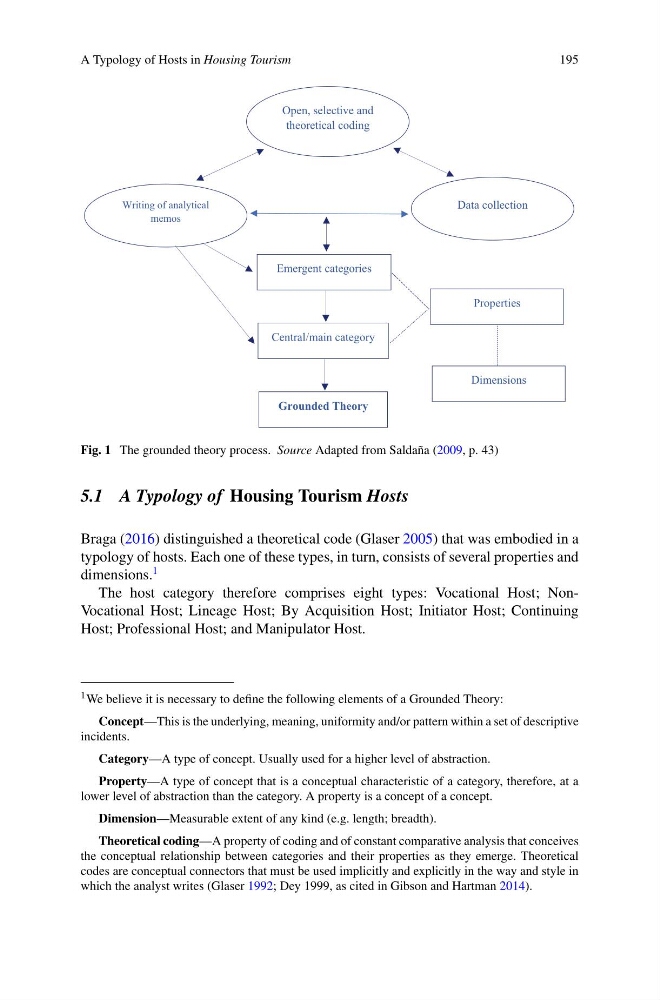
Fig. 1 The grounded theory process. Source Adapted from Saldaña (2009, p. 43)
5.1 A Typology of Housing Tourism Hosts
Braga (2016) distinguished a theoretical code (Glaser 2005) that was embodied in a
typology of hosts. Each one of these types, in turn, consists of several properties and
dimensions.
1
The host category therefore comprises eight types: Vocational Host; NonVocational Host; Lineage Host; By Acquisition Host; Initiator Host; Continuing
Host; Professional Host; and Manipulator Host.
1 We believe it is necessary to define the following elements of a Grounded Theory:
Concept—This is the underlying, meaning, uniformity and/or pattern within a set of descriptive
incidents.
Category—A type of concept. Usually used for a higher level of abstraction.
Property—A type of concept that is a conceptual characteristic of a category, therefore, at a
lower level of abstraction than the category. A property is a concept of a concept.
Dimension—Measurable extent of any kind (e.g. length; breadth).
Theoretical coding—A property of coding and of constant comparative analysis that conceives
the conceptual relationship between categories and their properties as they emerge. Theoretical
codes are conceptual connectors that must be used implicitly and explicitly in the way and style in
which the analyst writes (Glaser 1992; Dey 1999, as cited in Gibson and Hartman 2014).
195
Open, selective and
theoretical coding
Data collection
Writing of analytical
memos
Emergent categories
Central/main category
Grounded Theory
Properties
Dimensions
Fig. 1 The grounded theory process. Source Adapted from Saldaña (2009, p. 43)
5.1 A Typology of Housing Tourism Hosts
Braga (2016) distinguished a theoretical code (Glaser 2005) that was embodied in a
typology of hosts. Each one of these types, in turn, consists of several properties and
dimensions.
1
The host category therefore comprises eight types: Vocational Host; NonVocational Host; Lineage Host; By Acquisition Host; Initiator Host; Continuing
Host; Professional Host; and Manipulator Host.
1 We believe it is necessary to define the following elements of a Grounded Theory:
Concept—This is the underlying, meaning, uniformity and/or pattern within a set of descriptive
incidents.
Category—A type of concept. Usually used for a higher level of abstraction.
Property—A type of concept that is a conceptual characteristic of a category, therefore, at a
lower level of abstraction than the category. A property is a concept of a concept.
Dimension—Measurable extent of any kind (e.g. length; breadth).
Theoretical coding—A property of coding and of constant comparative analysis that conceives
the conceptual relationship between categories and their properties as they emerge. Theoretical
codes are conceptual connectors that must be used implicitly and explicitly in the way and style in
which the analyst writes (Glaser 1992; Dey 1999, as cited in Gibson and Hartman 2014).