

A Typology of Hosts in Housing Tourism
191
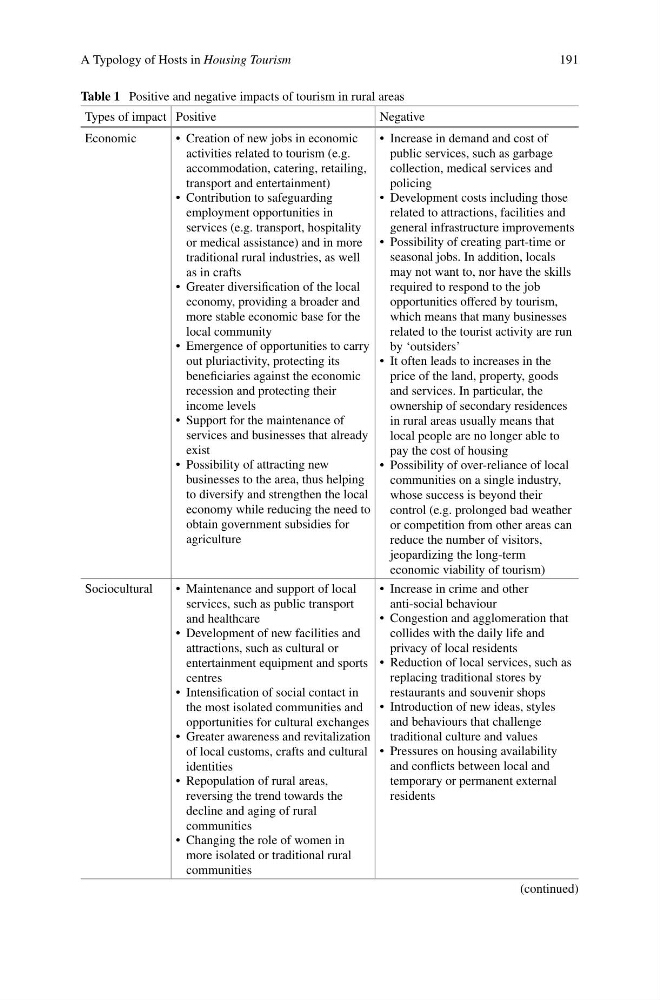
Table 1 Positive and negative impacts of tourism in rural areas
Types of impact Positive
Negative
Economic
• Creation of new jobs in economic
activities related to tourism (e.g.
accommodation, catering, retailing,
transport and entertainment)
• Contribution to safeguarding
employment opportunities in
services (e.g. transport, hospitality
or medical assistance) and in more
traditional rural industries, as well
as in crafts
• Greater diversification of the local
economy, providing a broader and
more stable economic base for the
local community
• Emergence of opportunities to carry
out pluriactivity, protecting its
beneficiaries against the economic
recession and protecting their
income levels
• Support for the maintenance of
services and businesses that already
exist
• Possibility of attracting new
businesses to the area, thus helping
to diversify and strengthen the local
economy while reducing the need to
obtain government subsidies for
agriculture
• Increase in demand and cost of
public services, such as garbage
collection, medical services and
policing
• Development costs including those
related to attractions, facilities and
general infrastructure improvements
• Possibility of creating part-time or
seasonal jobs. In addition, locals
may not want to, nor have the skills
required to respond to the job
opportunities offered by tourism,
which means that many businesses
related to the tourist activity are run
by ‘outsiders’
• It often leads to increases in the
price of the land, property, goods
and services. In particular, the
ownership of secondary residences
in rural areas usually means that
local people are no longer able to
pay the cost of housing
• Possibility of over-reliance of local
communities on a single industry,
whose success is beyond their
control (e.g. prolonged bad weather
or competition from other areas can
reduce the number of visitors,
jeopardizing the long-term
economic viability of tourism)
Sociocultural
• Maintenance and support of local
services, such as public transport
and healthcare
• Development of new facilities and
attractions, such as cultural or
entertainment equipment and sports
centres
• Intensification of social contact in
the most isolated communities and
opportunities for cultural exchanges
• Greater awareness and revitalization
of local customs, crafts and cultural
identities
• Repopulation of rural areas,
reversing the trend towards the
decline and aging of rural
communities
• Changing the role of women in
more isolated or traditional rural
communities
• Increase in crime and other
anti-social behaviour
• Congestion and agglomeration that
collides with the daily life and
privacy of local residents
• Reduction of local services, such as
replacing traditional stores by
restaurants and souvenir shops
• Introduction of new ideas, styles
and behaviours that challenge
traditional culture and values
• Pressures on housing availability
and conflicts between local and
temporary or permanent external
residents
(continued)
191
Table 1 Positive and negative impacts of tourism in rural areas
Types of impact Positive
Negative
Economic
• Creation of new jobs in economic
activities related to tourism (e.g.
accommodation, catering, retailing,
transport and entertainment)
• Contribution to safeguarding
employment opportunities in
services (e.g. transport, hospitality
or medical assistance) and in more
traditional rural industries, as well
as in crafts
• Greater diversification of the local
economy, providing a broader and
more stable economic base for the
local community
• Emergence of opportunities to carry
out pluriactivity, protecting its
beneficiaries against the economic
recession and protecting their
income levels
• Support for the maintenance of
services and businesses that already
exist
• Possibility of attracting new
businesses to the area, thus helping
to diversify and strengthen the local
economy while reducing the need to
obtain government subsidies for
agriculture
• Increase in demand and cost of
public services, such as garbage
collection, medical services and
policing
• Development costs including those
related to attractions, facilities and
general infrastructure improvements
• Possibility of creating part-time or
seasonal jobs. In addition, locals
may not want to, nor have the skills
required to respond to the job
opportunities offered by tourism,
which means that many businesses
related to the tourist activity are run
by ‘outsiders’
• It often leads to increases in the
price of the land, property, goods
and services. In particular, the
ownership of secondary residences
in rural areas usually means that
local people are no longer able to
pay the cost of housing
• Possibility of over-reliance of local
communities on a single industry,
whose success is beyond their
control (e.g. prolonged bad weather
or competition from other areas can
reduce the number of visitors,
jeopardizing the long-term
economic viability of tourism)
Sociocultural
• Maintenance and support of local
services, such as public transport
and healthcare
• Development of new facilities and
attractions, such as cultural or
entertainment equipment and sports
centres
• Intensification of social contact in
the most isolated communities and
opportunities for cultural exchanges
• Greater awareness and revitalization
of local customs, crafts and cultural
identities
• Repopulation of rural areas,
reversing the trend towards the
decline and aging of rural
communities
• Changing the role of women in
more isolated or traditional rural
communities
• Increase in crime and other
anti-social behaviour
• Congestion and agglomeration that
collides with the daily life and
privacy of local residents
• Reduction of local services, such as
replacing traditional stores by
restaurants and souvenir shops
• Introduction of new ideas, styles
and behaviours that challenge
traditional culture and values
• Pressures on housing availability
and conflicts between local and
temporary or permanent external
residents
(continued)