

Results and Discussion
Analysis of Stream Flow
From the study, humus thickness was found to vary from 8 to 10 cm. It is apparent
that the infiltration capacity values of soils are subject to wide variation depending
on several factors. Infiltration capacity can be the result of alterations in land use and
land cover. The values varied from 1.2 to 1.5 cm/h for the selected sites at Darap and
Limbuni Kholsa, whereas at the other sites these values increased by as much as
tenfold because of good grass cover or vegetation cover. In almost the entire
watersheds of the study area, stream flow increases as forest cover decreases, and
vice versa, because evaporation from the forest is significantly greater than that from
grasslands or crops. Although transpiration rates (soil water uptake by plants) under
conditions of ample soil water do not differ much between forests and non-forest
vegetation, rates of evaporation from vegetation wet by rain (rainfall interception)
are much higher from tall, aerodynamically rough surfaces such as forests. In
addition, the deeper roots of trees allow continued water uptake where plants with
more shallow roots cannot take up water during prolonged rainless periods. Because
rainfall interception totals are higher in wet years, the impact of forest clearance (i.e.,
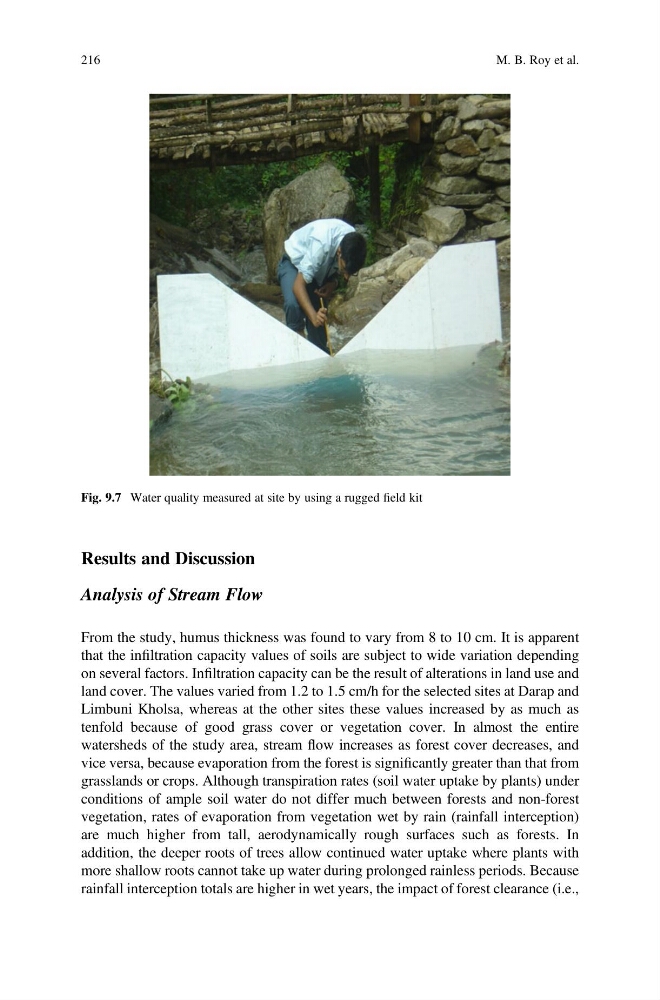
Fig. 9.7 Water quality measured at site by using a rugged field kit
216
M. B. Roy et al.
Analysis of Stream Flow
From the study, humus thickness was found to vary from 8 to 10 cm. It is apparent
that the infiltration capacity values of soils are subject to wide variation depending
on several factors. Infiltration capacity can be the result of alterations in land use and
land cover. The values varied from 1.2 to 1.5 cm/h for the selected sites at Darap and
Limbuni Kholsa, whereas at the other sites these values increased by as much as
tenfold because of good grass cover or vegetation cover. In almost the entire
watersheds of the study area, stream flow increases as forest cover decreases, and
vice versa, because evaporation from the forest is significantly greater than that from
grasslands or crops. Although transpiration rates (soil water uptake by plants) under
conditions of ample soil water do not differ much between forests and non-forest
vegetation, rates of evaporation from vegetation wet by rain (rainfall interception)
are much higher from tall, aerodynamically rough surfaces such as forests. In
addition, the deeper roots of trees allow continued water uptake where plants with
more shallow roots cannot take up water during prolonged rainless periods. Because
rainfall interception totals are higher in wet years, the impact of forest clearance (i.e.,
Fig. 9.7 Water quality measured at site by using a rugged field kit
216
M. B. Roy et al.