

coefficient with the respective color scheme. In case of cyclone, the household size
and average age are positively correlated with the decision of shifting to a cyclone
center and adaptation strategies of preparing cyclone-protected homes. Social group,
drinking water source, and distance to the drinking water source are negatively
correlated with the decisions for a cyclonic storm (Fig. 5.8a).
Correlation analysis between the adaptation strategies opted for flood hazards and
the socioeconomic conditions of the sampled households revealed that making a
higher foundation for the home and improving the river bank are positively correlated with per capita income. The social group is also positively correlated with
migration to a safer place during hazardous floods (Fig. 5.8b). In case of salinity
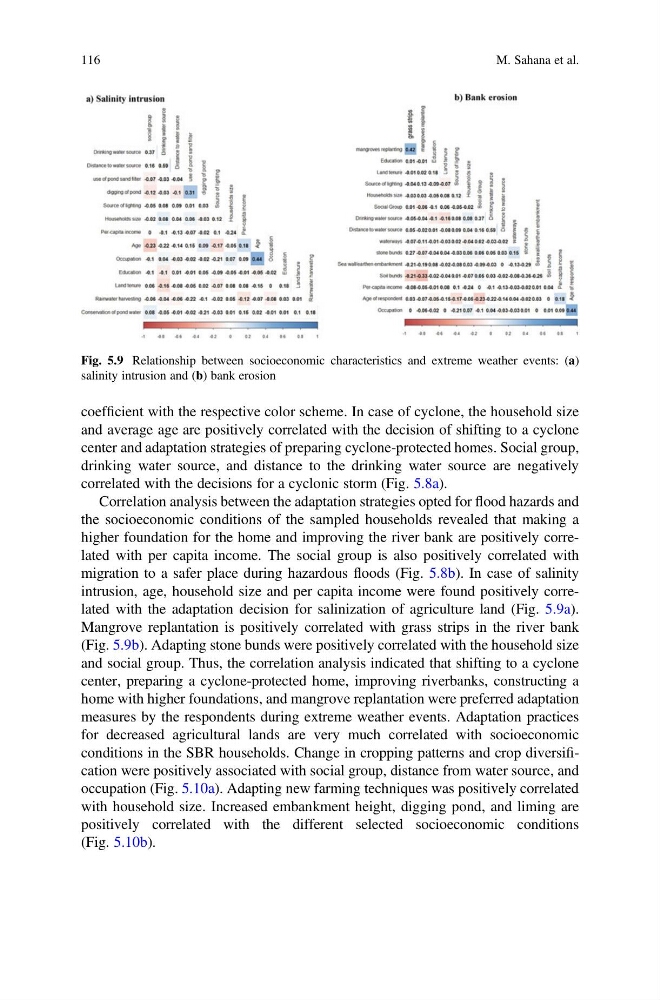
intrusion, age, household size and per capita income were found positively correlated with the adaptation decision for salinization of agriculture land (Fig. 5.9a).
Mangrove replantation is positively correlated with grass strips in the river bank
(Fig. 5.9b). Adapting stone bunds were positively correlated with the household size
and social group. Thus, the correlation analysis indicated that shifting to a cyclone
center, preparing a cyclone-protected home, improving riverbanks, constructing a
home with higher foundations, and mangrove replantation were preferred adaptation
measures by the respondents during extreme weather events. Adaptation practices
for decreased agricultural lands are very much correlated with socioeconomic
conditions in the SBR households. Change in cropping patterns and crop diversification were positively associated with social group, distance from water source, and
occupation (Fig. 5.10a). Adapting new farming techniques was positively correlated
with household size. Increased embankment height, digging pond, and liming are
positively correlated with the different selected socioeconomic conditions
(Fig. 5.10b).
Fig. 5.9 Relationship between socioeconomic characteristics and extreme weather events: (a)
salinity intrusion and (b) bank erosion
116
M. Sahana et al.
and average age are positively correlated with the decision of shifting to a cyclone
center and adaptation strategies of preparing cyclone-protected homes. Social group,
drinking water source, and distance to the drinking water source are negatively
correlated with the decisions for a cyclonic storm (Fig. 5.8a).
Correlation analysis between the adaptation strategies opted for flood hazards and
the socioeconomic conditions of the sampled households revealed that making a
higher foundation for the home and improving the river bank are positively correlated with per capita income. The social group is also positively correlated with
migration to a safer place during hazardous floods (Fig. 5.8b). In case of salinity
intrusion, age, household size and per capita income were found positively correlated with the adaptation decision for salinization of agriculture land (Fig. 5.9a).
Mangrove replantation is positively correlated with grass strips in the river bank
(Fig. 5.9b). Adapting stone bunds were positively correlated with the household size
and social group. Thus, the correlation analysis indicated that shifting to a cyclone
center, preparing a cyclone-protected home, improving riverbanks, constructing a
home with higher foundations, and mangrove replantation were preferred adaptation
measures by the respondents during extreme weather events. Adaptation practices
for decreased agricultural lands are very much correlated with socioeconomic
conditions in the SBR households. Change in cropping patterns and crop diversification were positively associated with social group, distance from water source, and
occupation (Fig. 5.10a). Adapting new farming techniques was positively correlated
with household size. Increased embankment height, digging pond, and liming are
positively correlated with the different selected socioeconomic conditions
(Fig. 5.10b).
Fig. 5.9 Relationship between socioeconomic characteristics and extreme weather events: (a)
salinity intrusion and (b) bank erosion
116
M. Sahana et al.