

the river bank (16%), making a community action team (11%), migrating to other
villages (9%), and constructing a home with a higher foundation (4%). It is important
to notice that most of the sampled households preferred to store food and move to
safer places during the flood period (Fig. 5.3b). In salinity intrusions, most of the
sampled households (45%) did not have any adaptation strategy. Nearly 19% of the
sampled households opted for rainwater harvesting, whereas conservation of pond
water was carried out by 19% of the respondents. Around 10% of the respondents
use a pond sand filter to reduce salinity intrusion and nearly 8% of the sampled
households dig ponds (Fig. 5.3c).
Various adaptation strategies were reported by respondents for bank erosion.
From Fig. 5.3d, it is observed that most of the respondents constructed soil bunds
(35%) to reduce bank erosion, followed by construction of stone bunds (20%) or
embankments (18%), or chose mangrove replantation (8%), no adaptation (7%),
waterways (6%), and alignment of grass strips (6%).
The analysis of adaptation strategies for extreme weather events revealed that
most of the sampled households did not choose any strategy during cyclones, salinity
intrusions, and river bank erosion. It is also noteworthy that few respondents opted
for disaster-resilient structures and embankments. Priority was given to staying at
home, storing food, harvesting rainwater, and constructing soil bunds along the
rivers and channels. Apart from these strategies, moving to safer places and migration to other villages were preferred by the sampled households. These strategies
reflect the varying degree of vulnerability of the people to different weather events in
the SBR and their responses to lessen the impacts on themselves.
Adaptation Measures of the Sampled Households for Changes
in Economic Activities
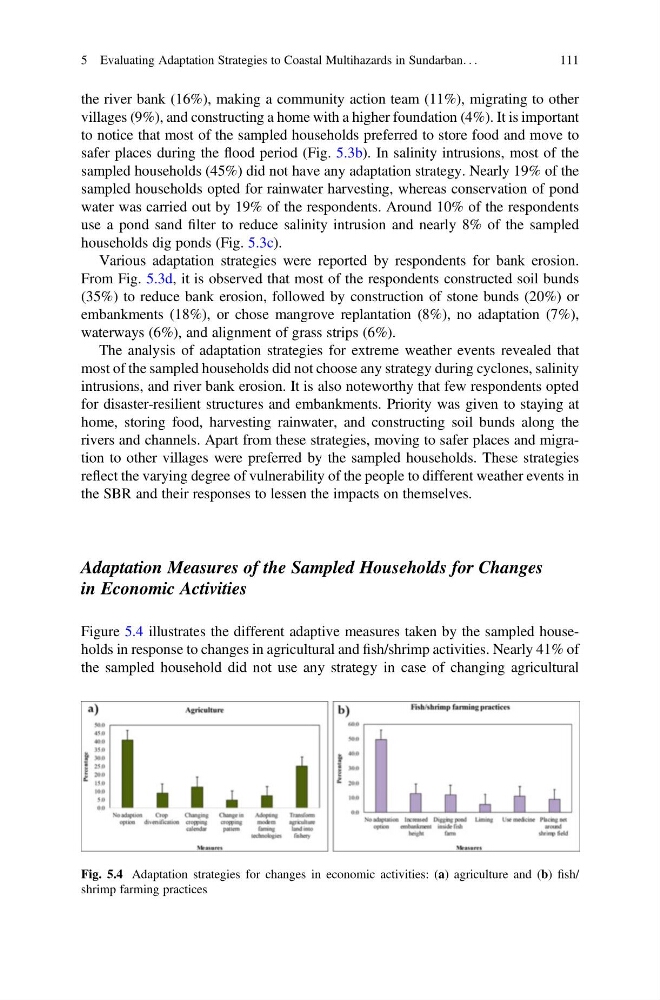
Figure 5.4 illustrates the different adaptive measures taken by the sampled households in response to changes in agricultural and fish/shrimp activities. Nearly 41% of
the sampled household did not use any strategy in case of changing agricultural
Fig. 5.4 Adaptation strategies for changes in economic activities: (a) agriculture and (b) fish/
shrimp farming practices
5 Evaluating Adaptation Strategies to Coastal Multihazards in Sundarban. . .
111
villages (9%), and constructing a home with a higher foundation (4%). It is important
to notice that most of the sampled households preferred to store food and move to
safer places during the flood period (Fig. 5.3b). In salinity intrusions, most of the
sampled households (45%) did not have any adaptation strategy. Nearly 19% of the
sampled households opted for rainwater harvesting, whereas conservation of pond
water was carried out by 19% of the respondents. Around 10% of the respondents
use a pond sand filter to reduce salinity intrusion and nearly 8% of the sampled
households dig ponds (Fig. 5.3c).
Various adaptation strategies were reported by respondents for bank erosion.
From Fig. 5.3d, it is observed that most of the respondents constructed soil bunds
(35%) to reduce bank erosion, followed by construction of stone bunds (20%) or
embankments (18%), or chose mangrove replantation (8%), no adaptation (7%),
waterways (6%), and alignment of grass strips (6%).
The analysis of adaptation strategies for extreme weather events revealed that
most of the sampled households did not choose any strategy during cyclones, salinity
intrusions, and river bank erosion. It is also noteworthy that few respondents opted
for disaster-resilient structures and embankments. Priority was given to staying at
home, storing food, harvesting rainwater, and constructing soil bunds along the
rivers and channels. Apart from these strategies, moving to safer places and migration to other villages were preferred by the sampled households. These strategies
reflect the varying degree of vulnerability of the people to different weather events in
the SBR and their responses to lessen the impacts on themselves.
Adaptation Measures of the Sampled Households for Changes
in Economic Activities
Figure 5.4 illustrates the different adaptive measures taken by the sampled households in response to changes in agricultural and fish/shrimp activities. Nearly 41% of
the sampled household did not use any strategy in case of changing agricultural
Fig. 5.4 Adaptation strategies for changes in economic activities: (a) agriculture and (b) fish/
shrimp farming practices
5 Evaluating Adaptation Strategies to Coastal Multihazards in Sundarban. . .
111