

5.3 Materials
161
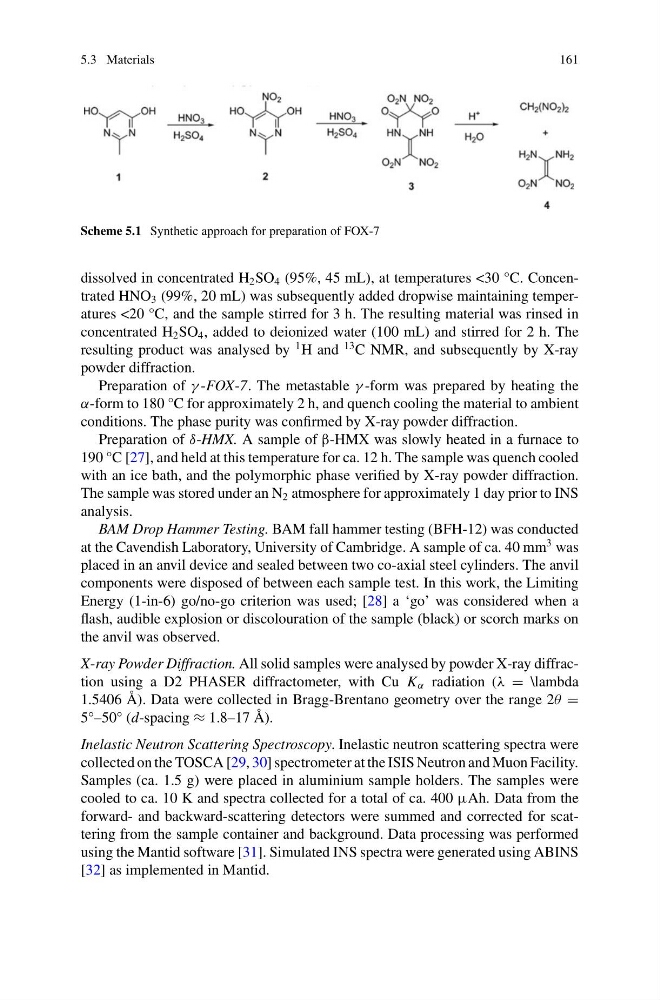
Scheme 5.1 Synthetic approach for preparation of FOX-7
dissolved in concentrated H 2 SO 4 (95%, 45 mL), at temperatures <30 °C. Concentrated HNO 3 (99%, 20 mL) was subsequently added dropwise maintaining temperatures <20 °C, and the sample stirred for 3 h. The resulting material was rinsed in
concentrated H 2 SO 4 , added to deionized water (100 mL) and stirred for 2 h. The
resulting product was analysed by
1 H and
13 C NMR, and subsequently by X-ray
powder diffraction.
Preparation of γ -FOX-7. The metastable γ -form was prepared by heating the
α-form to 180 °C for approximately 2 h, and quench cooling the material to ambient
conditions. The phase purity was confirmed by X-ray powder diffraction.
Preparation of δ-HMX. A sample of β-HMX was slowly heated in a furnace to
190 °C [27], and held at this temperature for ca. 12 h. The sample was quench cooled
with an ice bath, and the polymorphic phase verified by X-ray powder diffraction.
The sample was stored under an N 2 atmosphere for approximately 1 day prior to INS
analysis.
BAM Drop Hammer Testing. BAM fall hammer testing (BFH-12) was conducted
at the Cavendish Laboratory, University of Cambridge. A sample of ca. 40 mm
3 was
placed in an anvil device and sealed between two co-axial steel cylinders. The anvil
components were disposed of between each sample test. In this work, the Limiting
Energy (1-in-6) go/no-go criterion was used; [28] a ‘go’ was considered when a
flash, audible explosion or discolouration of the sample (black) or scorch marks on
the anvil was observed.
X-ray Powder Diffraction. All solid samples were analysed by powder X-ray diffraction using a D2 PHASER diffractometer, with Cu K α radiation (λ = \lambda
1.5406 Å). Data were collected in Bragg-Brentano geometry over the range 2θ =
5°–50° (d-spacing ≈ 1.8–17 Å).
Inelastic Neutron Scattering Spectroscopy. Inelastic neutron scattering spectra were
collected on the TOSCA [29, 30] spectrometer at the ISIS Neutron and Muon Facility.
Samples (ca. 1.5 g) were placed in aluminium sample holders. The samples were
cooled to ca. 10 K and spectra collected for a total of ca. 400 μAh. Data from the
forward- and backward-scattering detectors were summed and corrected for scattering from the sample container and background. Data processing was performed
using the Mantid software [31]. Simulated INS spectra were generated using ABINS
[32] as implemented in Mantid.
161
Scheme 5.1 Synthetic approach for preparation of FOX-7
dissolved in concentrated H 2 SO 4 (95%, 45 mL), at temperatures <30 °C. Concentrated HNO 3 (99%, 20 mL) was subsequently added dropwise maintaining temperatures <20 °C, and the sample stirred for 3 h. The resulting material was rinsed in
concentrated H 2 SO 4 , added to deionized water (100 mL) and stirred for 2 h. The
resulting product was analysed by
1 H and
13 C NMR, and subsequently by X-ray
powder diffraction.
Preparation of γ -FOX-7. The metastable γ -form was prepared by heating the
α-form to 180 °C for approximately 2 h, and quench cooling the material to ambient
conditions. The phase purity was confirmed by X-ray powder diffraction.
Preparation of δ-HMX. A sample of β-HMX was slowly heated in a furnace to
190 °C [27], and held at this temperature for ca. 12 h. The sample was quench cooled
with an ice bath, and the polymorphic phase verified by X-ray powder diffraction.
The sample was stored under an N 2 atmosphere for approximately 1 day prior to INS
analysis.
BAM Drop Hammer Testing. BAM fall hammer testing (BFH-12) was conducted
at the Cavendish Laboratory, University of Cambridge. A sample of ca. 40 mm
3 was
placed in an anvil device and sealed between two co-axial steel cylinders. The anvil
components were disposed of between each sample test. In this work, the Limiting
Energy (1-in-6) go/no-go criterion was used; [28] a ‘go’ was considered when a
flash, audible explosion or discolouration of the sample (black) or scorch marks on
the anvil was observed.
X-ray Powder Diffraction. All solid samples were analysed by powder X-ray diffraction using a D2 PHASER diffractometer, with Cu K α radiation (λ = \lambda
1.5406 Å). Data were collected in Bragg-Brentano geometry over the range 2θ =
5°–50° (d-spacing ≈ 1.8–17 Å).
Inelastic Neutron Scattering Spectroscopy. Inelastic neutron scattering spectra were
collected on the TOSCA [29, 30] spectrometer at the ISIS Neutron and Muon Facility.
Samples (ca. 1.5 g) were placed in aluminium sample holders. The samples were
cooled to ca. 10 K and spectra collected for a total of ca. 400 μAh. Data from the
forward- and backward-scattering detectors were summed and corrected for scattering from the sample container and background. Data processing was performed
using the Mantid software [31]. Simulated INS spectra were generated using ABINS
[32] as implemented in Mantid.