

92
3 Vibrational Up-Pumping: Predicting Impact Sensitivity of Some …
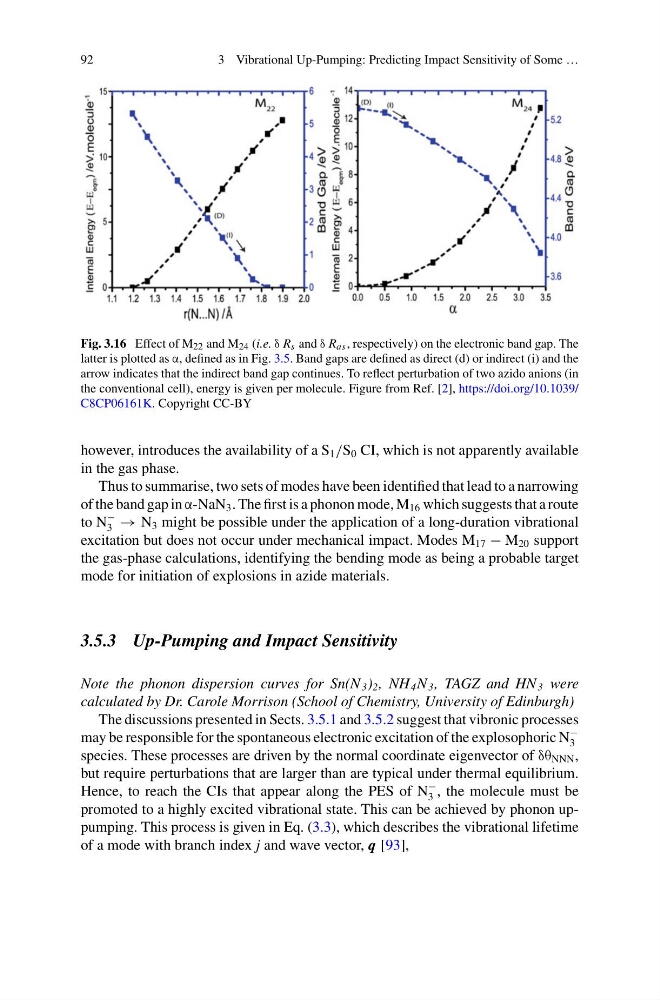
Fig. 3.16 Effect of M 22 and M 24 (i.e. δ R s and δ R as , respectively) on the electronic band gap. The
latter is plotted as α, defined as in Fig. 3.5. Band gaps are defined as direct (d) or indirect (i) and the
arrow indicates that the indirect band gap continues. To reflect perturbation of two azido anions (in
the conventional cell), energy is given per molecule. Figure from Ref. [2], https://doi.org/10.1039/
C8CP06161K. Copyright CC-BY
however, introduces the availability of a S 1 /S 0 CI, which is not apparently available
in the gas phase.
Thus to summarise, two sets of modes have been identified that lead to a narrowing
of the band gap in α-NaN 3 . The first is a phonon mode, M 16 which suggests that a route
to N
−
3 → N 3 might be possible under the application of a long-duration vibrational
excitation but does not occur under mechanical impact. Modes M 17 − M 20 support
the gas-phase calculations, identifying the bending mode as being a probable target
mode for initiation of explosions in azide materials.
3.5.3 Up-Pumping and Impact Sensitivity
Note the phonon dispersion curves for Sn(N 3 ) 2 , NH 4 N 3 , TAGZ and HN 3 were
calculated by Dr. Carole Morrison (School of Chemistry, University of Edinburgh)
The discussions presented in Sects. 3.5.1 and 3.5.2 suggest that vibronic processes
may be responsible for the spontaneous electronic excitation of the explosophoric N
−
3
species. These processes are driven by the normal coordinate eigenvector of δθ NNN ,
but require perturbations that are larger than are typical under thermal equilibrium.
Hence, to reach the CIs that appear along the PES of N
−
3 , the molecule must be
promoted to a highly excited vibrational state. This can be achieved by phonon uppumping. This process is given in Eq. (3.3), which describes the vibrational lifetime
of a mode with branch index j and wave vector, q [93],
3 Vibrational Up-Pumping: Predicting Impact Sensitivity of Some …
Fig. 3.16 Effect of M 22 and M 24 (i.e. δ R s and δ R as , respectively) on the electronic band gap. The
latter is plotted as α, defined as in Fig. 3.5. Band gaps are defined as direct (d) or indirect (i) and the
arrow indicates that the indirect band gap continues. To reflect perturbation of two azido anions (in
the conventional cell), energy is given per molecule. Figure from Ref. [2], https://doi.org/10.1039/
C8CP06161K. Copyright CC-BY
however, introduces the availability of a S 1 /S 0 CI, which is not apparently available
in the gas phase.
Thus to summarise, two sets of modes have been identified that lead to a narrowing
of the band gap in α-NaN 3 . The first is a phonon mode, M 16 which suggests that a route
to N
−
3 → N 3 might be possible under the application of a long-duration vibrational
excitation but does not occur under mechanical impact. Modes M 17 − M 20 support
the gas-phase calculations, identifying the bending mode as being a probable target
mode for initiation of explosions in azide materials.
3.5.3 Up-Pumping and Impact Sensitivity
Note the phonon dispersion curves for Sn(N 3 ) 2 , NH 4 N 3 , TAGZ and HN 3 were
calculated by Dr. Carole Morrison (School of Chemistry, University of Edinburgh)
The discussions presented in Sects. 3.5.1 and 3.5.2 suggest that vibronic processes
may be responsible for the spontaneous electronic excitation of the explosophoric N
−
3
species. These processes are driven by the normal coordinate eigenvector of δθ NNN ,
but require perturbations that are larger than are typical under thermal equilibrium.
Hence, to reach the CIs that appear along the PES of N
−
3 , the molecule must be
promoted to a highly excited vibrational state. This can be achieved by phonon uppumping. This process is given in Eq. (3.3), which describes the vibrational lifetime
of a mode with branch index j and wave vector, q [93],