

2.4 Conclusion
T-RFLP profiling of sclerotia grains collected in Fagus forest soils on Mt. Iwaki,
Aomori Prefecture, and Mt. Chokai, Yamagata Prefecture, did not indicate that the
sclerotia were formed by C. geophilum. Rather, it appears that the sclerotia were
formed by sclerotia-associated species or that the sclerotia were originally formed by
C. geophilum and subsequently occupied by sclerotia-associated species.
Clone library analysis of fungal community structure indicated that multiple
fungal species, including DSEs, are associated with sclerotia collected in soil from
Mt. Ontake in Gifu Prefecture. These species may represent species that colonize
C. geophilum sclerotia that have become inviable or species that themselves form
sclerotia. Fungal community profiling by culture and clone library methods allowed
us to identify many sclerotia-associated fungal species. Further investigation using
this approach, combined with different types of media and culture conditions, could
help to identify more sclerotia-forming species and broaden our understanding of the
roles and functions of sclerotia in forest soil.
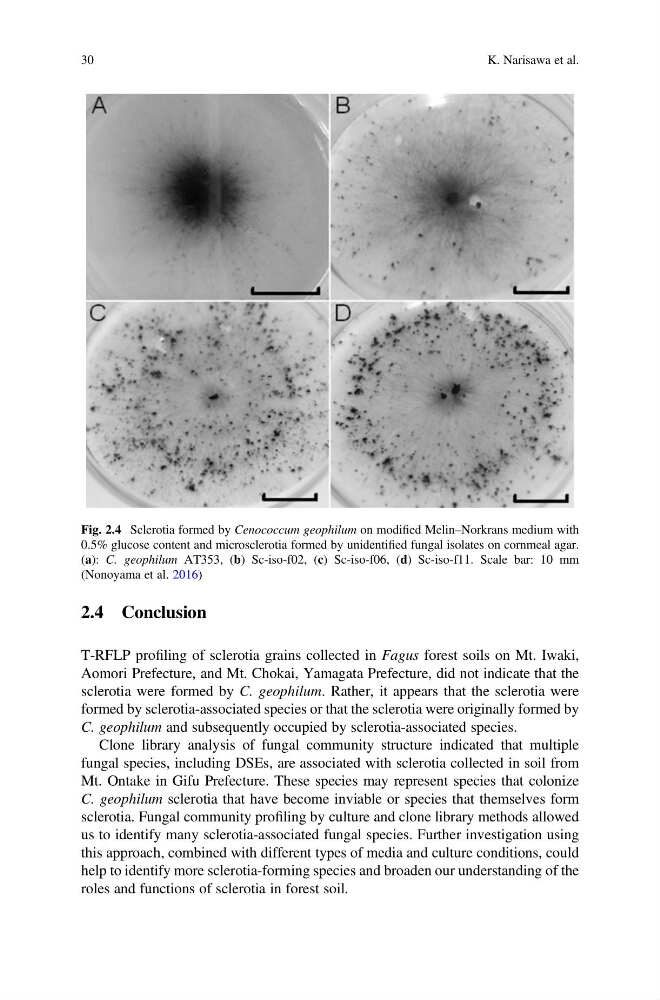
Fig. 2.4 Sclerotia formed by Cenococcum geophilum on modified Melin–Norkrans medium with
0.5% glucose content and microsclerotia formed by unidentified fungal isolates on cornmeal agar.
(a): C. geophilum AT353, (b) Sc-iso-f02, (c) Sc-iso-f06, (d) Sc-iso-f11. Scale bar: 10 mm
(Nonoyama et al. 2016)
30
K. Narisawa et al.
T-RFLP profiling of sclerotia grains collected in Fagus forest soils on Mt. Iwaki,
Aomori Prefecture, and Mt. Chokai, Yamagata Prefecture, did not indicate that the
sclerotia were formed by C. geophilum. Rather, it appears that the sclerotia were
formed by sclerotia-associated species or that the sclerotia were originally formed by
C. geophilum and subsequently occupied by sclerotia-associated species.
Clone library analysis of fungal community structure indicated that multiple
fungal species, including DSEs, are associated with sclerotia collected in soil from
Mt. Ontake in Gifu Prefecture. These species may represent species that colonize
C. geophilum sclerotia that have become inviable or species that themselves form
sclerotia. Fungal community profiling by culture and clone library methods allowed
us to identify many sclerotia-associated fungal species. Further investigation using
this approach, combined with different types of media and culture conditions, could
help to identify more sclerotia-forming species and broaden our understanding of the
roles and functions of sclerotia in forest soil.
Fig. 2.4 Sclerotia formed by Cenococcum geophilum on modified Melin–Norkrans medium with
0.5% glucose content and microsclerotia formed by unidentified fungal isolates on cornmeal agar.
(a): C. geophilum AT353, (b) Sc-iso-f02, (c) Sc-iso-f06, (d) Sc-iso-f11. Scale bar: 10 mm
(Nonoyama et al. 2016)
30
K. Narisawa et al.