

According to Chang et al. (2019), by using the combination of horizontal drilling and hydraulic fracturing techniques had made the extraction of shale/crude oil became
more feasible, economically and technically. It was discovered that this technique requires up to 34,900 m
3 of
water per horizontal well where it will limit the production
of the crude oil from the well due to high baseline water
stress which many countries with crude oil producer are
facing. Hence, this technique allows more water to be taken
out. Almost all crude oil producer countries facing this
problem due to the baseline levels of water stress were high.
The water needs to be taken out to allow the gas production
once the hydraulic fracturing process was completed which
resulting in flowback water (FW), and then, the PW was
taken place, and the process continued. Here come the
critical challenges faced by most refinery process plant to
manage this FW and PW where protecting human health
and the environment happened to be obeyed with respect to
preserve the extraction. At first, treating the water in
wastewater treatment plants (WWTP) has been one of the
attempts for this matter. However, it was found that the
quality of the receiving surface waters was reduced due to
failure to the remove the dissolved impurities from the oil.
Hence, it brought to another attempt of reuse and deep well
injection technique. The famously used method to extract
oil and gas is by deep well injection but limited not to all
reservoirs. In addition to concerns on earthquakes, a smaller
number of operating and constraint on the deep well
injection, it was suggested that recycling or reusing and
discharging the waters after proper treatment has been the
best solution for the industry.
On the other hand, there is another water produced from
the refinery processing which is process water. Generated as
the by-product after the refinery process of crude oil and gas,
the mineral ions/heavy metals content from this water considerably lower than produced water due to the refinery
process which taken place has removed almost half of the
constituents of the minerals in the water. There are other
chemicals broken down during the refinery process that
should be taken note. Major constituents such as ammonia
(NH 3 ), phenols, hydrogen sulphide (H 2 S), toluene, xylene,
benzene and ethylbenzene are among the chemical compounds that broken down which either loss or even absence
after the transformation process in PW. Hence, it also can be
considered that produced and process water possesses significant difference in term of chemicals content as generally,
PW contains high salt directly from crude oil/gas while high
organic matters containing in process water.
Even though the quality and quantity of PW may vary
depending on its location and geological sources, previous
studies have shown that there are no big differences in term
of treatment using microfiltration (MF) and ultrafiltration
(UF) membrane. In fact, even the results for PW and process
water also have no significant differences even comparable.
Therefore, in this chapter, the treatment for produce water
and process water can be reviewed as single progression. In
addition, there are only few literatures which stated where
the original source of the crude oil was taken, and hence, the
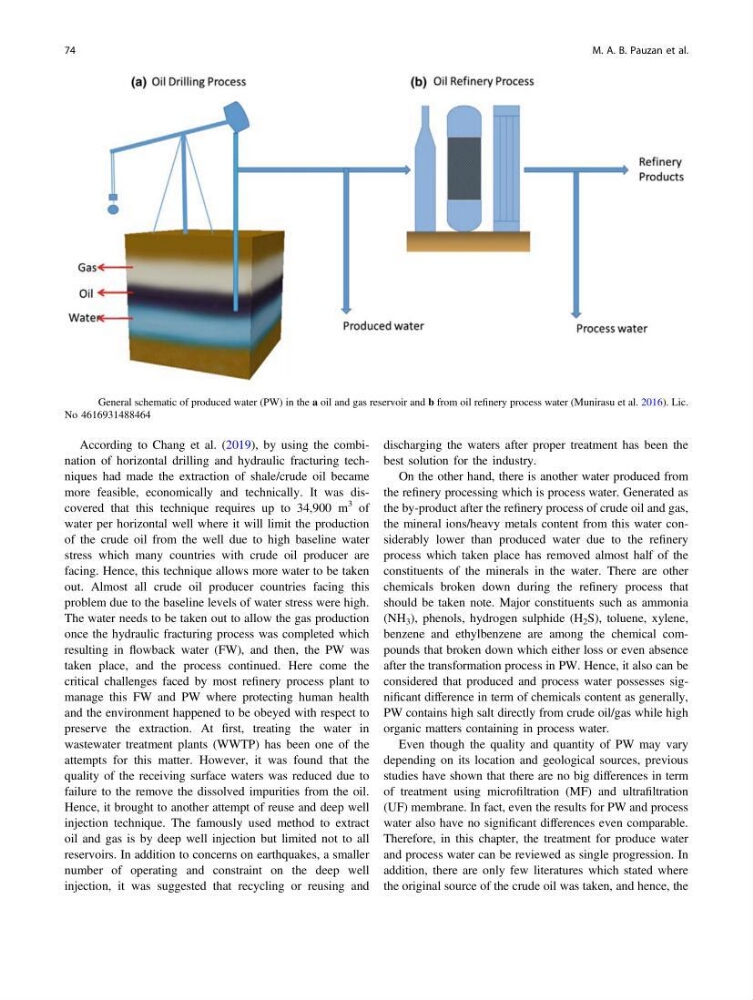
Fig. 1 General schematic of produced water (PW) in the a oil and gas reservoir and b from oil refinery process water (Munirasu et al. 2016). Lic.
No 4616931488464
74
M. A. B. Pauzan et al.
more feasible, economically and technically. It was discovered that this technique requires up to 34,900 m
3 of
water per horizontal well where it will limit the production
of the crude oil from the well due to high baseline water
stress which many countries with crude oil producer are
facing. Hence, this technique allows more water to be taken
out. Almost all crude oil producer countries facing this
problem due to the baseline levels of water stress were high.
The water needs to be taken out to allow the gas production
once the hydraulic fracturing process was completed which
resulting in flowback water (FW), and then, the PW was
taken place, and the process continued. Here come the
critical challenges faced by most refinery process plant to
manage this FW and PW where protecting human health
and the environment happened to be obeyed with respect to
preserve the extraction. At first, treating the water in
wastewater treatment plants (WWTP) has been one of the
attempts for this matter. However, it was found that the
quality of the receiving surface waters was reduced due to
failure to the remove the dissolved impurities from the oil.
Hence, it brought to another attempt of reuse and deep well
injection technique. The famously used method to extract
oil and gas is by deep well injection but limited not to all
reservoirs. In addition to concerns on earthquakes, a smaller
number of operating and constraint on the deep well
injection, it was suggested that recycling or reusing and
discharging the waters after proper treatment has been the
best solution for the industry.
On the other hand, there is another water produced from
the refinery processing which is process water. Generated as
the by-product after the refinery process of crude oil and gas,
the mineral ions/heavy metals content from this water considerably lower than produced water due to the refinery
process which taken place has removed almost half of the
constituents of the minerals in the water. There are other
chemicals broken down during the refinery process that
should be taken note. Major constituents such as ammonia
(NH 3 ), phenols, hydrogen sulphide (H 2 S), toluene, xylene,
benzene and ethylbenzene are among the chemical compounds that broken down which either loss or even absence
after the transformation process in PW. Hence, it also can be
considered that produced and process water possesses significant difference in term of chemicals content as generally,
PW contains high salt directly from crude oil/gas while high
organic matters containing in process water.
Even though the quality and quantity of PW may vary
depending on its location and geological sources, previous
studies have shown that there are no big differences in term
of treatment using microfiltration (MF) and ultrafiltration
(UF) membrane. In fact, even the results for PW and process
water also have no significant differences even comparable.
Therefore, in this chapter, the treatment for produce water
and process water can be reviewed as single progression. In
addition, there are only few literatures which stated where
the original source of the crude oil was taken, and hence, the
Fig. 1 General schematic of produced water (PW) in the a oil and gas reservoir and b from oil refinery process water (Munirasu et al. 2016). Lic.
No 4616931488464
74
M. A. B. Pauzan et al.