

fabrication by NIPS, a PHA with a high HV content should
lead to better mechanical properties.
On the other hand, P(3HB3HV) membranes were also
fabricated using the EIPS technique. These membranes were
found to have much better mechanical properties and could
be used for filtration tests. The influence of the presence of
additives (PEG of different molecular weights) into the dope
solution on P(3HB3HV) membrane properties was thus
evaluated. The properties of the membranes made by EIPS
are described below:
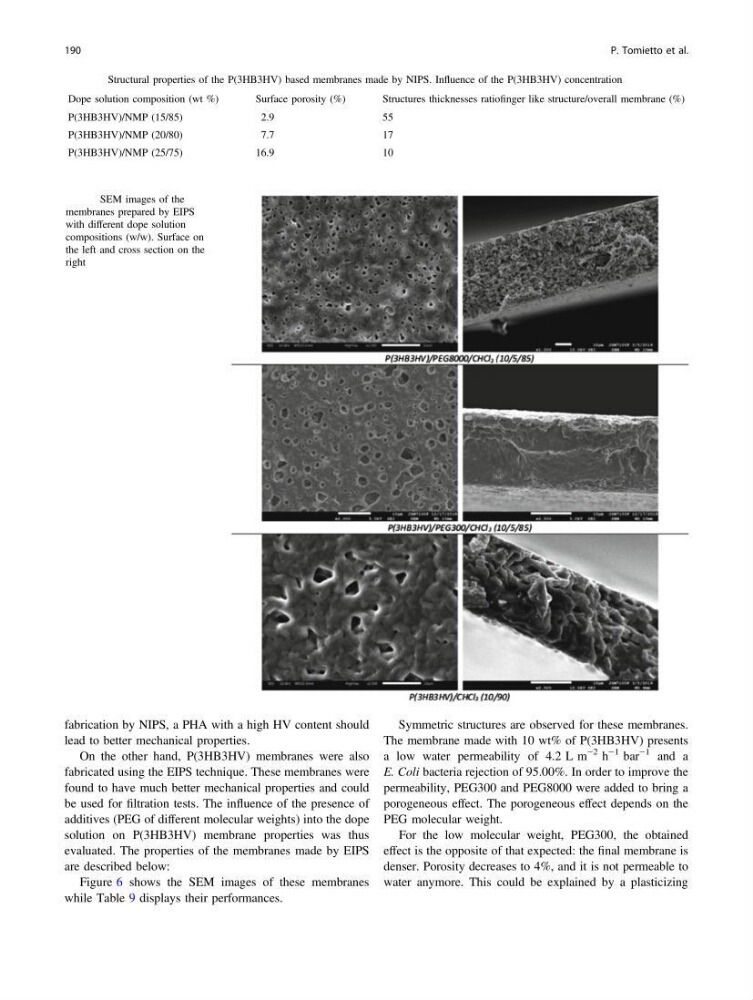
Figure 6 shows the SEM images of these membranes
while Table 9 displays their performances.
Symmetric structures are observed for these membranes.
The membrane made with 10 wt% of P(3HB3HV) presents
a low water permeability of 4.2 L m
−2 h
−1 bar
−1 and a
E. Coli bacteria rejection of 95.00%. In order to improve the
permeability, PEG300 and PEG8000 were added to bring a
porogeneous effect. The porogeneous effect depends on the
PEG molecular weight.
For the low molecular weight, PEG300, the obtained
effect is the opposite of that expected: the final membrane is
denser. Porosity decreases to 4%, and it is not permeable to
water anymore. This could be explained by a plasticizing
Table 8 Structural properties of the P(3HB3HV) based membranes made by NIPS. Influence of the P(3HB3HV) concentration
Dope solution composition (wt %)
Surface porosity (%)
Structures thicknesses ratiofinger like structure/overall membrane (%)
P(3HB3HV)/NMP (15/85)
2.9
55
P(3HB3HV)/NMP (20/80)
7.7
17
P(3HB3HV)/NMP (25/75)
16.9
10
Fig. 6 SEM images of the
membranes prepared by EIPS
with different dope solution
compositions (w/w). Surface on
the left and cross section on the
right
190
P. Tomietto et al.
lead to better mechanical properties.
On the other hand, P(3HB3HV) membranes were also
fabricated using the EIPS technique. These membranes were
found to have much better mechanical properties and could
be used for filtration tests. The influence of the presence of
additives (PEG of different molecular weights) into the dope
solution on P(3HB3HV) membrane properties was thus
evaluated. The properties of the membranes made by EIPS
are described below:
Figure 6 shows the SEM images of these membranes
while Table 9 displays their performances.
Symmetric structures are observed for these membranes.
The membrane made with 10 wt% of P(3HB3HV) presents
a low water permeability of 4.2 L m
−2 h
−1 bar
−1 and a
E. Coli bacteria rejection of 95.00%. In order to improve the
permeability, PEG300 and PEG8000 were added to bring a
porogeneous effect. The porogeneous effect depends on the
PEG molecular weight.
For the low molecular weight, PEG300, the obtained
effect is the opposite of that expected: the final membrane is
denser. Porosity decreases to 4%, and it is not permeable to
water anymore. This could be explained by a plasticizing
Table 8 Structural properties of the P(3HB3HV) based membranes made by NIPS. Influence of the P(3HB3HV) concentration
Dope solution composition (wt %)
Surface porosity (%)
Structures thicknesses ratiofinger like structure/overall membrane (%)
P(3HB3HV)/NMP (15/85)
2.9
55
P(3HB3HV)/NMP (20/80)
7.7
17
P(3HB3HV)/NMP (25/75)
16.9
10
Fig. 6 SEM images of the
membranes prepared by EIPS
with different dope solution
compositions (w/w). Surface on
the left and cross section on the
right
190
P. Tomietto et al.