

molecular mass of the polymer (by abiotic or biotic reactions) and then the bioassimilation by microorganisms
(Lucas et al. 2008; Vroman and Tighzert 2009). PHAs can
be degraded by a wide variety of microorganisms, and it has
been shown that the biodegradation rate depends strongly on
the environment conditions (Mergaert et al. 1992). As a case
example, P(3HB) degrades within a few months in anaerobic
sewage and within several years in seawater (Madison and
Huisman 1999). The decomposition by microorganisms is
also highly dependent on the physicochemical properties of
the polymer (Jendrossek et al. 1996). The important factors
are (i) the stereo configuration and the crystallinity: higher
crystallinity ratio or higher crystal perfection decreases the
degradability, (ii) the molecular mass: high molecular masses degrade slower than small molecular masses, (iii) the
monomeric content: P(3HB) tends to degrade slower than
copolymers of 3HV.
Additionally to their biodegradability, PHAs are also
biocompatible, which means both polymer and degradation
products have no toxic effects on living organisms (Volova
et al. 2003; Verlinden et al. 2007).
2.2 PHAs Applications
Due to their biobased origin, their biodegradability, biocompatibility, and versatile properties, PHAs have been
prospected for several applications. Today, two major
application sectors are mainly studied for PHAs, the packaging (Bugnicourt et al. 2014; Modi et al. 2011; Ragaert
et al. 2019; Hartley Yee and Ray Foster 2014), and the
therapeutic sectors (Zhang et al. 2018).
Among the 348 million tonnes of the worldwide plastics
production (in 2017), the packaging industry is the main
application sector for plastics (Plastics Europe 2018). In
Europe, 39.7% (in 2017) of the plastic demand is intended
for the packaging sector. Hence, there is a major driving
force, related to the transition toward a circular economy, for
the development of biopolymers intended for packaging
(Ellen MacArthur Foundation 2017). Therefore, PHAs have
been of growing concern in the past few years for this
application. For the food packaging, it is interesting to look
at the barrier properties to gases and moisture. In general, the
packaged foods have to be preserved from O 2 and H 2 O to
avoid microbial growth or deteriorative reactions, that is why
the packaging atmosphere is often made out of CO 2 and N 2
(Ragaert et al. 2019). The packaging material has to be the
least permeable to these gases. According to their good
barrier properties described previously (Part 2.A), PHAs
may be suitable for such applications. Indeed, compared to
conventional petrobased polymers used in packaging, like
PP, PE, and PS, PHAs have lower O 2 permeability, slightly
lower CO 2 permeability and higher H 2 O permeability
(Bugnicourt et al. 2014; Ragaert et al. 2019; Hartley Yee and
Ray Foster 2014). It must be mentioned that food packaging
often consists of multi layers of different polymer so that
combines the barrier properties of each. The degree of heat
resistance is also important in food packaging when the food
is pasteurized or sterilized. It has been reported that some
PHAs have heat resistance similar to PP. Due to their
hydrophobicity and film-forming property, PHAs are also
suitable for water-resistant surfaces or sealable coating on
paperboard packaging (Seoane et al. 2018).
For medical implants, the designed material acts as a
functional replacement for the damaged host tissue and must
not cause any adverse event. Thanks to their biodegradability and biocompatibility, described above (Part 2.A)
PHAs have been studied as medical implant materials. Since
Table 4 Typical properties of some PHAs compared to polypropylene (PP)
Parameter
P(3HB)
P(3HB3HV)
P(3HB4HB)
P(3HB3HHx)
PP
Melting temperature (°C)
177
145
150
127
176
Glass transition temperature (T g , °C)
2
−1
−7
−1
−10
Crystallinity (%)
60
56
45
34
50–70
Tensile strength (MPa)
43
20
26
21
38
Extension to break (%)
5
50
444
400
400
Adapted from Tsuge (2002)
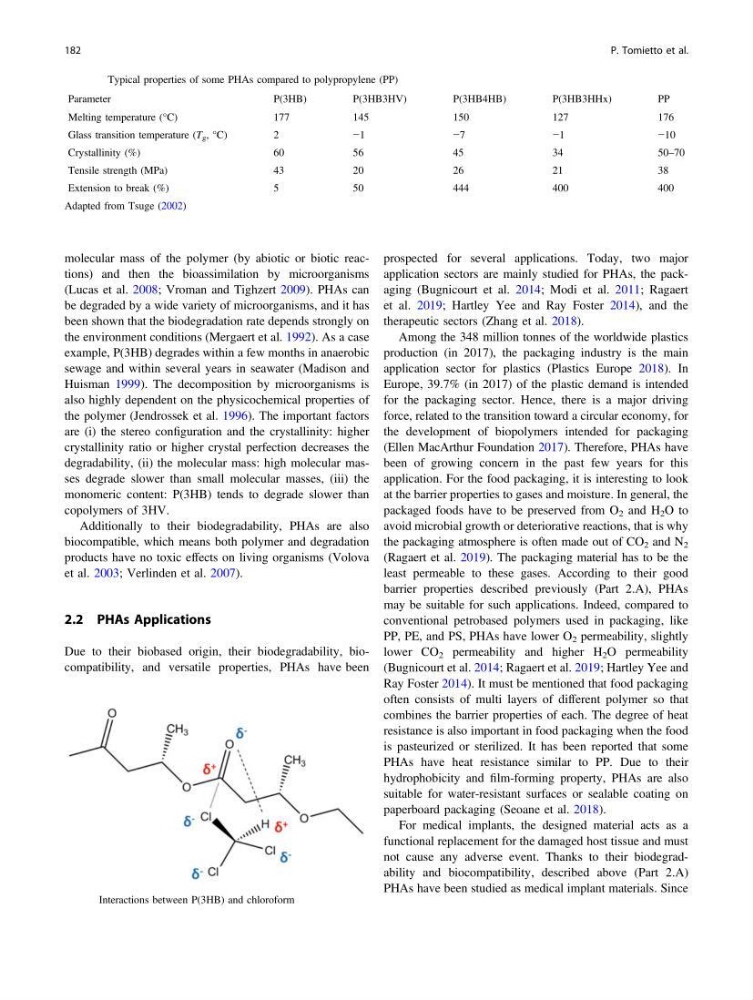
Fig. 4 Interactions between P(3HB) and chloroform
182
P. Tomietto et al.
(Lucas et al. 2008; Vroman and Tighzert 2009). PHAs can
be degraded by a wide variety of microorganisms, and it has
been shown that the biodegradation rate depends strongly on
the environment conditions (Mergaert et al. 1992). As a case
example, P(3HB) degrades within a few months in anaerobic
sewage and within several years in seawater (Madison and
Huisman 1999). The decomposition by microorganisms is
also highly dependent on the physicochemical properties of
the polymer (Jendrossek et al. 1996). The important factors
are (i) the stereo configuration and the crystallinity: higher
crystallinity ratio or higher crystal perfection decreases the
degradability, (ii) the molecular mass: high molecular masses degrade slower than small molecular masses, (iii) the
monomeric content: P(3HB) tends to degrade slower than
copolymers of 3HV.
Additionally to their biodegradability, PHAs are also
biocompatible, which means both polymer and degradation
products have no toxic effects on living organisms (Volova
et al. 2003; Verlinden et al. 2007).
2.2 PHAs Applications
Due to their biobased origin, their biodegradability, biocompatibility, and versatile properties, PHAs have been
prospected for several applications. Today, two major
application sectors are mainly studied for PHAs, the packaging (Bugnicourt et al. 2014; Modi et al. 2011; Ragaert
et al. 2019; Hartley Yee and Ray Foster 2014), and the
therapeutic sectors (Zhang et al. 2018).
Among the 348 million tonnes of the worldwide plastics
production (in 2017), the packaging industry is the main
application sector for plastics (Plastics Europe 2018). In
Europe, 39.7% (in 2017) of the plastic demand is intended
for the packaging sector. Hence, there is a major driving
force, related to the transition toward a circular economy, for
the development of biopolymers intended for packaging
(Ellen MacArthur Foundation 2017). Therefore, PHAs have
been of growing concern in the past few years for this
application. For the food packaging, it is interesting to look
at the barrier properties to gases and moisture. In general, the
packaged foods have to be preserved from O 2 and H 2 O to
avoid microbial growth or deteriorative reactions, that is why
the packaging atmosphere is often made out of CO 2 and N 2
(Ragaert et al. 2019). The packaging material has to be the
least permeable to these gases. According to their good
barrier properties described previously (Part 2.A), PHAs
may be suitable for such applications. Indeed, compared to
conventional petrobased polymers used in packaging, like
PP, PE, and PS, PHAs have lower O 2 permeability, slightly
lower CO 2 permeability and higher H 2 O permeability
(Bugnicourt et al. 2014; Ragaert et al. 2019; Hartley Yee and
Ray Foster 2014). It must be mentioned that food packaging
often consists of multi layers of different polymer so that
combines the barrier properties of each. The degree of heat
resistance is also important in food packaging when the food
is pasteurized or sterilized. It has been reported that some
PHAs have heat resistance similar to PP. Due to their
hydrophobicity and film-forming property, PHAs are also
suitable for water-resistant surfaces or sealable coating on
paperboard packaging (Seoane et al. 2018).
For medical implants, the designed material acts as a
functional replacement for the damaged host tissue and must
not cause any adverse event. Thanks to their biodegradability and biocompatibility, described above (Part 2.A)
PHAs have been studied as medical implant materials. Since
Table 4 Typical properties of some PHAs compared to polypropylene (PP)
Parameter
P(3HB)
P(3HB3HV)
P(3HB4HB)
P(3HB3HHx)
PP
Melting temperature (°C)
177
145
150
127
176
Glass transition temperature (T g , °C)
2
−1
−7
−1
−10
Crystallinity (%)
60
56
45
34
50–70
Tensile strength (MPa)
43
20
26
21
38
Extension to break (%)
5
50
444
400
400
Adapted from Tsuge (2002)
Fig. 4 Interactions between P(3HB) and chloroform
182
P. Tomietto et al.