

calculation. Therefore, a great suggestion to achieve accurate
results with easy convergence with MPd-UOE is to use
n_elements = 10, since calculations and derivatives are
simpler with arithmetic means, and higher number of elements is excessive, with no important gains in model
accuracy.
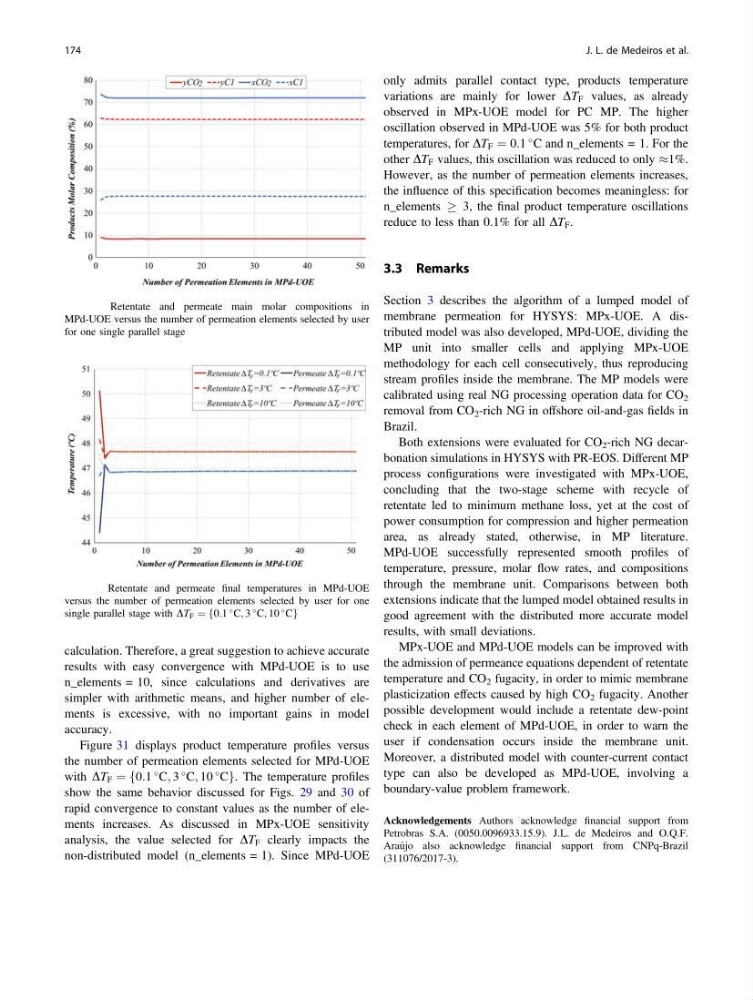
Figure 31 displays product temperature profiles versus
the number of permeation elements selected for MPd-UOE
with DT F ¼ f0:1
C; 3
C; 10
Cg. The temperature profiles
show the same behavior discussed for Figs. 29 and 30 of
rapid convergence to constant values as the number of elements increases. As discussed in MPx-UOE sensitivity
analysis, the value selected for DT F clearly impacts the
non-distributed model (n_elements = 1). Since MPd-UOE
only admits parallel contact type, products temperature
variations are mainly for lower DT F values, as already
observed in MPx-UOE model for PC MP. The higher
oscillation observed in MPd-UOE was 5% for both product
temperatures, for DT F ¼ 0:1
C and n_elements = 1. For the
other DT F values, this oscillation was reduced to only %1%.
However, as the number of permeation elements increases,
the influence of this specification becomes meaningless: for
n_elements ! 3, the final product temperature oscillations
reduce to less than 0.1% for all DT F .
3.3 Remarks
Section 3 describes the algorithm of a lumped model of
membrane permeation for HYSYS: MPx-UOE. A distributed model was also developed, MPd-UOE, dividing the
MP unit into smaller cells and applying MPx-UOE
methodology for each cell consecutively, thus reproducing
stream profiles inside the membrane. The MP models were
calibrated using real NG processing operation data for CO 2
removal from CO 2 -rich NG in offshore oil-and-gas fields in
Brazil.
Both extensions were evaluated for CO 2 -rich NG decarbonation simulations in HYSYS with PR-EOS. Different MP
process configurations were investigated with MPx-UOE,
concluding that the two-stage scheme with recycle of
retentate led to minimum methane loss, yet at the cost of
power consumption for compression and higher permeation
area, as already stated, otherwise, in MP literature.
MPd-UOE successfully represented smooth profiles of
temperature, pressure, molar flow rates, and compositions
through the membrane unit. Comparisons between both
extensions indicate that the lumped model obtained results in
good agreement with the distributed more accurate model
results, with small deviations.
MPx-UOE and MPd-UOE models can be improved with
the admission of permeance equations dependent of retentate
temperature and CO 2 fugacity, in order to mimic membrane
plasticization effects caused by high CO 2 fugacity. Another
possible development would include a retentate dew-point
check in each element of MPd-UOE, in order to warn the
user if condensation occurs inside the membrane unit.
Moreover, a distributed model with counter-current contact
type can also be developed as MPd-UOE, involving a
boundary-value problem framework.
Acknowledgements Authors acknowledge financial support from
Petrobras S.A. (0050.0096933.15.9). J.L. de Medeiros and O.Q.F.
Araújo also acknowledge financial support from CNPq-Brazil
(311076/2017-3).
Fig. 30 Retentate and permeate main molar compositions in
MPd-UOE versus the number of permeation elements selected by user
for one single parallel stage
Fig. 31 Retentate and permeate final temperatures in MPd-UOE
versus the number of permeation elements selected by user for one
single parallel stage with DT F ¼ f0:1
C; 3
C; 10
Cg
174
J. L. de Medeiros et al.
results with easy convergence with MPd-UOE is to use
n_elements = 10, since calculations and derivatives are
simpler with arithmetic means, and higher number of elements is excessive, with no important gains in model
accuracy.
Figure 31 displays product temperature profiles versus
the number of permeation elements selected for MPd-UOE
with DT F ¼ f0:1
C; 3
C; 10
Cg. The temperature profiles
show the same behavior discussed for Figs. 29 and 30 of
rapid convergence to constant values as the number of elements increases. As discussed in MPx-UOE sensitivity
analysis, the value selected for DT F clearly impacts the
non-distributed model (n_elements = 1). Since MPd-UOE
only admits parallel contact type, products temperature
variations are mainly for lower DT F values, as already
observed in MPx-UOE model for PC MP. The higher
oscillation observed in MPd-UOE was 5% for both product
temperatures, for DT F ¼ 0:1
C and n_elements = 1. For the
other DT F values, this oscillation was reduced to only %1%.
However, as the number of permeation elements increases,
the influence of this specification becomes meaningless: for
n_elements ! 3, the final product temperature oscillations
reduce to less than 0.1% for all DT F .
3.3 Remarks
Section 3 describes the algorithm of a lumped model of
membrane permeation for HYSYS: MPx-UOE. A distributed model was also developed, MPd-UOE, dividing the
MP unit into smaller cells and applying MPx-UOE
methodology for each cell consecutively, thus reproducing
stream profiles inside the membrane. The MP models were
calibrated using real NG processing operation data for CO 2
removal from CO 2 -rich NG in offshore oil-and-gas fields in
Brazil.
Both extensions were evaluated for CO 2 -rich NG decarbonation simulations in HYSYS with PR-EOS. Different MP
process configurations were investigated with MPx-UOE,
concluding that the two-stage scheme with recycle of
retentate led to minimum methane loss, yet at the cost of
power consumption for compression and higher permeation
area, as already stated, otherwise, in MP literature.
MPd-UOE successfully represented smooth profiles of
temperature, pressure, molar flow rates, and compositions
through the membrane unit. Comparisons between both
extensions indicate that the lumped model obtained results in
good agreement with the distributed more accurate model
results, with small deviations.
MPx-UOE and MPd-UOE models can be improved with
the admission of permeance equations dependent of retentate
temperature and CO 2 fugacity, in order to mimic membrane
plasticization effects caused by high CO 2 fugacity. Another
possible development would include a retentate dew-point
check in each element of MPd-UOE, in order to warn the
user if condensation occurs inside the membrane unit.
Moreover, a distributed model with counter-current contact
type can also be developed as MPd-UOE, involving a
boundary-value problem framework.
Acknowledgements Authors acknowledge financial support from
Petrobras S.A. (0050.0096933.15.9). J.L. de Medeiros and O.Q.F.
Araújo also acknowledge financial support from CNPq-Brazil
(311076/2017-3).
Fig. 30 Retentate and permeate main molar compositions in
MPd-UOE versus the number of permeation elements selected by user
for one single parallel stage
Fig. 31 Retentate and permeate final temperatures in MPd-UOE
versus the number of permeation elements selected by user for one
single parallel stage with DT F ¼ f0:1
C; 3
C; 10
Cg
174
J. L. de Medeiros et al.