

milk protein concentration by appropriate fermentation
processing. During the membrane cleaning process, foam
cleaning agent was generated by the shear effect to greatly
improve cleaning efficiency, as it could penetrate into the
membrane pores and react with membrane foulants in a
deeper level.
As for leaf protein solution filtration, the studies about
filtration module structure, membrane fouling model, and
optimization of operation conditions were summarized.
Among three filtration modules, CRDM exhibited a high
permeate flux, great anti-fouling capacity and excellent
separation performance, because of high shear effect and
open flow channel structure. In order to better understand
the stepwise membrane fouling process, a SMDM was
proposed to simulate the complex fouling process, while
calculate the key fouling parameters. Besides, with high
shear stress, larger UF pore size and suitable TMP and
temperature, the filtration efficiency (permeate flux and filtration time), and separation performance (protein rejection
and the protein purity in retentate) could be significantly
promoted. This work provides an important guidance for
the application of SEF for the separation and concentration
of protein solution.
Acknowledgements The authors would like to acknowledge the
financial support from the National Natural Science Foundation of
China (No. 51908136), Science and Technology Project of Guangzhou
(201904010122), and Guangdong Natural Science Foundation of China
(2017A030310540 and 2018A0303130036). The authors would like to
thank Ms. Christa AOUDE for her help with the English correction.
References
Beier, S. P., Guerra, M., Garde, A., & Jonsson, G. (2006). Dynamic
microfiltration with a vibrating hollow fiber membrane module:
Filtration of yeast suspensions. Desalination, 199, 499–500.
Chen, W., Mo, J., Du, X., Zhang, Z., & Zhang, W. (2019). Biomimetic
dynamic membrane for aquatic dye removal. Water Research, 151,
243–251.
Ding, L. H., & Jaffrin, M. Y. (2014). Benefits of high shear rate
dynamic nanofiltration and reverse osmosis: A review. Separation
Science & Technology, 49, 1953–1967.
Ding, L. H., Jaffrin, M. Y., & Luo, J. (2015). Chapter two—Dynamic
filtration with rotating disks, and rotating or vibrating membranes.
In Progress in filtration & separation (pp. 27–59).
Ding, L. H., Jaffrin, M. Y., Mellal, M., & He, G. (2006). Investigation
of performances of a multishaft disk (MSD) system with overlapping ceramic membranes in microfiltration of mineral suspensions.
Journal of Membrane Science, 276, 232–240.
Ding, L. H., Omar, A., Antoine, A., & Jaffrin, M. Y. (2003). High shear
skim milk ultrafiltration using rotating disk filtration systems.
AIChE Journal, 49(9), 2433–2441.
Ding, L. H., Zhang, W., Oulddris, A., Jaffrin, M. Y., & Bing, T. (2016).
Concentration of milk proteins for producing cheese using
shear-enhanced ultrafiltration technique. Industrial and Engineering
Chemistry Research, 55, 6b–2738b.
Gahleitner, B., Loderer, C., & Fuchs, W. (2013). Chemical foam
cleaning as an alternative for flux recovery in dynamic filtration
processes. Journal of Membrane Science, 431, 19–27.
Gahleitner, B., Loderer, C., Saracino, C., Pum, D., & Fuchs, W. (2014).
Chemical foam cleaning as an efficient ultrafiltration alternative for
flux recovery in processes. Journal of Membrane Science, 450,
433–439.
Hwang, K. J., Liao, C. Y., & Tung, K. L. (2007). Analysis of particle
fouling during microfiltration by use of blocking models. Journal of
Membrane Science, 287, 287–293.
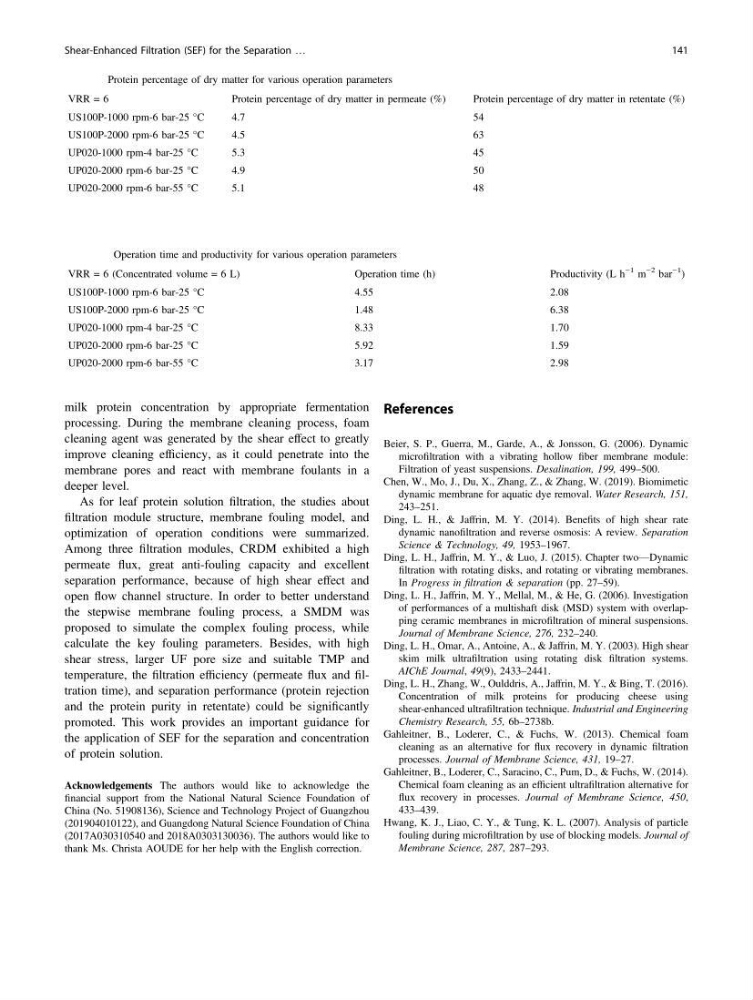
Table 9 Protein percentage of dry matter for various operation parameters
VRR = 6
Protein percentage of dry matter in permeate (%)
Protein percentage of dry matter in retentate (%)
US100P-1000 rpm-6 bar-25 °C
4.7
54
US100P-2000 rpm-6 bar-25 °C
4.5
63
UP020-1000 rpm-4 bar-25 °C
5.3
45
UP020-2000 rpm-6 bar-25 °C
4.9
50
UP020-2000 rpm-6 bar-55 °C
5.1
48
Table 10 Operation time and productivity for various operation parameters
VRR = 6 (Concentrated volume = 6 L)
Operation time (h)
Productivity (L h
−1 m
−2 bar
−1
)
US100P-1000 rpm-6 bar-25 °C
4.55
2.08
US100P-2000 rpm-6 bar-25 °C
1.48
6.38
UP020-1000 rpm-4 bar-25 °C
8.33
1.70
UP020-2000 rpm-6 bar-25 °C
5.92
1.59
UP020-2000 rpm-6 bar-55 °C
3.17
2.98
Shear-Enhanced Filtration (SEF) for the Separation …
141
processing. During the membrane cleaning process, foam
cleaning agent was generated by the shear effect to greatly
improve cleaning efficiency, as it could penetrate into the
membrane pores and react with membrane foulants in a
deeper level.
As for leaf protein solution filtration, the studies about
filtration module structure, membrane fouling model, and
optimization of operation conditions were summarized.
Among three filtration modules, CRDM exhibited a high
permeate flux, great anti-fouling capacity and excellent
separation performance, because of high shear effect and
open flow channel structure. In order to better understand
the stepwise membrane fouling process, a SMDM was
proposed to simulate the complex fouling process, while
calculate the key fouling parameters. Besides, with high
shear stress, larger UF pore size and suitable TMP and
temperature, the filtration efficiency (permeate flux and filtration time), and separation performance (protein rejection
and the protein purity in retentate) could be significantly
promoted. This work provides an important guidance for
the application of SEF for the separation and concentration
of protein solution.
Acknowledgements The authors would like to acknowledge the
financial support from the National Natural Science Foundation of
China (No. 51908136), Science and Technology Project of Guangzhou
(201904010122), and Guangdong Natural Science Foundation of China
(2017A030310540 and 2018A0303130036). The authors would like to
thank Ms. Christa AOUDE for her help with the English correction.
References
Beier, S. P., Guerra, M., Garde, A., & Jonsson, G. (2006). Dynamic
microfiltration with a vibrating hollow fiber membrane module:
Filtration of yeast suspensions. Desalination, 199, 499–500.
Chen, W., Mo, J., Du, X., Zhang, Z., & Zhang, W. (2019). Biomimetic
dynamic membrane for aquatic dye removal. Water Research, 151,
243–251.
Ding, L. H., & Jaffrin, M. Y. (2014). Benefits of high shear rate
dynamic nanofiltration and reverse osmosis: A review. Separation
Science & Technology, 49, 1953–1967.
Ding, L. H., Jaffrin, M. Y., & Luo, J. (2015). Chapter two—Dynamic
filtration with rotating disks, and rotating or vibrating membranes.
In Progress in filtration & separation (pp. 27–59).
Ding, L. H., Jaffrin, M. Y., Mellal, M., & He, G. (2006). Investigation
of performances of a multishaft disk (MSD) system with overlapping ceramic membranes in microfiltration of mineral suspensions.
Journal of Membrane Science, 276, 232–240.
Ding, L. H., Omar, A., Antoine, A., & Jaffrin, M. Y. (2003). High shear
skim milk ultrafiltration using rotating disk filtration systems.
AIChE Journal, 49(9), 2433–2441.
Ding, L. H., Zhang, W., Oulddris, A., Jaffrin, M. Y., & Bing, T. (2016).
Concentration of milk proteins for producing cheese using
shear-enhanced ultrafiltration technique. Industrial and Engineering
Chemistry Research, 55, 6b–2738b.
Gahleitner, B., Loderer, C., & Fuchs, W. (2013). Chemical foam
cleaning as an alternative for flux recovery in dynamic filtration
processes. Journal of Membrane Science, 431, 19–27.
Gahleitner, B., Loderer, C., Saracino, C., Pum, D., & Fuchs, W. (2014).
Chemical foam cleaning as an efficient ultrafiltration alternative for
flux recovery in processes. Journal of Membrane Science, 450,
433–439.
Hwang, K. J., Liao, C. Y., & Tung, K. L. (2007). Analysis of particle
fouling during microfiltration by use of blocking models. Journal of
Membrane Science, 287, 287–293.
Table 9 Protein percentage of dry matter for various operation parameters
VRR = 6
Protein percentage of dry matter in permeate (%)
Protein percentage of dry matter in retentate (%)
US100P-1000 rpm-6 bar-25 °C
4.7
54
US100P-2000 rpm-6 bar-25 °C
4.5
63
UP020-1000 rpm-4 bar-25 °C
5.3
45
UP020-2000 rpm-6 bar-25 °C
4.9
50
UP020-2000 rpm-6 bar-55 °C
5.1
48
Table 10 Operation time and productivity for various operation parameters
VRR = 6 (Concentrated volume = 6 L)
Operation time (h)
Productivity (L h
−1 m
−2 bar
−1
)
US100P-1000 rpm-6 bar-25 °C
4.55
2.08
US100P-2000 rpm-6 bar-25 °C
1.48
6.38
UP020-1000 rpm-4 bar-25 °C
8.33
1.70
UP020-2000 rpm-6 bar-25 °C
5.92
1.59
UP020-2000 rpm-6 bar-55 °C
3.17
2.98
Shear-Enhanced Filtration (SEF) for the Separation …
141