

180 Eva Castringius
who offered to fly him there to photograph the results of the explosion
at the nuclear power plant. As he approached the plant, he noticed the
hectic activity of military vehicles and, briefly thereafter, the gaping hole
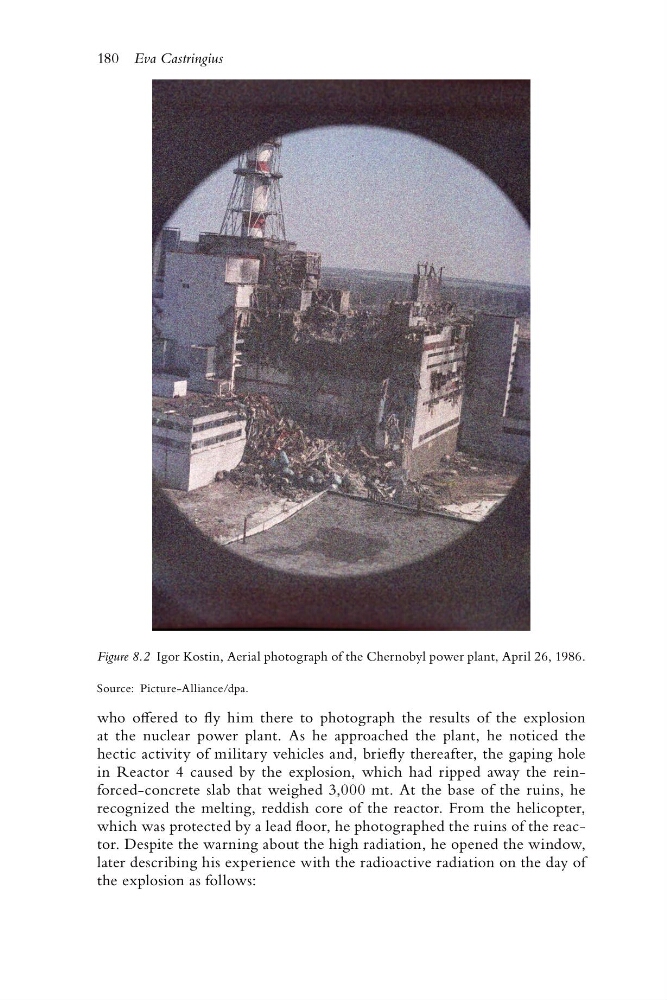
in Reactor 4 caused by the explosion, which had ripped away the reinforced-concrete slab that weighed 3,000 mt. At the base of the ruins, he
recognized the melting, reddish core of the reactor. From the helicopter,
which was protected by a lead floor, he photographed the ruins of the reactor. Despite the warning about the high radiation, he opened the window,
later describing his experience with the radioactive radiation on the day of
the explosion as follows:
Figure 8.2 Igor Kostin, Aerial photograph of the Chernobyl power plant, April 26, 1986.
Source: Picture-Alliance/dpa.
who offered to fly him there to photograph the results of the explosion
at the nuclear power plant. As he approached the plant, he noticed the
hectic activity of military vehicles and, briefly thereafter, the gaping hole
in Reactor 4 caused by the explosion, which had ripped away the reinforced-concrete slab that weighed 3,000 mt. At the base of the ruins, he
recognized the melting, reddish core of the reactor. From the helicopter,
which was protected by a lead floor, he photographed the ruins of the reactor. Despite the warning about the high radiation, he opened the window,
later describing his experience with the radioactive radiation on the day of
the explosion as follows:
Figure 8.2 Igor Kostin, Aerial photograph of the Chernobyl power plant, April 26, 1986.
Source: Picture-Alliance/dpa.