

There are non-hydrocarbon-based energy systems that do not depend on combustion of hydrocarbons that deserve mention. This includes wind,
hydro, nuclear, and solar power. Some of these
such as wind and water have been in use for
centuries to provide power. Nuclear power had
its advent post-WWII. Solar power with its current focus on photovoltaic conversion is relatively
new. All of these systems have the advantage of
not creating airborne emissions related to combustion. However, each of these energy sources has
its own disadvantages related to potential impacts
on human health and ecosystems.
It is important to recognize that there are a
multitude of other industrial and personal activities beyond combustion of hydrocarbons that
result in air emissions that may be harmful to
human health and ecosystems. These range from
mining and extraction of minerals to processes
producing specialized products such as paper,
fabric, silicon chips, and chemicals to the manufacture of vehicles and other commercial goods.
Agricultural activities also have unique airborne
emissions. Each of these activities require variable
amounts of energy and, thus, contribute to the
potential for local emissions of combustion products or emissions at a remote location such as a
central facility producing electrical power. In
addition, each of these activities has airborne
emissions unique to the processes being used.
The focus of this entry is on the pollutants that
arise from multiple sources and, thus, are found
everywhere. These common air pollutants are identified as criteria pollutants in the Clean Air Act, the
principal statute governing air quality in the United
States [14]. Some of these same pollutants have
been identified by the World Health Organization
(WHO) as common air pollutants [94].
Air Quality Management Framework
Air quality guidelines and standards are a key
element of air quality management as practiced
around the world. Bachmann [7] provides an informative historical review of the evolution of air
quality management in the United States with particular emphasis on the National Ambient Air
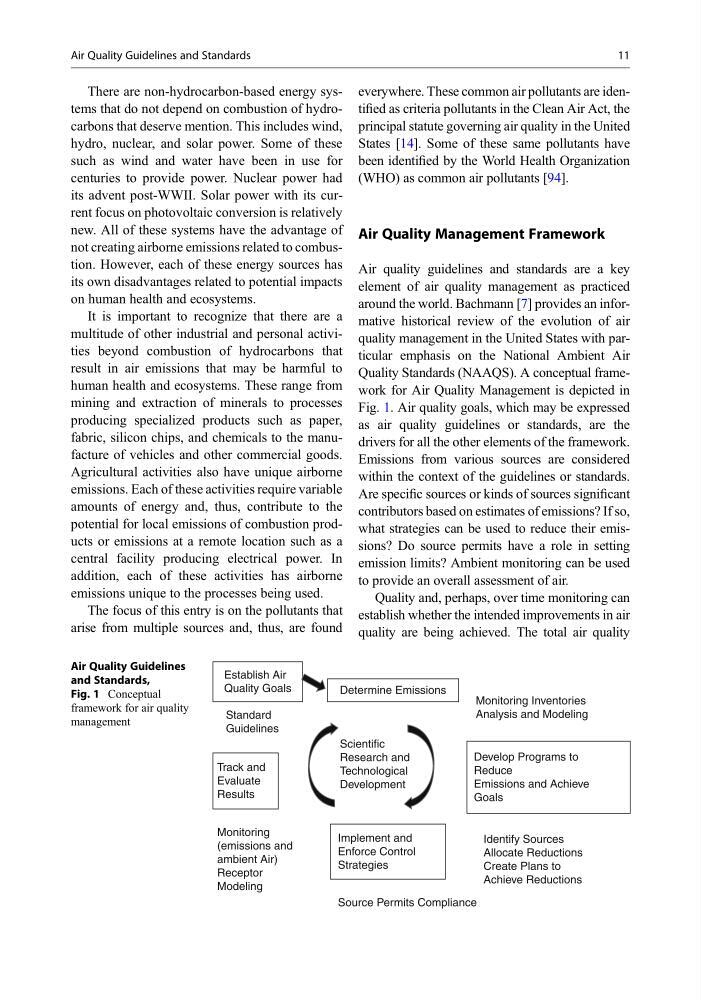
Quality Standards (NAAQS). A conceptual framework for Air Quality Management is depicted in
Fig. 1. Air quality goals, which may be expressed
as air quality guidelines or standards, are the
drivers for all the other elements of the framework.
Emissions from various sources are considered
within the context of the guidelines or standards.
Are specific sources or kinds of sources significant
contributors based on estimates of emissions? If so,
what strategies can be used to reduce their emissions? Do source permits have a role in setting
emission limits? Ambient monitoring can be used
to provide an overall assessment of air.
Quality and, perhaps, over time monitoring can
establish whether the intended improvements in air
quality are being achieved. The total air quality
Determine Emissions
Establish Air
Quality Goals
Standard
Guidelines
Track and
Evaluate
Results
Monitoring
(emissions and
ambient Air)
Receptor
Modeling
Scientific
Research and
Technological
Development
Monitoring Inventories
Analysis and Modeling
Develop Programs to
Reduce
Emissions and Achieve
Goals
Identify Sources
Allocate Reductions
Create Plans to
Achieve Reductions
Implement and
Enforce Control
Strategies
Source Permits Compliance
Air Quality Guidelines
and Standards,
Fig. 1 Conceptual
framework for air quality
management
Air Quality Guidelines and Standards
11
hydro, nuclear, and solar power. Some of these
such as wind and water have been in use for
centuries to provide power. Nuclear power had
its advent post-WWII. Solar power with its current focus on photovoltaic conversion is relatively
new. All of these systems have the advantage of
not creating airborne emissions related to combustion. However, each of these energy sources has
its own disadvantages related to potential impacts
on human health and ecosystems.
It is important to recognize that there are a
multitude of other industrial and personal activities beyond combustion of hydrocarbons that
result in air emissions that may be harmful to
human health and ecosystems. These range from
mining and extraction of minerals to processes
producing specialized products such as paper,
fabric, silicon chips, and chemicals to the manufacture of vehicles and other commercial goods.
Agricultural activities also have unique airborne
emissions. Each of these activities require variable
amounts of energy and, thus, contribute to the
potential for local emissions of combustion products or emissions at a remote location such as a
central facility producing electrical power. In
addition, each of these activities has airborne
emissions unique to the processes being used.
The focus of this entry is on the pollutants that
arise from multiple sources and, thus, are found
everywhere. These common air pollutants are identified as criteria pollutants in the Clean Air Act, the
principal statute governing air quality in the United
States [14]. Some of these same pollutants have
been identified by the World Health Organization
(WHO) as common air pollutants [94].
Air Quality Management Framework
Air quality guidelines and standards are a key
element of air quality management as practiced
around the world. Bachmann [7] provides an informative historical review of the evolution of air
quality management in the United States with particular emphasis on the National Ambient Air
Quality Standards (NAAQS). A conceptual framework for Air Quality Management is depicted in
Fig. 1. Air quality goals, which may be expressed
as air quality guidelines or standards, are the
drivers for all the other elements of the framework.
Emissions from various sources are considered
within the context of the guidelines or standards.
Are specific sources or kinds of sources significant
contributors based on estimates of emissions? If so,
what strategies can be used to reduce their emissions? Do source permits have a role in setting
emission limits? Ambient monitoring can be used
to provide an overall assessment of air.
Quality and, perhaps, over time monitoring can
establish whether the intended improvements in air
quality are being achieved. The total air quality
Determine Emissions
Establish Air
Quality Goals
Standard
Guidelines
Track and
Evaluate
Results
Monitoring
(emissions and
ambient Air)
Receptor
Modeling
Scientific
Research and
Technological
Development
Monitoring Inventories
Analysis and Modeling
Develop Programs to
Reduce
Emissions and Achieve
Goals
Identify Sources
Allocate Reductions
Create Plans to
Achieve Reductions
Implement and
Enforce Control
Strategies
Source Permits Compliance
Air Quality Guidelines
and Standards,
Fig. 1 Conceptual
framework for air quality
management
Air Quality Guidelines and Standards
11