

Mesoscale
In the following section, the main features of the
flow and meteorology in the three characteristic
flow regions of urban areas are discussed, beginning
with those on the mesoscale. These are broadly
categorized in Table 2 according to the relative
effects of buoyancy to inertial forces produced by
orographic or heat island effects on the one hand and
the effects of Coriolis forces acting over the overall
scale L O of the urban area on the other. The
Change in surface z 0 , F θ , θ s
U B
U H
U G
U G
L I
L o
h
H c
H c ′
z = z s
Urban Air Quality: Meteorological Processes,
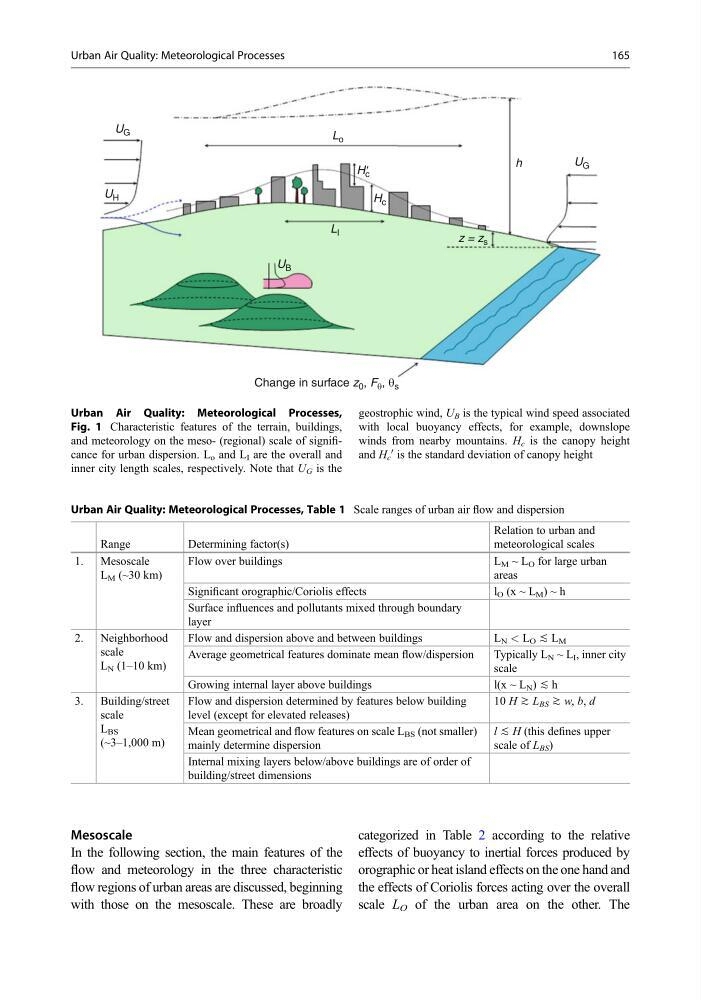
Fig. 1 Characteristic features of the terrain, buildings,
and meteorology on the meso- (regional) scale of significance for urban dispersion. L o and L I are the overall and
inner city length scales, respectively. Note that U G is the
geostrophic wind, U B is the typical wind speed associated
with local buoyancy effects, for example, downslope
winds from nearby mountains. H c is the canopy height
and H c
0 is the standard deviation of canopy height
Urban Air Quality: Meteorological Processes, Table 1 Scale ranges of urban air flow and dispersion
Range
Determining factor(s)
Relation to urban and
meteorological scales
1. Mesoscale
L M (~30 km)
Flow over buildings
L M ~ L O for large urban
areas
Significant orographic/Coriolis effects
l O (x ~ L M ) ~ h
Surface influences and pollutants mixed through boundary
layer
2. Neighborhood
scale
L N (1–10 km)
Flow and dispersion above and between buildings
L N < L O ≲ L M
Average geometrical features dominate mean flow/dispersion
Typically L N ~ L I , inner city
scale
Growing internal layer above buildings
l(x ~ L N ) ≲ h
3. Building/street
scale
L BS
(~3–1,000 m)
Flow and dispersion determined by features below building
level (except for elevated releases)
10 H ≳ L BS ≳ w, b, d
Mean geometrical and flow features on scale L BS (not smaller)
mainly determine dispersion
l ≲ H (this defines upper
scale of L BS )
Internal mixing layers below/above buildings are of order of
building/street dimensions
Urban Air Quality: Meteorological Processes
165
In the following section, the main features of the
flow and meteorology in the three characteristic
flow regions of urban areas are discussed, beginning
with those on the mesoscale. These are broadly
categorized in Table 2 according to the relative
effects of buoyancy to inertial forces produced by
orographic or heat island effects on the one hand and
the effects of Coriolis forces acting over the overall
scale L O of the urban area on the other. The
Change in surface z 0 , F θ , θ s
U B
U H
U G
U G
L I
L o
h
H c
H c ′
z = z s
Urban Air Quality: Meteorological Processes,
Fig. 1 Characteristic features of the terrain, buildings,
and meteorology on the meso- (regional) scale of significance for urban dispersion. L o and L I are the overall and
inner city length scales, respectively. Note that U G is the
geostrophic wind, U B is the typical wind speed associated
with local buoyancy effects, for example, downslope
winds from nearby mountains. H c is the canopy height
and H c
0 is the standard deviation of canopy height
Urban Air Quality: Meteorological Processes, Table 1 Scale ranges of urban air flow and dispersion
Range
Determining factor(s)
Relation to urban and
meteorological scales
1. Mesoscale
L M (~30 km)
Flow over buildings
L M ~ L O for large urban
areas
Significant orographic/Coriolis effects
l O (x ~ L M ) ~ h
Surface influences and pollutants mixed through boundary
layer
2. Neighborhood
scale
L N (1–10 km)
Flow and dispersion above and between buildings
L N < L O ≲ L M
Average geometrical features dominate mean flow/dispersion
Typically L N ~ L I , inner city
scale
Growing internal layer above buildings
l(x ~ L N ) ≲ h
3. Building/street
scale
L BS
(~3–1,000 m)
Flow and dispersion determined by features below building
level (except for elevated releases)
10 H ≳ L BS ≳ w, b, d
Mean geometrical and flow features on scale L BS (not smaller)
mainly determine dispersion
l ≲ H (this defines upper
scale of L BS )
Internal mixing layers below/above buildings are of order of
building/street dimensions
Urban Air Quality: Meteorological Processes
165