

both the discharge and collection electrodes should
be rapped frequently to remove deposited particle
cake. However, rapping may not be practical for
smaller devices such as indoor air cleaners. Furthermore, cleaning the wires by water spraying is difficult as it can cause arcing and current bridging
between the wires and the collection electrodes
[75]. Other problems related to traditional electrodes
include particle re-entrainment [72], reverse corona
[77], and ozone generation [5]. To overcome these
issues, Li et al. [78] developed a new wire-on-plate
ESP (WOPEP). Figure 16a compares the traditional
and newer ESPs. In WOPEP, discharge wires are
attached directly to the surface of a dielectric plate,
leading to reduced particle deposition on the wires
and reduced ozone generation while maintaining a
high particle collection efficiency. The authors
achieved collection efficiencies of 90.9–99.7% and
98.8–99.9% in the particle size range of
30–1870 nm, at average face velocities of 0.50 m/s
(flow rate, 30 L/min; residence time, 0.36 s) and
0.25 m/s (flow rate, 15 L/min; residence time,
0.72 s). The experimental collection efficiencies
were seen to be in agreement with the theoretical
models. A key finding was that the WOP ESP, at the
same voltage, has one to two orders of magnitude
lower ozone generation, and cleaner wires and
higher collection efficiency, compared to a traditional ESP (Fig. 16b).
Besides the various configurations of ESP
structure such as operation mode and voltages,
which have a large effect on particle collection
performance, there are some important parameters related to the composition of the gas stream
that greatly contribute to the collection efficiency
of ESPs. The velocity and particle concentration
of the gas stream are the most critical operational
parameters in these processes. Oliveira et al. [79]
separately evaluated the influences of residence
time (gas velocities) and concentration of nanoparticles on the performance of a conventional
ESP. They observed a decline in collection efficiency with particle concentration and particle
diameter (Fig. 17a). An increase in the gas velocity at a fixed particulate feed rate reduced the
collection efficiency, which was related not only
to the residence time but also to the gas-particle
concentration (GAC). To prevent the dilution
effect due to increased velocity, they used a particle injection method called aqueous solution
concentration (AQC), to quantify the effect of
the residence time. Figure 17b shows the
decreasing trend of the collection efficiency in
this test.
Table 7 shows the collection performance of
the previously described ESPs, as a function of
structural properties and operational conditions.
Thermophoresis
The movement of a particle due to an external
force is called phoresis. Examples include heat
(thermophoresis) and an electrical field
(electrophoresis).
A temperature gradient through an aerosol
leads to a thermal gradient across the aerosol
particles themselves. As illustrated in Fig. 18a,
b, collisions with gas molecules on the hightemperature side of the particle will have more
energy than collisions on the cooler side. As a
result, particles are accelerated toward the cold
side. Thermophoresis is not a strong mechanism
compared to the aforementioned methods; however, it can be applied in many aerosol-related
fields such as nanoparticle filtration. The mass of
a particle depends on the volume or the third
power of radius, whereas the number of collisions
depends on the surface area, which depends on the
Airborne Nanoparticles: Control and Detection,
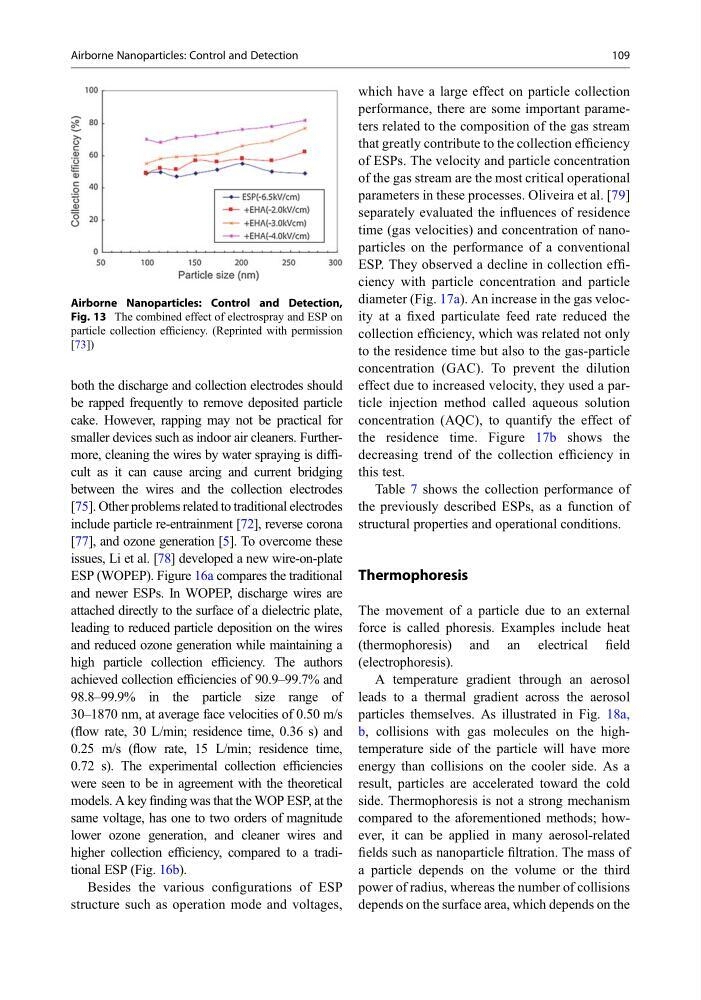
Fig. 13 The combined effect of electrospray and ESP on
particle collection efficiency. (Reprinted with permission
[73])
Airborne Nanoparticles: Control and Detection
109
be rapped frequently to remove deposited particle
cake. However, rapping may not be practical for
smaller devices such as indoor air cleaners. Furthermore, cleaning the wires by water spraying is difficult as it can cause arcing and current bridging
between the wires and the collection electrodes
[75]. Other problems related to traditional electrodes
include particle re-entrainment [72], reverse corona
[77], and ozone generation [5]. To overcome these
issues, Li et al. [78] developed a new wire-on-plate
ESP (WOPEP). Figure 16a compares the traditional
and newer ESPs. In WOPEP, discharge wires are
attached directly to the surface of a dielectric plate,
leading to reduced particle deposition on the wires
and reduced ozone generation while maintaining a
high particle collection efficiency. The authors
achieved collection efficiencies of 90.9–99.7% and
98.8–99.9% in the particle size range of
30–1870 nm, at average face velocities of 0.50 m/s
(flow rate, 30 L/min; residence time, 0.36 s) and
0.25 m/s (flow rate, 15 L/min; residence time,
0.72 s). The experimental collection efficiencies
were seen to be in agreement with the theoretical
models. A key finding was that the WOP ESP, at the
same voltage, has one to two orders of magnitude
lower ozone generation, and cleaner wires and
higher collection efficiency, compared to a traditional ESP (Fig. 16b).
Besides the various configurations of ESP
structure such as operation mode and voltages,
which have a large effect on particle collection
performance, there are some important parameters related to the composition of the gas stream
that greatly contribute to the collection efficiency
of ESPs. The velocity and particle concentration
of the gas stream are the most critical operational
parameters in these processes. Oliveira et al. [79]
separately evaluated the influences of residence
time (gas velocities) and concentration of nanoparticles on the performance of a conventional
ESP. They observed a decline in collection efficiency with particle concentration and particle
diameter (Fig. 17a). An increase in the gas velocity at a fixed particulate feed rate reduced the
collection efficiency, which was related not only
to the residence time but also to the gas-particle
concentration (GAC). To prevent the dilution
effect due to increased velocity, they used a particle injection method called aqueous solution
concentration (AQC), to quantify the effect of
the residence time. Figure 17b shows the
decreasing trend of the collection efficiency in
this test.
Table 7 shows the collection performance of
the previously described ESPs, as a function of
structural properties and operational conditions.
Thermophoresis
The movement of a particle due to an external
force is called phoresis. Examples include heat
(thermophoresis) and an electrical field
(electrophoresis).
A temperature gradient through an aerosol
leads to a thermal gradient across the aerosol
particles themselves. As illustrated in Fig. 18a,
b, collisions with gas molecules on the hightemperature side of the particle will have more
energy than collisions on the cooler side. As a
result, particles are accelerated toward the cold
side. Thermophoresis is not a strong mechanism
compared to the aforementioned methods; however, it can be applied in many aerosol-related
fields such as nanoparticle filtration. The mass of
a particle depends on the volume or the third
power of radius, whereas the number of collisions
depends on the surface area, which depends on the
Airborne Nanoparticles: Control and Detection,
Fig. 13 The combined effect of electrospray and ESP on
particle collection efficiency. (Reprinted with permission
[73])
Airborne Nanoparticles: Control and Detection
109