

The Periodic Transport
197
x
a
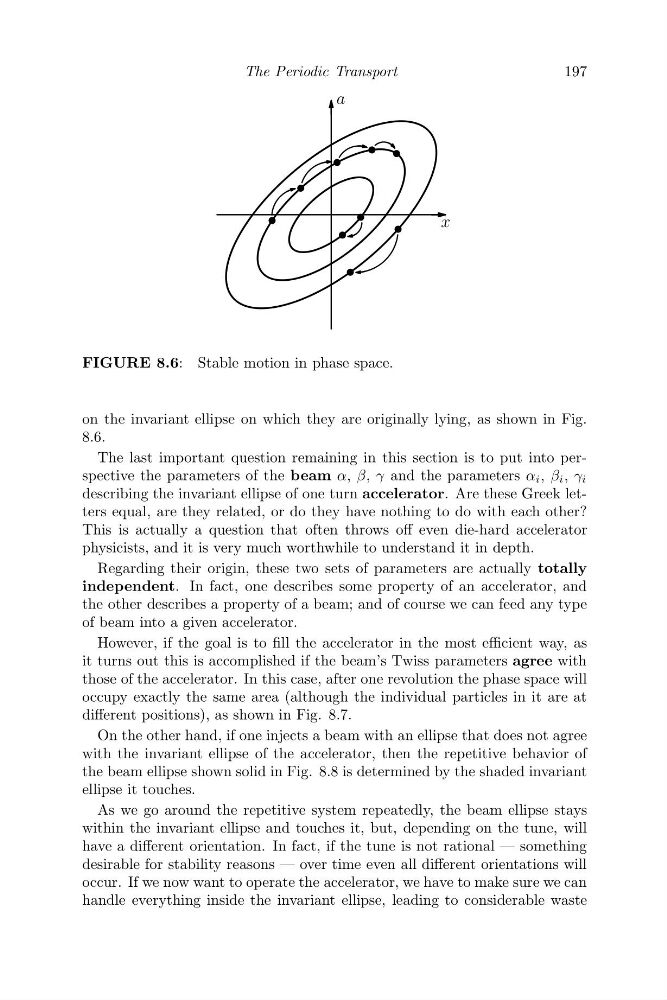
FIGURE 8.6: Stable motion in phase space.
on the invariant ellipse on which they are originally lying, as shown in Fig.
8.6.
The last important question remaining in this section is to put into perspective the parameters of the beam α, β, γ and the parameters α i , β i , γ i
describing the invariant ellipse of one turn accelerator. Are these Greek letters equal, are they related, or do they have nothing to do with each other?
This is actually a question that often throws off even die-hard accelerator
physicists, and it is very much worthwhile to understand it in depth.
Regarding their origin, these two sets of parameters are actually totally
independent. In fact, one describes some property of an accelerator, and
the other describes a property of a beam; and of course we can feed any type
of beam into a given accelerator.
However, if the goal is to fill the accelerator in the most efficient way, as
it turns out this is accomplished if the beam’s Twiss parameters agree with
those of the accelerator. In this case, after one revolution the phase space will
occupy exactly the same area (although the individual particles in it are at
different positions), as shown in Fig. 8.7.
On the other hand, if one injects a beam with an ellipse that does not agree
with the invariant ellipse of the accelerator, then the repetitive behavior of
the beam ellipse shown solid in Fig. 8.8 is determined by the shaded invariant
ellipse it touches.
As we go around the repetitive system repeatedly, the beam ellipse stays
within the invariant ellipse and touches it, but, depending on the tune, will
have a different orientation. In fact, if the tune is not rational — something
desirable for stability reasons — over time even all different orientations will
occur. If we now want to operate the accelerator, we have to make sure we can
handle everything inside the invariant ellipse, leading to considerable waste
197
x
a
FIGURE 8.6: Stable motion in phase space.
on the invariant ellipse on which they are originally lying, as shown in Fig.
8.6.
The last important question remaining in this section is to put into perspective the parameters of the beam α, β, γ and the parameters α i , β i , γ i
describing the invariant ellipse of one turn accelerator. Are these Greek letters equal, are they related, or do they have nothing to do with each other?
This is actually a question that often throws off even die-hard accelerator
physicists, and it is very much worthwhile to understand it in depth.
Regarding their origin, these two sets of parameters are actually totally
independent. In fact, one describes some property of an accelerator, and
the other describes a property of a beam; and of course we can feed any type
of beam into a given accelerator.
However, if the goal is to fill the accelerator in the most efficient way, as
it turns out this is accomplished if the beam’s Twiss parameters agree with
those of the accelerator. In this case, after one revolution the phase space will
occupy exactly the same area (although the individual particles in it are at
different positions), as shown in Fig. 8.7.
On the other hand, if one injects a beam with an ellipse that does not agree
with the invariant ellipse of the accelerator, then the repetitive behavior of
the beam ellipse shown solid in Fig. 8.8 is determined by the shaded invariant
ellipse it touches.
As we go around the repetitive system repeatedly, the beam ellipse stays
within the invariant ellipse and touches it, but, depending on the tune, will
have a different orientation. In fact, if the tune is not rational — something
desirable for stability reasons — over time even all different orientations will
occur. If we now want to operate the accelerator, we have to make sure we can
handle everything inside the invariant ellipse, leading to considerable waste