

Imaging Devices
179
f
f
2f
f
f
f
f
2f
f
f
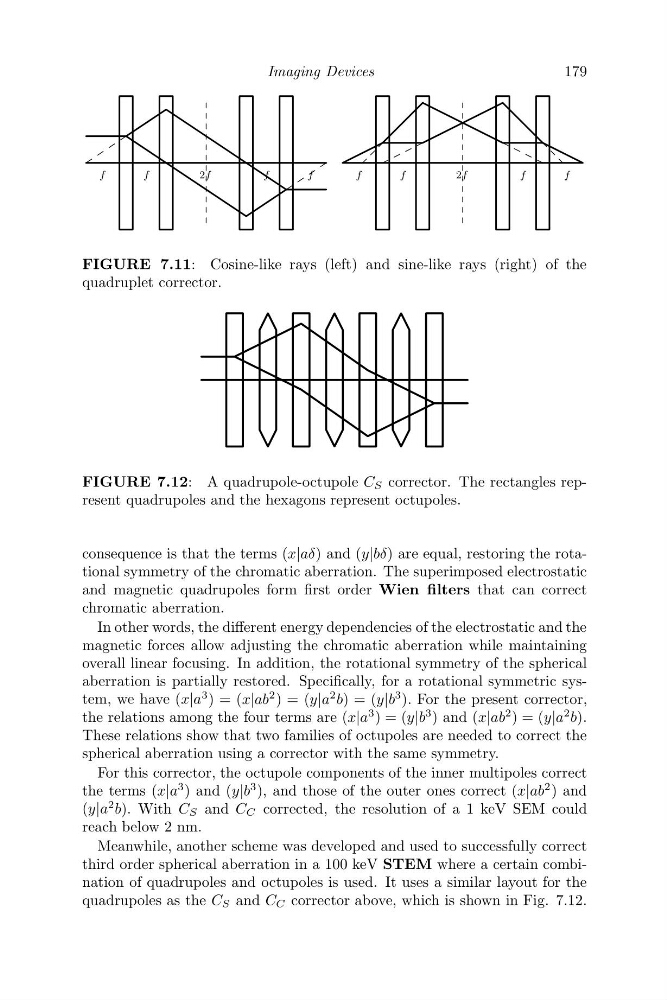
FIGURE 7.11: Cosine-like rays (left) and sine-like rays (right) of the
quadruplet corrector.
FIGURE 7.12: A quadrupole-octupole C S corrector. The rectangles represent quadrupoles and the hexagons represent octupoles.
consequence is that the terms (x|aδ) and (y|bδ) are equal, restoring the rotational symmetry of the chromatic aberration. The superimposed electrostatic
and magnetic quadrupoles form first order Wien filters that can correct
chromatic aberration.
In other words, the different energy dependencies of the electrostatic and the
magnetic forces allow adjusting the chromatic aberration while maintaining
overall linear focusing. In addition, the rotational symmetry of the spherical
aberration is partially restored. Specifically, for a rotational symmetric system, we have (x|a
3 ) = (x|ab
2 ) = (y|a
2 b) = (y|b
3 ). For the present corrector,
the relations among the four terms are (x|a
3 ) = (y|b
3 ) and (x|ab
2 ) = (y|a
2 b).
These relations show that two families of octupoles are needed to correct the
spherical aberration using a corrector with the same symmetry.
For this corrector, the octupole components of the inner multipoles correct
the terms (x|a
3 ) and (y|b
3 ), and those of the outer ones correct (x|ab
2 ) and
(y|a
2 b). With C S and C C corrected, the resolution of a 1 keV SEM could
reach below 2 nm.
Meanwhile, another scheme was developed and used to successfully correct
third order spherical aberration in a 100 keV STEM where a certain combination of quadrupoles and octupoles is used. It uses a similar layout for the
quadrupoles as the C S and C C corrector above, which is shown in Fig. 7.12.
179
f
f
2f
f
f
f
f
2f
f
f
FIGURE 7.11: Cosine-like rays (left) and sine-like rays (right) of the
quadruplet corrector.
FIGURE 7.12: A quadrupole-octupole C S corrector. The rectangles represent quadrupoles and the hexagons represent octupoles.
consequence is that the terms (x|aδ) and (y|bδ) are equal, restoring the rotational symmetry of the chromatic aberration. The superimposed electrostatic
and magnetic quadrupoles form first order Wien filters that can correct
chromatic aberration.
In other words, the different energy dependencies of the electrostatic and the
magnetic forces allow adjusting the chromatic aberration while maintaining
overall linear focusing. In addition, the rotational symmetry of the spherical
aberration is partially restored. Specifically, for a rotational symmetric system, we have (x|a
3 ) = (x|ab
2 ) = (y|a
2 b) = (y|b
3 ). For the present corrector,
the relations among the four terms are (x|a
3 ) = (y|b
3 ) and (x|ab
2 ) = (y|a
2 b).
These relations show that two families of octupoles are needed to correct the
spherical aberration using a corrector with the same symmetry.
For this corrector, the octupole components of the inner multipoles correct
the terms (x|a
3 ) and (y|b
3 ), and those of the outer ones correct (x|ab
2 ) and
(y|a
2 b). With C S and C C corrected, the resolution of a 1 keV SEM could
reach below 2 nm.
Meanwhile, another scheme was developed and used to successfully correct
third order spherical aberration in a 100 keV STEM where a certain combination of quadrupoles and octupoles is used. It uses a similar layout for the
quadrupoles as the C S and C C corrector above, which is shown in Fig. 7.12.