

Imaging Devices
175
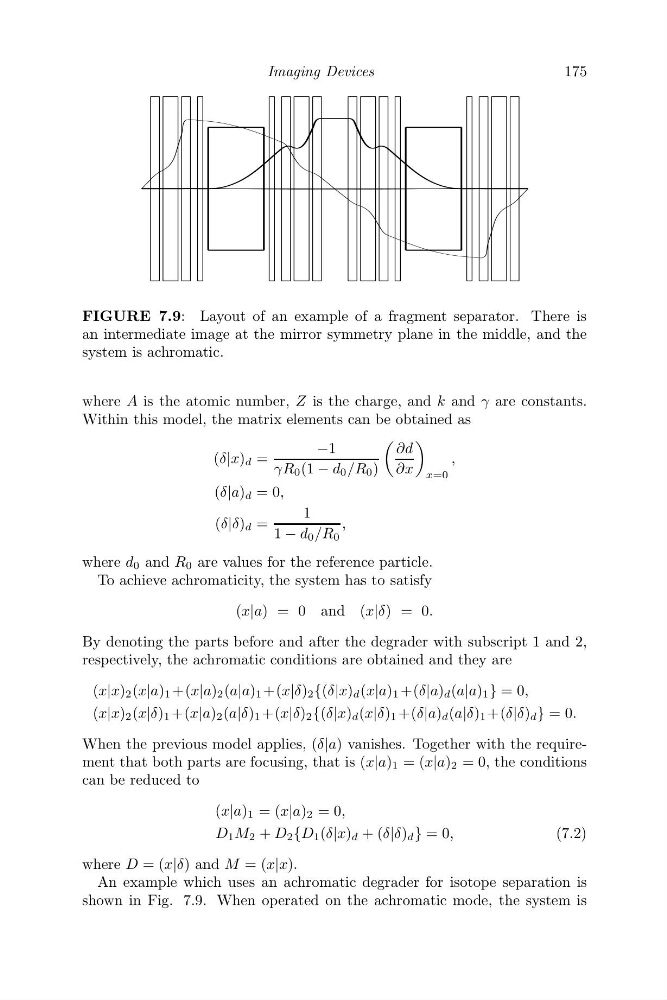
FIGURE 7.9: Layout of an example of a fragment separator. There is
an intermediate image at the mirror symmetry plane in the middle, and the
system is achromatic.
where A is the atomic number, Z is the charge, and k and γ are constants.
Within this model, the matrix elements can be obtained as
(δ|x) d =
−1
γR 0 (1 − d 0 /R 0 )
∂d
∂x
x=0
,
(δ|a) d = 0,
(δ|δ) d =
1
1 − d 0 /R 0
,
where d 0 and R 0 are values for the reference particle.
To achieve achromaticity, the system has to satisfy
(x|a) = 0 and (x|δ) = 0.
By denoting the parts before and after the degrader with subscript 1 and 2,
respectively, the achromatic conditions are obtained and they are
(x|x) 2 (x|a) 1 +(x|a) 2 (a|a) 1 +(x|δ) 2 {(δ|x) d (x|a) 1 +(δ|a) d (a|a) 1 } = 0,
(x|x) 2 (x|δ) 1 +(x|a) 2 (a|δ) 1 +(x|δ) 2 {(δ|x) d (x|δ) 1 +(δ|a) d (a|δ) 1 +(δ|δ) d } = 0.
When the previous model applies, (δ|a) vanishes. Together with the requirement that both parts are focusing, that is (x|a) 1 = (x|a) 2 = 0, the conditions
can be reduced to
(x|a) 1 = (x|a) 2 = 0,
D 1 M 2 + D 2 {D 1 (δ|x) d + (δ|δ) d } = 0,
(7.2)
where D = (x|δ) and M = (x|x).
An example which uses an achromatic degrader for isotope separation is
shown in Fig. 7.9. When operated on the achromatic mode, the system is
175
FIGURE 7.9: Layout of an example of a fragment separator. There is
an intermediate image at the mirror symmetry plane in the middle, and the
system is achromatic.
where A is the atomic number, Z is the charge, and k and γ are constants.
Within this model, the matrix elements can be obtained as
(δ|x) d =
−1
γR 0 (1 − d 0 /R 0 )
∂d
∂x
x=0
,
(δ|a) d = 0,
(δ|δ) d =
1
1 − d 0 /R 0
,
where d 0 and R 0 are values for the reference particle.
To achieve achromaticity, the system has to satisfy
(x|a) = 0 and (x|δ) = 0.
By denoting the parts before and after the degrader with subscript 1 and 2,
respectively, the achromatic conditions are obtained and they are
(x|x) 2 (x|a) 1 +(x|a) 2 (a|a) 1 +(x|δ) 2 {(δ|x) d (x|a) 1 +(δ|a) d (a|a) 1 } = 0,
(x|x) 2 (x|δ) 1 +(x|a) 2 (a|δ) 1 +(x|δ) 2 {(δ|x) d (x|δ) 1 +(δ|a) d (a|δ) 1 +(δ|δ) d } = 0.
When the previous model applies, (δ|a) vanishes. Together with the requirement that both parts are focusing, that is (x|a) 1 = (x|a) 2 = 0, the conditions
can be reduced to
(x|a) 1 = (x|a) 2 = 0,
D 1 M 2 + D 2 {D 1 (δ|x) d + (δ|δ) d } = 0,
(7.2)
where D = (x|δ) and M = (x|x).
An example which uses an achromatic degrader for isotope separation is
shown in Fig. 7.9. When operated on the achromatic mode, the system is