

Imaging Devices
165
R
R
R R
90
◦
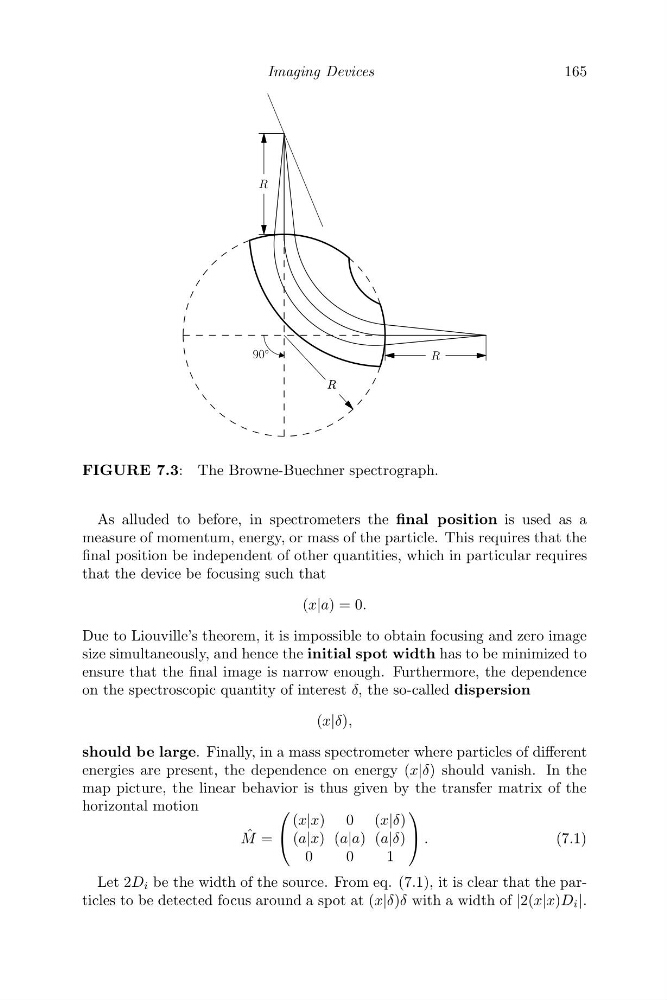
FIGURE 7.3: The Browne-Buechner spectrograph.
As alluded to before, in spectrometers the final position is used as a
measure of momentum, energy, or mass of the particle. This requires that the
final position be independent of other quantities, which in particular requires
that the device be focusing such that
(x|a) = 0.
Due to Liouville’s theorem, it is impossible to obtain focusing and zero image
size simultaneously, and hence the initial spot width has to be minimized to
ensure that the final image is narrow enough. Furthermore, the dependence
on the spectroscopic quantity of interest δ, the so-called dispersion
(x|δ),
should be large. Finally, in a mass spectrometer where particles of different
energies are present, the dependence on energy (x|δ) should vanish. In the
map picture, the linear behavior is thus given by the transfer matrix of the
horizontal motion
ˆ
M =
⎛
⎝
(x|x) 0 (x|δ)
(a|x) (a|a) (a|δ)
0
0
1
⎞
⎠ .
(7.1)
Let 2D i be the width of the source. From eq. (7.1), it is clear that the particles to be detected focus around a spot at (x|δ)δ with a width of |2(x|x)D i |.
165
R
R
R R
90
◦
FIGURE 7.3: The Browne-Buechner spectrograph.
As alluded to before, in spectrometers the final position is used as a
measure of momentum, energy, or mass of the particle. This requires that the
final position be independent of other quantities, which in particular requires
that the device be focusing such that
(x|a) = 0.
Due to Liouville’s theorem, it is impossible to obtain focusing and zero image
size simultaneously, and hence the initial spot width has to be minimized to
ensure that the final image is narrow enough. Furthermore, the dependence
on the spectroscopic quantity of interest δ, the so-called dispersion
(x|δ),
should be large. Finally, in a mass spectrometer where particles of different
energies are present, the dependence on energy (x|δ) should vanish. In the
map picture, the linear behavior is thus given by the transfer matrix of the
horizontal motion
ˆ
M =
⎛
⎝
(x|x) 0 (x|δ)
(a|x) (a|a) (a|δ)
0
0
1
⎞
⎠ .
(7.1)
Let 2D i be the width of the source. From eq. (7.1), it is clear that the particles to be detected focus around a spot at (x|δ)δ with a width of |2(x|x)D i |.