

102
An Introduction to Beam Physics
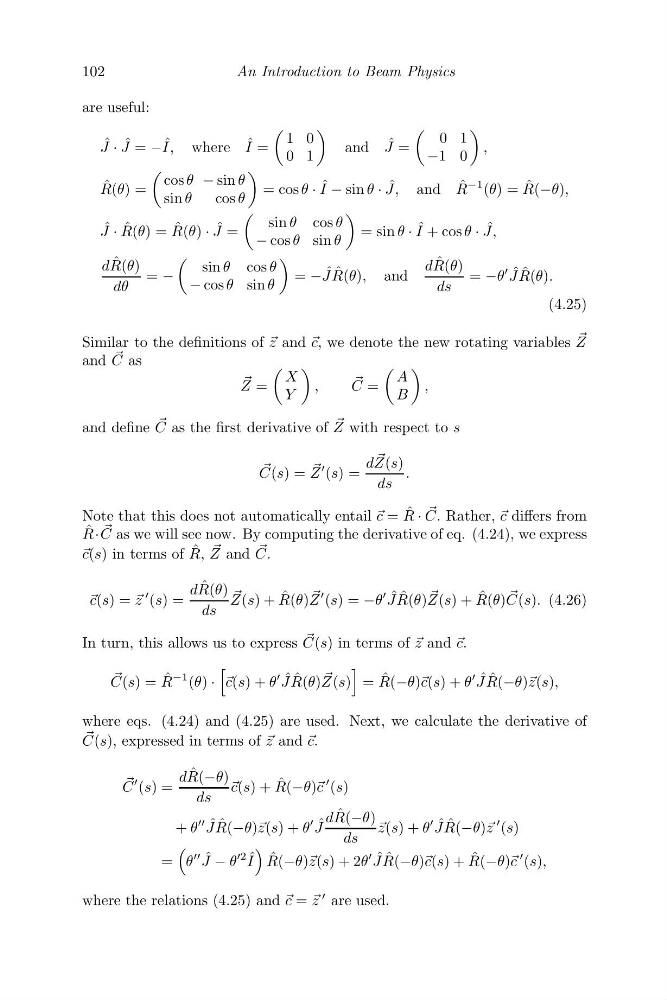
are useful:
ˆ
J · ˆ
J = − ˆ
I, where ˆ
I =
1 0
0 1
and ˆ
J =
0 1
−1 0
,
ˆ
R(θ) =
cos θ − sin θ
sin θ
cos θ
= cos θ · ˆ
I − sin θ · ˆ
J, and ˆ
R
−1 (θ) = ˆ
R(−θ),
ˆ
J · ˆ
R(θ) = ˆ
R(θ) · ˆ
J =
sin θ cos θ
− cos θ sin θ
= sin θ · ˆ
I + cos θ · ˆ
J,
d ˆ
R(θ)
dθ
= −
sin θ cos θ
− cos θ sin θ
= − ˆ
J ˆ
R(θ), and
d ˆ
R(θ)
ds
= −θ
ˆ
J ˆ
R(θ).
(4.25)
Similar to the definitions of z and c, we denote the new rotating variables
Z
and
C as
Z =
X
Y
,
C =
A
B
,
and define
C as the first derivative of
Z with respect to s
C(s) =
Z
(s) =
d
Z(s)
ds
.
Note that this does not automatically entail c = ˆ
R ·
C. Rather, c differs from
ˆ
R·
C as we will see now. By computing the derivative of eq. (4.24), we express
c(s) in terms of ˆ
R,
Z and
C.
c(s) = z
(s) =
d ˆ
R(θ)
ds
Z(s) + ˆ
R(θ)
Z
(s) = −θ
ˆ
J ˆ
R(θ)
Z(s) + ˆ
R(θ)
C(s). (4.26)
In turn, this allows us to express
C(s) in terms of z and c.
C(s) = ˆ
R
−1 (θ) ·
c(s) + θ
ˆ
J ˆ
R(θ)
Z(s)
= ˆ
R(−θ) c(s) + θ
ˆ
J ˆ
R(−θ) z(s),
where eqs. (4.24) and (4.25) are used. Next, we calculate the derivative of
C(s), expressed in terms of z and c.
C
(s) =
d ˆ
R(−θ)
ds
c(s) + ˆ
R(−θ) c
(s)
+ θ
ˆ
J ˆ
R(−θ) z(s) + θ
ˆ
J
d ˆ
R(−θ)
ds
z(s) + θ
ˆ
J ˆ
R(−θ) z
(s)
=
θ
ˆ
J − θ
2 ˆ
I
ˆ
R(−θ) z(s) + 2θ
ˆ
J ˆ
R(−θ) c(s) + ˆ
R(−θ) c
(s),
where the relations (4.25) and c = z
are used.
An Introduction to Beam Physics
are useful:
ˆ
J · ˆ
J = − ˆ
I, where ˆ
I =
1 0
0 1
and ˆ
J =
0 1
−1 0
,
ˆ
R(θ) =
cos θ − sin θ
sin θ
cos θ
= cos θ · ˆ
I − sin θ · ˆ
J, and ˆ
R
−1 (θ) = ˆ
R(−θ),
ˆ
J · ˆ
R(θ) = ˆ
R(θ) · ˆ
J =
sin θ cos θ
− cos θ sin θ
= sin θ · ˆ
I + cos θ · ˆ
J,
d ˆ
R(θ)
dθ
= −
sin θ cos θ
− cos θ sin θ
= − ˆ
J ˆ
R(θ), and
d ˆ
R(θ)
ds
= −θ
ˆ
J ˆ
R(θ).
(4.25)
Similar to the definitions of z and c, we denote the new rotating variables
Z
and
C as
Z =
X
Y
,
C =
A
B
,
and define
C as the first derivative of
Z with respect to s
C(s) =
Z
(s) =
d
Z(s)
ds
.
Note that this does not automatically entail c = ˆ
R ·
C. Rather, c differs from
ˆ
R·
C as we will see now. By computing the derivative of eq. (4.24), we express
c(s) in terms of ˆ
R,
Z and
C.
c(s) = z
(s) =
d ˆ
R(θ)
ds
Z(s) + ˆ
R(θ)
Z
(s) = −θ
ˆ
J ˆ
R(θ)
Z(s) + ˆ
R(θ)
C(s). (4.26)
In turn, this allows us to express
C(s) in terms of z and c.
C(s) = ˆ
R
−1 (θ) ·
c(s) + θ
ˆ
J ˆ
R(θ)
Z(s)
= ˆ
R(−θ) c(s) + θ
ˆ
J ˆ
R(−θ) z(s),
where eqs. (4.24) and (4.25) are used. Next, we calculate the derivative of
C(s), expressed in terms of z and c.
C
(s) =
d ˆ
R(−θ)
ds
c(s) + ˆ
R(−θ) c
(s)
+ θ
ˆ
J ˆ
R(−θ) z(s) + θ
ˆ
J
d ˆ
R(−θ)
ds
z(s) + θ
ˆ
J ˆ
R(−θ) z
(s)
=
θ
ˆ
J − θ
2 ˆ
I
ˆ
R(−θ) z(s) + 2θ
ˆ
J ˆ
R(−θ) c(s) + ˆ
R(−θ) c
(s),
where the relations (4.25) and c = z
are used.