

160 Damage to concrete structures
to amorphous hydrous silica (Skalny et al. 2002). Due to this reaction, a
strength loss is obtained.
When carbon dioxide dissolves in water, carbonic acid, H 2 CO 3 , is
formed. Upon reaction with a cementitious system, calcium bicarbonate,
Ca(HCO 3 ) 2 , is formed, which can go into solution. In some cases that
involve contact with flowing water containing high amounts of carbon
dioxide, the cement stone can be eroded.
In general, acid attacks on concrete elements are nearly impossible to
avoid. However, some measures can be taken to slow the degradation process. The most commonly mentioned measure to reduce or delay degradation resulting from acid attack is to provide a dense concrete matrix by
lowering the water/cement ratio. Another option is to provide a concrete
liner or coating to avoid contact between the acid and the cementitious
material.
5.3.4 biogenic sulfuric acid attack
In concrete sewer systems, it is quite often noticed in practice that severe
damage occurs after a very short time, sometimes only a few years.
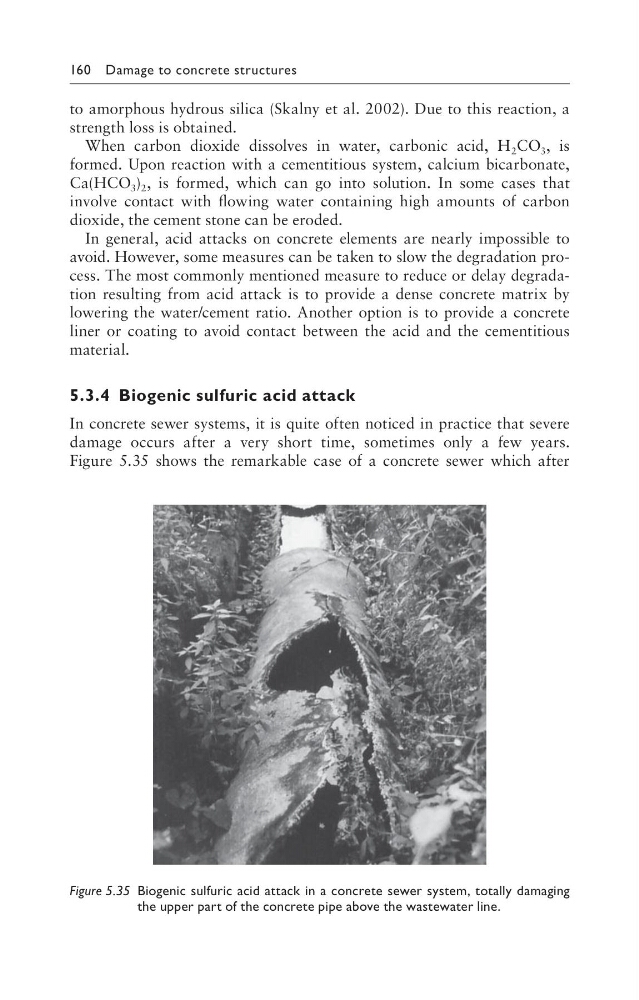
Figure 5.35 shows the remarkable case of a concrete sewer which after
Figure 5.35 Biogenic sulfuric acid attack in a concrete sewer system, totally damaging
the upper part of the concrete pipe above the wastewater line.
to amorphous hydrous silica (Skalny et al. 2002). Due to this reaction, a
strength loss is obtained.
When carbon dioxide dissolves in water, carbonic acid, H 2 CO 3 , is
formed. Upon reaction with a cementitious system, calcium bicarbonate,
Ca(HCO 3 ) 2 , is formed, which can go into solution. In some cases that
involve contact with flowing water containing high amounts of carbon
dioxide, the cement stone can be eroded.
In general, acid attacks on concrete elements are nearly impossible to
avoid. However, some measures can be taken to slow the degradation process. The most commonly mentioned measure to reduce or delay degradation resulting from acid attack is to provide a dense concrete matrix by
lowering the water/cement ratio. Another option is to provide a concrete
liner or coating to avoid contact between the acid and the cementitious
material.
5.3.4 biogenic sulfuric acid attack
In concrete sewer systems, it is quite often noticed in practice that severe
damage occurs after a very short time, sometimes only a few years.
Figure 5.35 shows the remarkable case of a concrete sewer which after
Figure 5.35 Biogenic sulfuric acid attack in a concrete sewer system, totally damaging
the upper part of the concrete pipe above the wastewater line.